


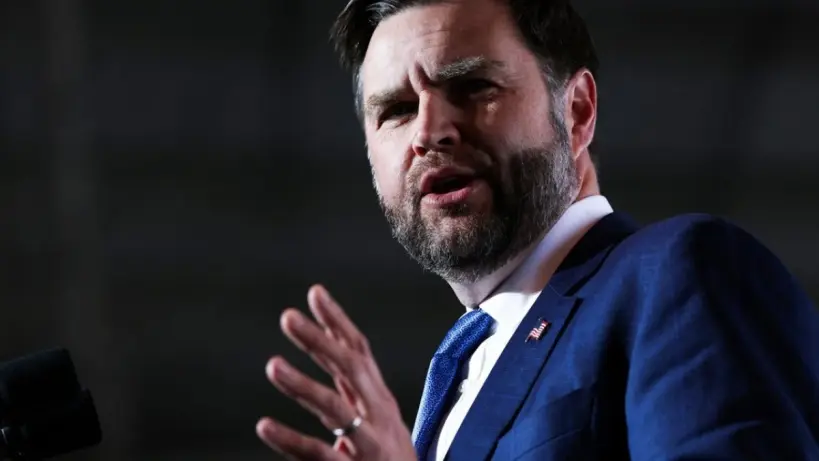
India has condemned US Vice-President J.D. Vance’s references to foreign workers as “indentured servants”, calling the language deeply offensive as Washington moves against several major Indian IT services companies under an immigration programme.
Vance and Labor Secretary Keith Sonderling announced on Oct 8 the suspension of some of India’s largest IT services businesses, along with Microsoft and Adobe, from a longstanding immigration initiative. The action was part of a crackdown on alleged misuse of the H-1B skilled-worker visa system.
Calling for US companies to employ more Americans, Vance said employers should “stop importing an indentured servant to do a job that an American worker would happily do”. Many foreign recruits at US software companies are Indian.
In India, the term carries particular weight because it is linked to a colonial-era arrangement in which people were compelled to work on overseas plantations and farms in exploitative conditions.
India’s Ministry of External Affairs responded on Oct 9 without directly naming Vance. It said the remarks were “unwarranted and ignore the fact that Indian professionals in the United States are highly educated and skilled contributors to its economy and innovation ecosystem”.
“Resorting to terminology that carries painful historical and colonial legacy connotations is deeply offensive,” the ministry said.
Vance repeated the disputed expression on Oct 9 when reporters questioned him about industrial policy. “We’re trying to make it harder for major corporations to undercut the wages of American workers and bring in indentured servants to replace American jobs,” he said.
He also criticised Democrats, saying: “You see Democrats aggressively saying, ‘No, no, no, no! We want to continue to allow corporations to bring in indentured servants from overseas to undercut the wages of Americans.’ That is absurd. We fight for American workers.”
Concerns over immigration measures
The measures announced by Vance and Sonderling concern the Permanent Labor Certification Program, known as PERM. The programme enables companies to sponsor foreign workers already in the United States on H-1B and other visas for legal permanent residency, which is the first step towards US citizenship.
India’s foreign ministry said the latest restrictions on skilled immigration do not serve the two countries’ shared ambitions, arguing that the movement of talent benefits both sides. It added that the United States had itself been shaped by generations of immigrants whose work, businesses and innovation contributed to its growth and prosperity.
Ashok Malik, a partner at strategy and business advisory firm The Asia Group, said the new restrictions on IT firms were clearly directed at India. “It will have an impact on the bilateral relationship,” he said. “The trust between the two countries has clearly suffered now.”
Relations between India and the United States have faced pressure over the past year amid trade disagreements, immigration issues and US President Donald Trump’s closer relationship with Pakistan, India’s nuclear-armed neighbour. Senior officials from both countries have recently indicated that trade talks remain at an impasse after months of negotiations.
Tata Consultancy Services, Asia’s largest provider of software outsourcing services, said on Oct 9 that the restrictions would not change its hiring or business strategy.





Comments
Log in to write a comment