


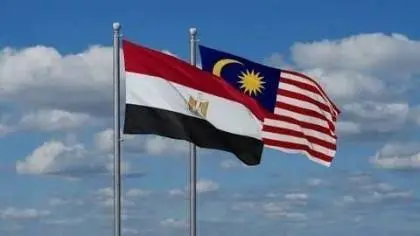
Egypt has announced its candidacy for membership of UNESCO’s Executive Board for the 2029–2033 term, with Higher Education and Scientific Research Minister and Acting Culture Minister Abdel Aziz Qonsowa saying the country supports efforts to strengthen the UN agency’s work in education, scientific research and cultural heritage protection.
Qonsowa made the announcement in a speech to the 225th session of the UNESCO Executive Board in Paris. During the address, he outlined Egypt’s efforts to advance higher education, research and innovation, and presented Egypt’s positions on issues before the organization.
He also praised UNESCO Director-General Khaled El-Enany’s work, particularly the “UNESCO 80” reform vision. According to Qonsowa, the initiative is intended to improve the organization’s effectiveness, strengthen resource management and broaden its funding sources.
Education and artificial intelligence
On education, Qonsowa called for artificial intelligence to be used responsibly, safely and equitably in ways that improve educational quality and assist teachers. He said the human role must remain central to the learning process.
The minister said Egypt also wants closer cooperation with UNESCO on rules for AI models, so they are aligned with students’ learning requirements and their cognitive and educational development.
Qonsowa pointed to domestic plans to begin applying the Tier 1 model for globally leading universities at five Egyptian universities, as part of efforts to develop the country’s higher education, scientific research and innovation system.
Heritage and water cooperation
On cultural heritage, Qonsowa noted that UNESCO’s General Conference had adopted an Egyptian initiative to mark August 21 each year as World Underwater Cultural Heritage Day.
He also highlighted Egypt’s interest in expanding cooperation through UNESCO’s Intergovernmental Hydrological Programme. The minister said Egypt seeks to draw on UNESCO’s expertise and international networks in sustainable water-resource management, river and transboundary-waterway governance, scientific cooperation and capacity-building.
Qonsowa cited the work of the African Centre for Water and Climate Adaptation, which is affiliated with Egypt’s Ministry of Water Resources and Irrigation. The centre works to build the capacity of African professionals in the field and was recently designated a UNESCO Category 2 Centre.
Comments
Log in to write a comment