


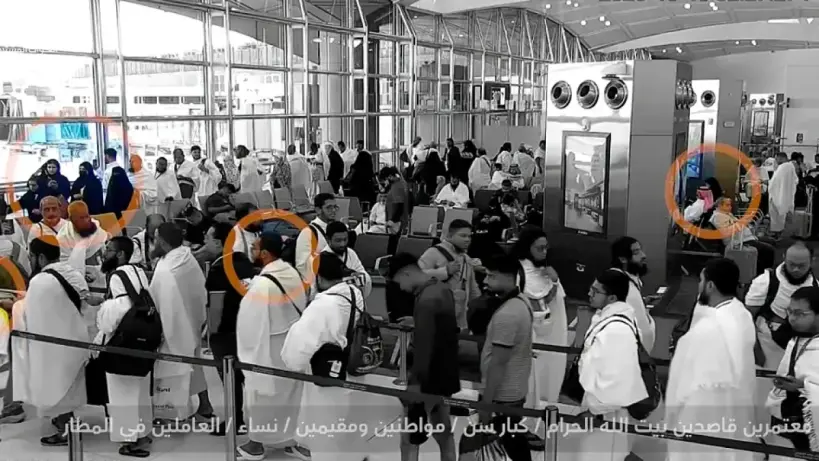
The Saudi-led military coalition said on Thursday that Houthi attacks on King Khalid International Airport in Riyadh this month had killed 17 people and injured 333, amid an intensifying confrontation between Saudi Arabia and the Iran-aligned Yemeni group.
Coalition spokesperson Turki Al Maliki said at a press conference that the airport had been hit in 20 attacks during the month. The coalition said the Houthis had also targeted dozens of Saudi airports, ports and oil facilities, highlighting what it described as an increased threat to civilian infrastructure.
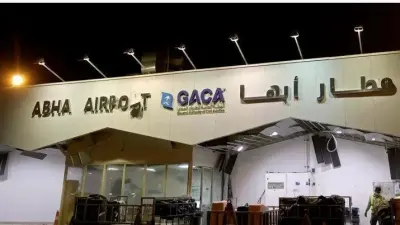
According to Al Maliki, attacks on Abha airport in southwestern Saudi Arabia, near the border with Yemen, killed three people and wounded 28 others.
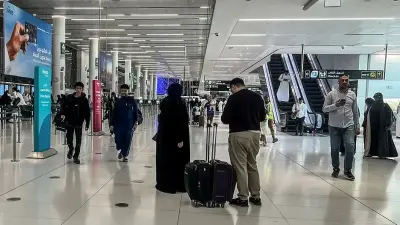
He offered condolences to the families of those killed and wished those injured a speedy recovery. Al Maliki condemned the attacks on civilians and civilian facilities, including King Khalid International Airport, which he said is used daily by tens of thousands of people.
The spokesperson also said attacks on Makkah and Madinah formed part of what he called a systematic hostile approach that threatened the security of visitors to the Two Holy Mosques. He said the targeting of holy sites, civilians and civilian objects contradicted humanitarian principles, ethics and values.
The Houthis have fired ballistic missiles and drones at key sites in Saudi Arabia for a week, in response to the kingdom's backing of government forces in Yemen's renewed civil war, the coalition said.
Al Maliki said the Houthis had obtained advanced capabilities, including ballistic missiles, drones and explosive-laden fast boats, with assistance from “regional actors.” He said coalition forces had destroyed 127 weapons storage facilities and launch platforms in Yemen's mountainous areas.
Saudi air-defence systems had effectively intercepted threats and prevented targeting attempts, he said. The leadership of the Coalition's Joint Forces would continue taking measures against Houthi threats and efforts to dismantle the group's offensive capability, including weapons depots and missile launch platforms, according to Al Maliki.
He said the coalition had determined that the Houthis were using civilian objects and essential resources to support their military operations. He named the Al-Sabaha central station in Sana'a, underground fuel reserves, fuel tanks, and fuel transport and unloading facilities in Hodeidah, Sana'a and Dhamar.
Al Maliki called on the Houthis to stop operations targeting civilians and civilian infrastructure immediately. He said the group should read the coalition's statement carefully and “between the lines.”
After the coalition's statement, the Houthi military spokesperson renewed a warning to airlines, saying Saudi airspace and airports were unsafe. The warning excluded airspace over the holy cities of Mecca and Medina.
Yemen has remained in conflict since the Houthis took control of the capital, Sanaa, in 2014. A Saudi-led military intervention followed the next year. A UN-brokered truce in 2022 largely stopped major fighting, and a de facto truce continued for six months after the agreement expired. Efforts to turn that pause into a lasting political settlement have since stalled as regional tensions have increased.
Source: Khaleej Times, with additional information from a Saudi-led coalition press release.




Thank you for being part of our community. Read our Comment Policy before posting.
Comments
Loading the conversation…