


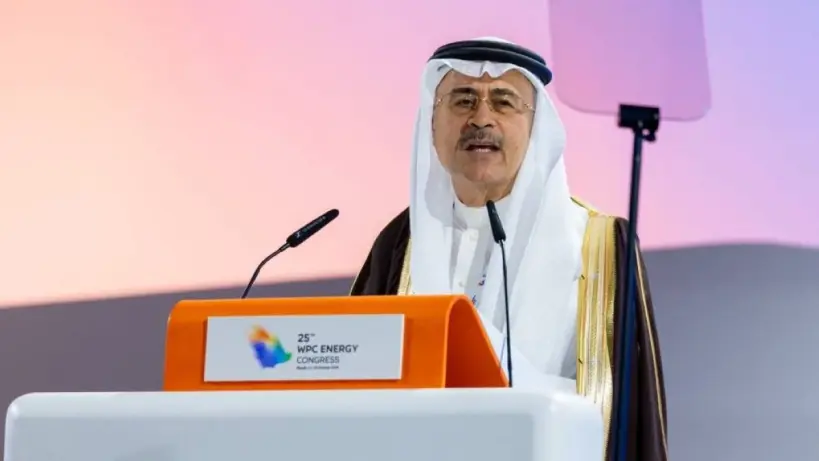
Saudi Aramco says it has strengthened its ability to keep oil facilities operating and restore damaged infrastructure quickly after attacks, relying on specialised response teams, drone assessments and locally available repair supplies. The company resumed pumping within days after attack drones struck its largest oil pipeline last month, according to Aramco chief executive Amin Nasser.
Satellite imagery showed that one of the pipeline’s pumping stations had been burned out in the strike. By the following day, dozens of bulldozers were already constructing a replacement pipeline, Nasser told Reuters in an interview last week.
The response reflects changes made after a 2019 drone and missile attack on Aramco’s Abqaiq oil-processing facility, which temporarily removed half of the company’s production capacity. Nasser said the company subsequently established specialised rapid-response units, known internally as “zero-hour responders”.
“After Abqaiq in 2019, we came up with the idea of rapid response teams, or what we call zero-hour responders,” Nasser said.
Aramco also began preparing for the prospect that several facilities could be targeted at the same time. “Today, our teams can handle multiple incidents simultaneously, and we continue to build this capability,” Nasser said.
Its preparedness has been tested repeatedly since the United States and Israel attacked Iran in February this year, followed by retaliatory strikes by Iran and its proxies that affected infrastructure across the Middle East. The company’s crisis-management system faced another test on Tuesday, when a Houthi attack hit Aramco’s headquarters complex and caused extensive damage.
According to International Energy Agency data, Saudi daily oil production fell below 7mn barrels for most of the first six months of the war, compared with more than 10mn barrels a day before the conflict. Production had recovered to about 8mn barrels a day in September.
Saudi oil exports, like those of other Gulf producers, have also been constrained by attacks on tankers and a shortage of ships, limiting crude flows through the Strait of Hormuz. Aramco has nevertheless been able to repair damaged sites and resume operations rapidly, Nasser said.
The executive said technology has shortened the period between an attack and the beginning of repair work. Aramco’s incident response is now more than six times faster than the industry average, he said, allowing facilities to restart in days even after substantial damage.
Rather than waiting until an incident has been fully contained before inspecting the site, Aramco uses drones to assess damage while events are still unfolding, Nasser said. “Inspection drones provide an exceptional level of visibility and detail,” he said. “By the time the situation is under control, we are ready to get to work.”
Response teams can dispatch materials to affected locations before repairs formally begin. Nasser said about 90% of the materials needed for repairs are either produced locally or kept in local warehouses, following years of work to develop supply chains and inventories.
Aramco’s ability to continue deliveries during repeated attacks has become an important consideration for customers, Nasser said. “They see that Aramco is able to deliver under different scenarios.”
Export routes remain exposed to disruptions outside the company’s control. Aramco is examining possible alternatives to the Strait of Hormuz, Bab el-Mandeb and the Suez route, Nasser said, without providing details. “Details will be disclosed if and when a final decision is made,” he said.
Source: Gulf Times, reporting remarks made by Aramco chief executive Amin Nasser to Reuters.






Thank you for being part of our community. Read our Comment Policy before posting.
Comments
Loading the conversation…