


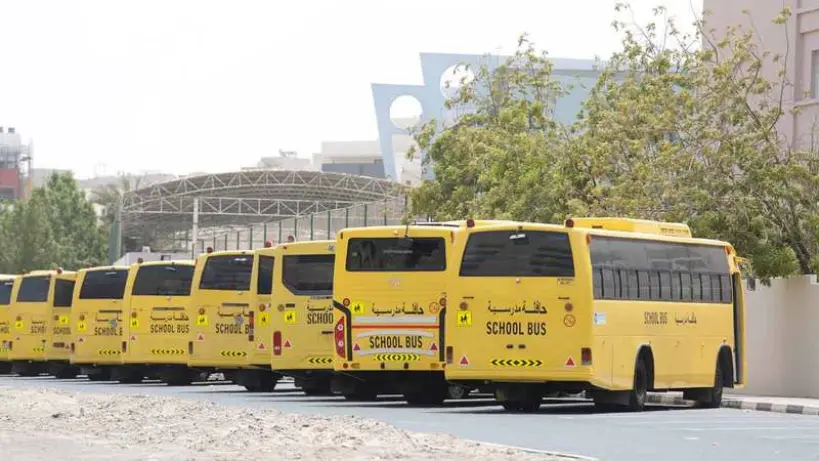
As students prepare to return to classrooms next week, many families in the UAE are actively searching for alternatives to traditional school transport in an effort to reduce the growing cost of daily travel.
Annual school bus fees in some schools range from Dh5,000 to Dh8,500 per student, creating a significant additional expense for families with more than one child. Parents have identified six main alternatives, including family cars, ride-sharing services, electric scooters, shared taxis, public buses, and car-lift services, as they look for more affordable ways to manage school transportation costs.
The private student transport sector is also seeing increased activity ahead of the new school term, with advertisements for transport services spreading widely across social media platforms, particularly WhatsApp and Instagram groups. Private car owners are offering car-lift services at different prices based on distance and travel routes, while some families are arranging shared transport among parents. Others are adopting a rotating drop-off and pick-up system, allowing parents to share responsibility for transporting children and reduce individual fuel expenses.
Several parents said that school bus fees have become a major financial burden, especially for households with multiple students enrolled in private schools. Transport costs for several children can add tens of thousands of dirhams to annual education expenses, prompting some families to buy small cars or reorganize their daily routines. Some parents now take their children to school in the morning before heading to work and rely on shared taxis or car-lift services for the return journey. Monthly fees for one-way car-lift services can range from Dh500 to Dh700, depending on the distance between the school and home.
Private school administrators, however, stressed that school bus fees are not set independently by schools and are subject to approval by the relevant authorities. They explained that many schools rely on specialised transport operators, while fees are influenced by several operational factors, including route length, the distance between schools and residential areas, the number of students using the service, vehicle operating and maintenance costs, driver and supervisor salaries, fuel, insurance, safety requirements, and approved regulatory standards. Abu Dhabi’s education authority has also stated that proposed school bus fees must be based on the school bus fee framework of the Integrated Transport Centre, with exceptional increases requiring the necessary coordination and approval procedures.
Education authorities have further emphasised that the use of non-school transport is subject to specific conditions. Only Cycle 3 students may travel to and from school without being accompanied by a parent or another adult appointed by the parent, in line with approved student care policies. Schools do not assume responsibility for journeys made through transport services outside their direct supervision, with school supervision beginning once the student enters the school campus. Parents are also required to sign consent forms acknowledging their responsibilities and the potential risks associated with non-school transport options. Safety remains a central concern, particularly for students using scooters, private vehicles, taxis, or other alternative means of travel, making compliance with approved transport and road safety requirements essential.





Thank you for being part of our community. Read our Comment Policy before posting.
Comments
Loading the conversation…