


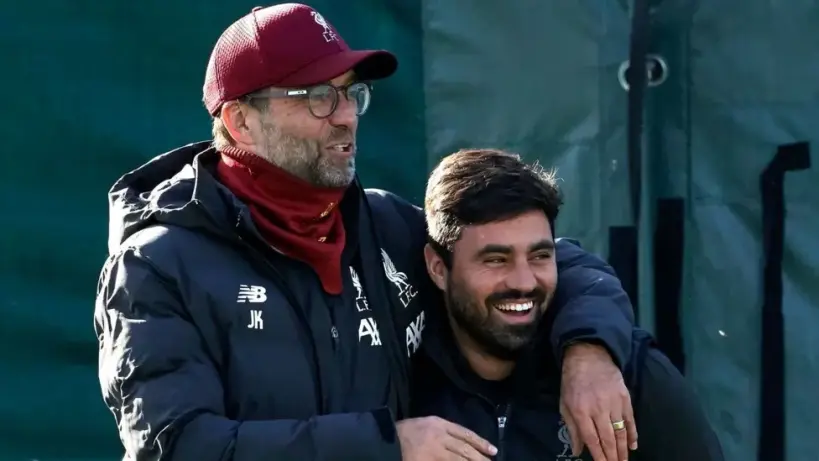
Swansea boss Vitor Matos has outlined how his side seek to create attacking openings against both zonal and man-marking defences, with a focus on moving opponents and building numerical advantages near the ball.
Matos said the solution depends on the type of defensive structure Swansea face. “How we solve problems depends on if we play against a man-marking team or a complete zonal team,” he said.
Against a fully zonal defence, Matos believes the priority is to shift the opposition’s shape. “When you play against a complete zonal team, the most important thing is that you understand that you need to move them. By moving the opposition, you create spaces, you create a free player.”
The search for an unmarked player has long been central to positional play. A forward can occupy a space between defenders and receive without immediate pressure, but a defender who moves to close that player down may leave another opponent free elsewhere.
Man-to-man pressing presents a separate problem, however. When defenders track individual players closely, there may be no obvious free player available.
Matos said his experience in China helped him develop an approach for dealing with that type of pressure. “In China, I understood that to arrive at a more positional game, you could have different steps beforehand,” he said.
Rather than immediately spreading players across the pitch, Matos sees value in bringing more teammates into close proximity. “There is a benefit to having more players close to each other, rather than spreading them over space,” he said.
He said a more expansive setup can place greater technical demands on players in one-versus-one situations. By contrast, having players closer to the ball can offer additional passing options and establish a rhythm that later helps teammates operate in wider areas.
“If you spread them over space, you are demanding that, technically, they can solve many situations one-v-one,” Matos said. “If they come closer to the ball, you can generate more possibilities. You can create a tempo that allows other players to be better in the big spaces.”
That approach uses overloads around possession to give Swansea more options and to unsettle either zonal structures or individual marking. Matos said positioning a midfielder wide can help create an extra player on one side before the team accelerates play.
“Especially if you play with a midfielder outside, you can overload one side a little bit more,” Matos added. “Let’s exchange the ball here five times, eight times and then when we go, we really go.”




Thank you for being part of our community. Read our Comment Policy before posting.
Comments
Loading the conversation…