


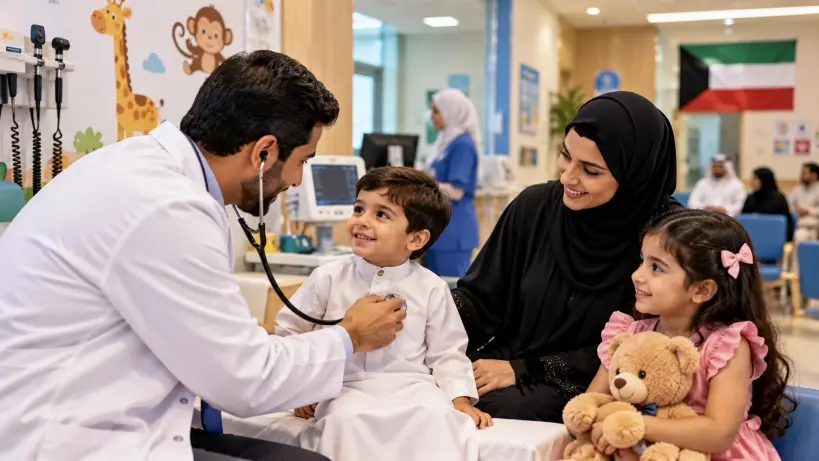
Kuwait’s Ministry of Health has launched a new National Early Childhood Initiative designed to improve the monitoring of children’s growth and development while providing families with practical guidance and better access to preventive healthcare services.
The initiative includes a national developmental screening pathway that helps doctors assess key areas of a child’s progress, including communication, movement, problem-solving and personal-social interaction, allowing possible developmental concerns to be identified earlier.
Health Minister Dr Ahmad Al-Awadhi said child healthcare begins even before birth through counselling, screening and pregnancy care and continues after delivery through vaccinations, growth monitoring and developmental follow-up.
The initiative includes two main programmes: the National Developmental Screening Program and the Bada’a platform, which provides parents and caregivers with practical information about child development and ways to build skills through play, interaction and daily activities.
Authorities said 240 doctors have already been trained to use the screening tools, while 95 health centres have been prepared for the programme’s phased rollout, significantly expanding access to developmental monitoring services across Kuwait.
Evening Well-Baby clinics have also opened this week at 12 health centres, giving families more flexible options for appointments outside standard daytime hours and making routine child health follow-up more accessible.
The next phase will allow appointments for these evening clinics to be booked through Kuwait’s unified government services application, Sahel, further simplifying access for parents and reducing the need for traditional in-person booking procedures.
During a Mother and Child exhibition held last month, 170 children were screened under the programme and 30 were referred to hospital paediatricians for further assessment, representing around 18 percent of the children evaluated.
Officials said early developmental screening is important because identifying possible delays at an early stage gives families and healthcare providers more time to arrange appropriate support and intervention when needed.
The initiative is also intended to strengthen the family’s role as a key partner in a child’s development by providing parents with reliable information, practical tools and easier access to services during the most important early years of life.






Comments
Log in to write a comment