

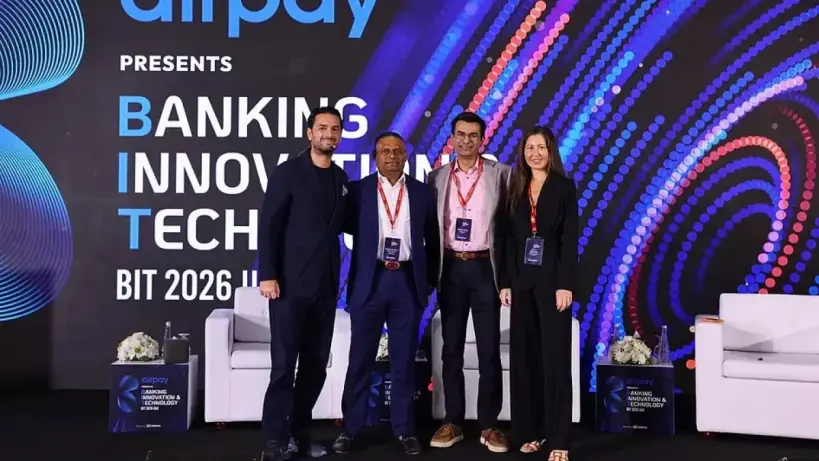
Stablecoins, tokenised gold and cross-border financial services are moving closer to practical, everyday use as the UAE develops its position in digital assets, industry executives said at the Banking Innovation & Technology Summit (BIT) 2026 on Thursday.
The session, titled “Stablecoins Go Live: From Dirham-ed Tokens to Everyday Settlement”, considered how digital assets could develop beyond an investment product and play a role in payments, settlements and wealth management. Speakers included Ramana Kumar, President of Stablecoin Ecosystem at ADI Foundation; Gaurav Mathur, Founder and Managing Director of SafeGold; and Serena Sebastiani, Chief Strategy Officer at Fuze Finance.
Making gold more transferable
Kumar said tokenisation could help restore some of gold’s traditional functions as a means of exchange by overcoming the practical difficulties of moving and dividing physical metal.
“If you go back in history, gold has been used as a currency. Gold is a store of value and a medium of exchange. When the value of a physical piece of metal became too big to carry around or subdivide, it obviously stopped being used as currency,” he said.
By representing gold digitally, tokenisation can make it simpler to split into smaller amounts, transfer and use, Kumar said. He described the approach as a way of storing gold in a format similar to a stablecoin, which could make investment more accessible to consumers.
“So fundamentally, what tokenisation does is allow you to make gold usable as currency again. You can use it, and we want to tokenise gold and store it like some sort of stablecoin. From a consumer point of view, it makes it much easier to invest,” Kumar said.
He said holders of digital gold tokens could also have the option to exchange them for physical gold through participating gold shops and jewellers. “With one of these digital tokens, you can walk into retail shops (gold shops and jewellers) and convert it into different pieces of gold seamlessly,” he said.
Although Kumar said few people may choose to make that conversion, he argued that the option itself could make tokenised gold more appealing. “Not that many people do that, but knowing you have the ability to convert it makes it quite an attractive investment opportunity for consumers. I think a lot of people think of gold as their insurance asset.”
UAE’s expanding digital-asset market
Sebastiani said the UAE has helped drive growth not only in stablecoins but in crypto and digital assets more broadly. She said the country’s willingness to encourage innovation while building a regulatory framework has made it an important jurisdiction in the sector.
“The UAE has been pioneering all this growth, not only in stablecoins, but in digital assets and crypto in general. The jurisdiction is not afraid to support crypto. We are one of the (few) jurisdictions that has embraced crypto,” she said.
The discussion also addressed the financial needs of UAE residents whose income, savings and investments may be spread across different currencies and countries. David Henry, Chief Product Officer at Mal, said international freelancers and other workers connected to global markets can earn abroad while remaining dependent on local financial systems.
“From a regional perspective, they (people) are still locked into their local financial systems, so they have to get paid in a weaker currency, potentially amid high inflationary pressures. In general, this population is able to earn internationally, but the financial services ecosystem hasn’t really kept pace. It’s still very locally focused and local-first, which is necessary to some extent for everyday spending,” Henry said.
He said consumers could benefit from the ability to receive income internationally and keep liquidity in currencies that are less volatile. He also cited interest in financial planning tools, including “retirement calculators”, as residents assess how to save, invest and make their money work.




Comments
Log in to write a comment