


Bahrain has begun implementing a new phase of its mandatory health insurance framework for expatriate residents, effective Saturday, October 31, 2026. The rules affect the issuance and renewal of eligible residence and work permits, as well as the medical benefits available to covered residents and qualifying family members under the national health insurance programme.
Bahrain Implements Mandatory Health Insurance Rules for Residents: Work Permit Renewals and BHD 15,000 Annual Medical Coverage
Bahrain
Font
Article text size
English fonts

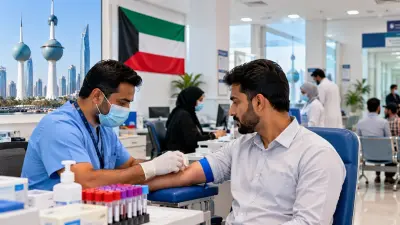
Medical services in Bahrain
The changes are established under Decision No. 66 of 2026, issued by the President of the Supreme Council of Health and Chairman of the Health Insurance Fund Board. Published in the Official Gazette on October 29, the decision contains nine regulatory articles and detailed schedules describing health benefits, contributions, eligibility requirements and exclusions.
One of the most significant provisions prevents the issuance or renewal of residence and work permits for people covered by the mandatory insurance framework until the applicable health insurance contribution has been paid. The Labour Market Regulatory Authority is responsible for collecting contributions owed to the Health Insurance Fund when the relevant permits are issued or renewed.
The decision requires contributions to be paid annually and in advance, treating part of a year as a full year for the purpose of calculating the contribution. Payments covering more than one year are permitted within the validity period of the relevant residence or work authorization.
Importantly, individuals who already held valid residence or work permits before the decision took effect will become subject to its requirements when those permits are renewed and the applicable mandatory insurance contribution becomes payable. The rules do not require all existing permit holders to immediately obtain replacement documents simply because the implementation date has arrived.
The covered categories include expatriate employees working for employers and their qualifying dependants, including spouses and children who have not exceeded the age of 24. Certain non-Bahraini individual business owners and people authorized to work without a conventional employer are also included under the relevant conditions.
Expatriates employed by government entities and their dependants are excluded from the scope of this decision. The Supreme Council of Health has also clarified that domestic workers are not included in this phase of the national health insurance programme for residents, while healthcare services provided to Bahraini citizens remain unchanged.
Under the mandatory benefits schedule, the annual treatment coverage ceiling is BHD 15,000 per insured individual. This figure represents the maximum general value of covered medical benefits under the relevant policy conditions, not a cash payment or financial grant made directly to the resident.
The covered healthcare benefits include primary and secondary medical services, hospital care, emergency treatment and accident-related services, subject to the policy’s provider networks and financial limits. Emergency medical treatment within Bahrain is covered at 100 percent without the usual deductible or co-payment, subject to the applicable annual limit and policy rules.
The benefits schedule sets a combined annual limit of BHD 2,000 for pre-existing medical conditions and chronic diseases. It also provides coverage of up to BHD 500 annually for eligible outpatient medications, with different co-payment rules depending on the type of prescribed medicine.
For general practitioner consultations and specified outpatient services, the policy establishes a BHD 5 deductible per consultation. A follow-up appointment for the same medical condition with the same doctor within seven days is exempt from that particular charge under the terms of the schedule.
Medical providers are organized into four network categories: bronze, silver, gold and platinum. Depending on the service and provider category, the insured individual may be responsible for co-payment rates of 20, 30, 45 or 60 percent, with additional maximum payment limits applying to certain services.
The schedule also provides maternity benefits, with an annual coverage limit of BHD 500 for natural childbirth and BHD 800 for caesarean delivery. Certain prenatal appointments and newborn services during the first 30 days after delivery are included, subject to the relevant medical and policy requirements.
Other covered benefits include certain cancer treatments, kidney dialysis, physiotherapy and emergency ground ambulance services. Some non-emergency treatments require prior authorization, and coverage may be subject to specific financial sublimits or approved provider arrangements.
The policy also contains exclusions that residents should review carefully. These include treatment received during travel outside Bahrain and certain routine examinations, cosmetic procedures and services that are not medically necessary, along with other exclusions detailed in the official policy schedule.
The decision does not introduce a single new numerical contribution amount for every expatriate resident. Instead, it refers to the existing applicable healthcare cost categories for non-Bahraini workers, meaning the annual BHD 15,000 medical coverage ceiling must not be confused with the amount payable as an insurance contribution.
Employers and covered residents should review their permit renewal dates, verify insurance payment requirements and understand the scope of their available benefits. Official guidance from the Labour Market Regulatory Authority and the relevant health authorities should be consulted whenever the applicability of the rules or a particular contribution amount is unclear.
The new framework has therefore been in force since October 31, 2026, linking covered work and residence permit issuance and renewal to mandatory insurance contributions while establishing a structured medical benefits package with an annual general coverage limit of BHD 15,000 per insured person.
Source: Bahrain Supreme Council of Health – Official Gazette – Al Ayam – Al Bilad
What do you think of this story?
Share your reaction, or help us correct a detail.





Thank you for being part of our community. Read our Comment Policy before posting.
Comments
Loading the conversation…