


Kuwait’s Ministry of Health provides a medical examination service for newly arriving expatriate workers as part of the procedures associated with obtaining legal residency in the country.
Kuwait Ministry of Health Explains Medical Tests, Documents and Fees Required for Newly Arriving Expatriate Workers
Kuwait
Font
Article text size
English fonts
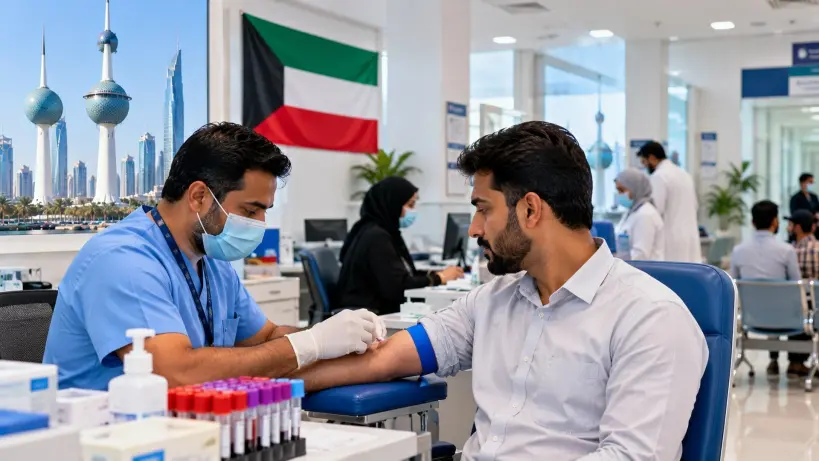
Medical tests in Kuwait
According to the official Kuwait Government Online service description, eligible applicants must undergo medical assessments to establish whether they meet the required health conditions and are free from certain communicable diseases. The procedure is an important step in the residency process, particularly for employers and sponsors arranging documentation for workers entering Kuwait.
The official government service lists several diseases covered by the examinations. These include HIV/AIDS, hepatitis B, hepatitis C, tuberculosis, malaria and filariasis. The medical assessments are intended to establish whether an applicant meets the health requirements prescribed for the relevant residency process. They should not be confused with occupational fitness examinations required for certain jobs, because Kuwait also provides separate medical services for candidates seeking employment in particular government and business-sector positions.
Applicants are required to attend an approved expatriate medical examination center in person to complete the necessary tests. Merely submitting documents through a representative does not replace personal attendance for the clinical assessment. Kuwait Government Online also provides an electronic service for requesting an expatriate medical examination appointment, allowing applicants or their representatives to access the relevant government booking process. The appropriate examination center and appointment arrangements should be confirmed through the official channels before attendance.
According to the published service requirements, applicants must prepare their original passports, original entry visas or a no-objection letter from the passport authorities where the visa is unavailable, four personal photographs and a printed examination card. Other documents include a copy of the Civil ID belonging to the sponsor authorized to sign on the applicant’s behalf. A copy of the signature authorization may also be required, although the official service description exempts domestic workers and applicants joining a family sponsor from that particular document.
The examination procedure begins with presenting the required documents at the designated medical center. Applicants must undergo the prescribed health assessments, including a radiological examination through the Tuberculosis Control Unit. After completing the relevant medical procedures and paying the applicable charges, the applicant may obtain a certificate confirming freedom from the specified communicable diseases, subject to the medical results and official requirements. The published government service card lists a fixed stamp fee of ten Kuwaiti dinars and does not specify an additional variable charge.
Applicants and employers should understand that completing the medical examination does not automatically guarantee the issuance of a residence permit. The immigration authorities must still confirm that all other applicable legal and administrative conditions have been satisfied. Newly arriving expatriates, sponsors and employers are therefore advised to use official government channels when booking appointments, preparing documents and checking procedural requirements. They should also avoid relying on unverified claims about examination results or processing times, because these may depend on the specific case and the procedures followed by the relevant authorities.
Source: Kuwait Ministry of Health — Kuwait Government Online.
What do you think of this story?
Share your reaction, or help us correct a detail.






Thank you for being part of our community. Read our Comment Policy before posting.
Comments
Loading the conversation…