


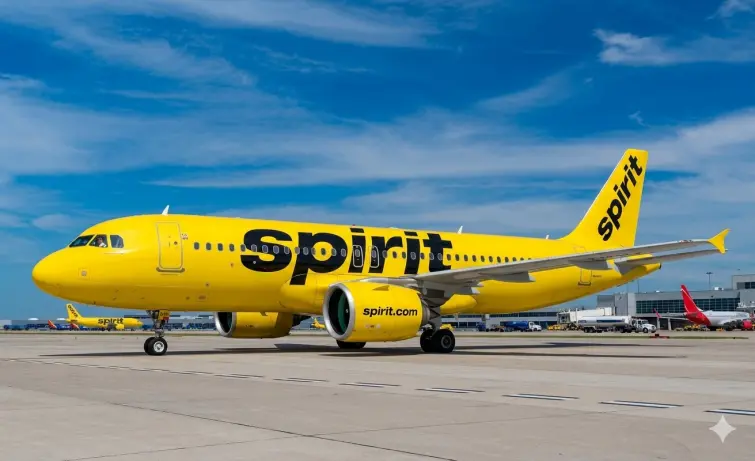
Spirit Airlines, one of the leading low-cost carriers in the United States, has officially declared bankruptcy and initiated an immediate liquidation of its operations, resulting in the cancellation of all flights and leaving thousands of passengers stranded across multiple airports.
This dramatic collapse marks one of the most significant disruptions in the US aviation industry in decades, especially after previous bankruptcy attempts and failed efforts to secure government-backed rescue funding, placing the future of around 17,000 employees and contractors at serious risk.
Chief Executive Officer Dave Davis stated that the primary cause of the collapse was the sharp and sustained spike in fuel prices in recent weeks, emphasizing that the airline required hundreds of millions of dollars in liquidity to continue operations, which was no longer available.
The crisis was further intensified by rising jet fuel costs linked to geopolitical tensions involving Iran, which ultimately delivered the final blow to the struggling airline as it was preparing a restructuring plan to exit bankruptcy.
Regarding customers, the airline confirmed that passengers who booked using credit or debit cards will receive automatic refunds, while those who booked through travel agencies are advised to contact their agents directly, with compensation mechanisms for voucher and points users to be announced later.
Major US airlines including United Airlines, American Airlines, and Southwest Airlines quickly stepped in to offer discounted fares to assist stranded passengers, aiming to mitigate the immediate impact of the crisis.
Industry analysts expect that the exit of Spirit Airlines, previously the eighth-largest carrier in the US market, will lead to a noticeable increase in ticket prices due to reduced competition in the low-cost segment.
The airline had been facing long-standing financial challenges, reporting losses of approximately 5.9 billion dollars between 2020 and 2025, highlighting the scale of its operational struggles.
The collapse has also reignited political debate in the United States, with criticism directed at the Biden administration for blocking a proposed merger with JetBlue in early 2024 on antitrust grounds, which was widely seen as a last lifeline for the airline.
The company is now expected to liquidate its assets, including 166 leased aircraft and 48 owned planes, a move that could create expansion opportunities for competitors while simultaneously ushering in a new era of higher airfare prices.




Comments
Log in to write a comment