


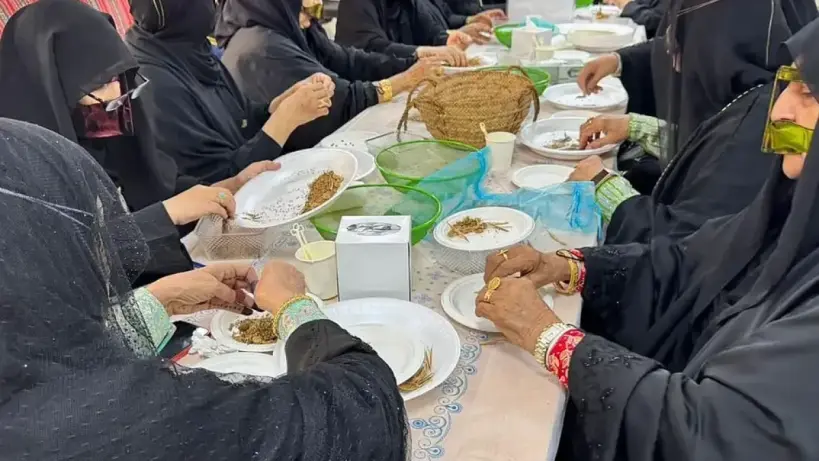
A seed-sharing group started by Emirati woman Mona Ali Al Suwaidi on WhatsApp has developed into the UAE Seeds Bank, a volunteer-run initiative that distributes seeds free of charge, promotes home growing and seeks to preserve traditional agricultural knowledge. The project, launched in 2021 through the women’s gardening group Al Jinan Gardens, is in its sixth season in 2026.
The initiative began with women exchanging excess seeds from their farms and home gardens, as well as practical advice about cultivating different plants. As participation increased and larger amounts of seeds became available, Al Suwaidi began coordinating how they were collected, kept and passed on to other growers.
“I never expected the initiative to reach where it is today,” Al Suwaidi said.
UAE Seeds Bank now receives local, inherited and previously cultivated varieties from gardeners and farmers after the agricultural season. Volunteers inspect the donations, sort and dry the seeds, package them, store them in suitable conditions and distribute them before the following planting season.
More than 1,000 people benefited in the initiative’s fifth season alone. Al Suwaidi said the total number of recipients over its six seasons is believed to run into the thousands, although the group does not yet have a formal process to record every beneficiary. Seed contributions and exchanges have also involved people outside the UAE.
Sharing seeds and growing knowledge
Al Suwaidi said one of the initiative’s most encouraging outcomes is seeing people who received seeds return in a later season with seeds saved from their own crops. Some participants send photographs of their plants, while others contribute surplus seeds so they can be provided to new growers.
The aim is not simply to hand out seeds, she said, but to encourage recipients to plant them, retain part of the harvest for the next season and share what remains. The seeds and related cultivation knowledge circulate through agricultural gatherings, farmers’ markets, workshops and community events.
Each variety is accompanied by information about where it came from, how it should be planted and how it can be preserved. This allows participants to exchange their own growing experience while helping keep varieties in circulation.
Continuing a household tradition
For Al Suwaidi, the project reflects the historical role of Emirati women in household agriculture and food production. She said women in earlier generations understood planting periods, grew food for their families and retained seeds for future seasons, passing such knowledge between households and generations through hands-on practice.
“What we are doing today is an extension of that earlier role, but in a way that suits our current circumstances and needs,” she said.
Al Suwaidi said preserving seeds cannot be separated from preserving the knowledge connected with them. “We are not only preserving the seed. We are preserving the knowledge connected to it,” she said.
She said she is proud to lead a voluntary agricultural project as an Emirati woman and to demonstrate how women can use their skills and interests to support sustainability and food security. Many of those habits begin at home, she added, including how families grow and consume food, reduce waste and introduce children to agriculture.
Al Suwaidi hopes more people will consider planting seeds rather than discarding them after eating fruit or vegetables. She also wants younger people to see agriculture as relevant to their lives and future, rather than only as a practice from the past.
Home growing and small businesses
The initiative has helped some women build enough gardening experience to produce part of their food at home, according to Al Suwaidi. Others have developed small online businesses selling products grown from seeds while continuing to donate surplus seeds back to the project.
She said these examples show how an individual interest can benefit families and the wider community, while supporting food security and productive home-based work.
Volunteer work behind every seed packet
Despite its expansion, UAE Seeds Bank depends entirely on volunteers and available resources. Al Suwaidi, who has a full-time job, said managing the seed bank alongside her professional work requires considerable time and commitment. Other participants are homemakers with family responsibilities, making organisation especially important during collection and distribution periods.
She said the central challenge has not been leading the project as a woman, but maintaining an expanding volunteer operation without dedicated financial support. Seed packets require several stages of work, including receiving donations, assessing quality, recording information, sorting, drying, packaging and coordinating delivery.
“People see a simple packet of seeds, but behind that packet are time, effort and many stages of work,” Al Suwaidi said.
As the number of recipients rises, the responsibility for the women operating the initiative also grows. However, Al Suwaidi said its progress indicates that community projects can have an impact without major financial resources when they are supported by commitment, consistency and community trust.
Plans for a permanent seed bank
In its sixth season, the initiative is seeking to move beyond seasonal collection and distribution. Al Suwaidi hopes it can eventually operate from a permanent location where seeds can be stored, preserved and distributed throughout the year.
She also wants to develop a fuller record of seed types, their origins and the experiences of growers who have successfully cultivated them. The project already holds educational workshops, takes part in agricultural events and works with schools to introduce children to seed preservation and home gardening.
Al Suwaidi hopes to broaden those activities for children, mothers, farmers and gardening enthusiasts. Her longer-term objective is a community-based system that maintains local and non-local seeds as well as the knowledge associated with them.
During the sixth season, UAE Seeds Bank is collaborating with the Ministry of Community Empowerment and is seeking to develop further partnerships with agricultural and community organisations.
Al Suwaidi said her main goal is not a specific beneficiary total, but for saving, replanting and sharing seeds to become routine in UAE households. She envisages families keeping seeds from their harvests for the next season and giving excess supplies to relatives, neighbours and other community members.
“At that point, the initiative will no longer depend on one person or one group. It will become a culture within the community,” she said.
Her aim, she said, is for communities to be able to protect and share their own agricultural resources, allowing seeds, growing knowledge and the tradition of giving to be passed on between generations.



Thank you for being part of our community. Read our Comment Policy before posting.
Comments
Loading the conversation…