


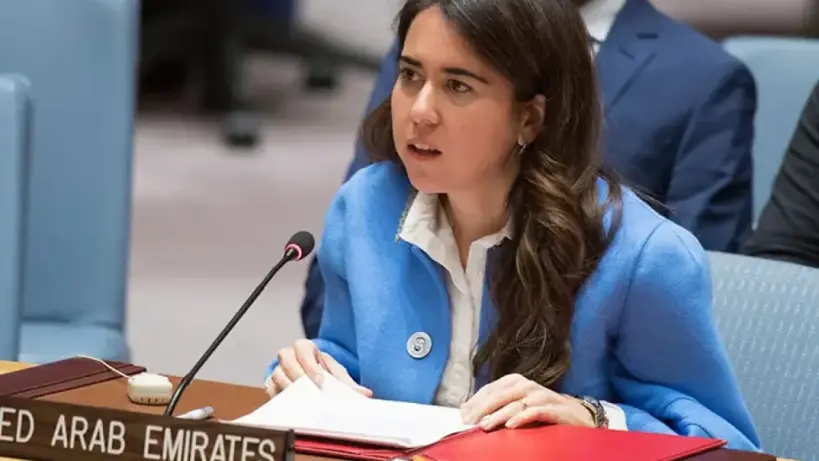
UAE diplomat Lana Nusseibeh’s work on efforts to expand humanitarian assistance to Gaza demonstrates the type of sustained diplomacy required of a UN Secretary-General, according to Dr Sara Chehab of the Anwar Gargash Diplomatic Academy.
Chehab, the academy’s Academic Director, pointed to Nusseibeh’s role in advancing UN Security Council Resolution 2720. The resolution was adopted in December 2023 and sought to increase aid to Gaza. Her assessment followed Nusseibeh’s announcement on October 21 that she was a candidate for the UN’s top post.
“Such negotiations require an understanding of what different governments can accept without losing sight of the people whose needs make agreement urgent,” Chehab told Khaleej Times.
Chehab said the work does not end once the Security Council adopts a resolution. “Adoption is only one stage. Access still has to be secured, arrangements coordinated and commitments implemented, requiring diplomatic attention long after a resolution has passed,” she said.
In an eight-page vision statement, Nusseibeh has proposed pursuing “first agreements”, including local truces, prisoner exchanges and humanitarian access. She presents those initial arrangements as possible building blocks for wider political settlements.
Chehab said that, when respected, such limited agreements can create a basis for further engagement. She also cited Nusseibeh’s involvement in discussions on Security Council reform, saying it could be relevant to the task of strengthening the UN as an institution.
Arab regional experience
Chehab, who also leads AGDA’s Women in Diplomacy program, said an Arab Secretary-General could bring familiarity with the Gulf’s expanding mediation role and its experience of sustaining contacts across political divisions.
“A Secretary-General familiar with that landscape would understand the relationships through which regional actors can bring parties together, including when formal international channels face difficulties,” she said.
She said mediation can be most effective when the person leading talks has the confidence of the parties involved. In such circumstances, the UN may contribute through humanitarian coordination, technical knowledge and assistance in carrying out agreements.
“Knowing when to lead and when to support someone else is an important part of diplomatic judgement,” Chehab said.
Chehab also referred to the UAE’s experience of institution-building and economic transformation. She said it could inform perspectives on development cooperation for countries seeking investment, employment, skills and access to technology as well as essential aid.
She cautioned, however, that no national experience can be applied universally. Closing gaps between the Global North and Global South would require listening to developing countries’ priorities and ensuring they have a substantive role in decisions concerning their development, she said.
Experience inside the UN system
“Lana Nusseibeh knows the UN from the inside, including the difficult work of keeping negotiations moving when governments appear far apart,” Chehab said.
According to Chehab, Nusseibeh’s experience in humanitarian affairs, development and institutional reform informs her proposals to restore trust in the UN through earlier action and tangible outcomes.
“Other candidates bring substantial qualifications, so the distinction is in how she connects her experience to the demands of the office,” she said.
Chehab said the central measure of success for the organisation would be whether it meets its commitments to both governments and communities.
Selection hurdles
Nusseibeh’s candidacy faces expectations in some quarters that the next Secretary-General should come from Latin America or the Caribbean, Chehab said. Regional rotation is not required by the UN Charter, she added, noting that António Guterres was chosen in 2016 despite expectations that the post would go to Eastern Europe.
“The decisive hurdle is securing sufficient Security Council support without a permanent member’s veto,” Chehab said.
She said Nusseibeh would need to build confidence among governments in different regions. “Governments must trust that she would apply principles consistently and speak frankly with every capital, without favouring supporters or penalising critics,” Chehab said.
The next Secretary-General will take over an organisation confronted by financial pressures, protracted conflicts and divisions between major powers. Chehab described a mismatch between the demands placed on the UN and what governments are willing to allow it to do.
“There is a difficult imbalance between what the world expects of the UN and what governments are currently prepared to enable it to do,” Chehab said.
She said the next leader would need sound political judgement about when private diplomacy may work and when public advocacy is required. The office-holder would also need to speak candidly to member states about the difference between the UN’s assigned responsibilities and the resources available to it.
Implications for Arab diplomacy
Whatever the result of the selection process, Chehab said Nusseibeh’s campaign would raise the profile of Arab diplomacy. It would draw attention to regional contributions in UN reform, development finance, artificial intelligence governance and youth participation, as well as mediation and humanitarian action, she said.
“It puts Arab multilateral expertise at the centre of a global conversation about international leadership,” Chehab said.
For younger diplomats, Chehab said Nusseibeh’s career illustrates how demanding assignments and long-term international engagement can prepare individuals for senior global responsibilities. She added that such visibility matters most when younger officials are given opportunities to build their own experience and undertake substantive work.
Thank you for being part of our community. Read our Comment Policy before posting.
Comments
Loading the conversation…