


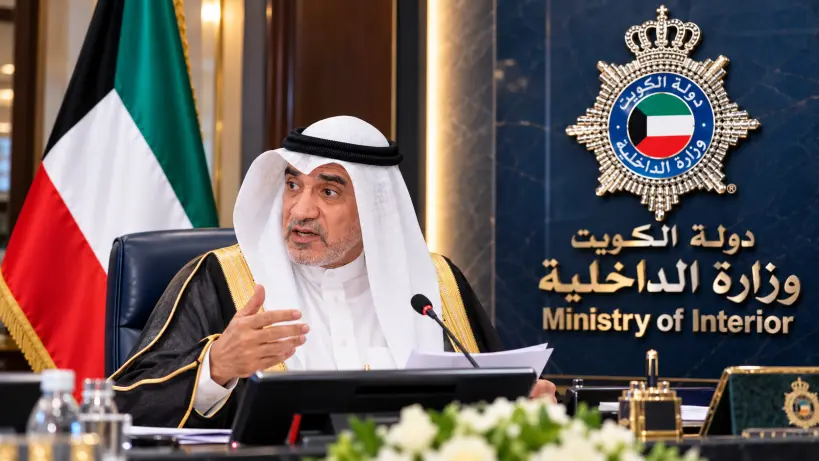
Kuwait’s First Deputy Prime Minister and Minister of Interior, Sheikh Fahad Al-Yousef, has revealed significant developments in the government’s efforts to regulate the labor market and protect expatriate workers. The minister emphasized that addressing violations affecting workers’ rights has become a major priority for the authorities.
In statements reported by Kuwait’s Al-Jarida newspaper on Monday, October 26, 2026, the minister disclosed that stricter enforcement measures had resulted in the suspension of approximately 10,000 company files. The action was linked to employers delaying workers’ salaries or failing to meet their wage payment obligations.
The minister highlighted concerns over practices in which some employers exploited workers’ financial vulnerability and dependence on their jobs. He stressed that such conduct requires firm legal intervention to protect employees, improve compliance, and prevent further irregularities in the labor market.
Kuwaiti authorities are also focusing on violations involving human trafficking, commercial concealment, money laundering, and residency regulations. These efforts form part of a wider initiative to ensure that employment practices comply with the country’s legal and regulatory framework.
Sheikh Fahad Al-Yousef emphasized that individuals and businesses operating legally should have no reason to fear enforcement measures. He indicated that the authorities intend to target violations while protecting compliant employers and facilitating legitimate business activities.
The announcement follows other discussions concerning labor market reforms, including a proposal to limit the proportion of employees from a single nationality within individual companies. However, that proposal should not be confused with a final, universally implemented regulation.
For expatriate employees, particularly those experiencing delayed salary payments or employment-related disputes, the minister’s statements underline the government’s increased focus on wage compliance and worker protection. Further implementation details should be followed through official Kuwaiti authorities.
Source: Al-Jarida Newspaper, Kuwait






Thank you for being part of our community. Read our Comment Policy before posting.
Comments
Loading the conversation…