


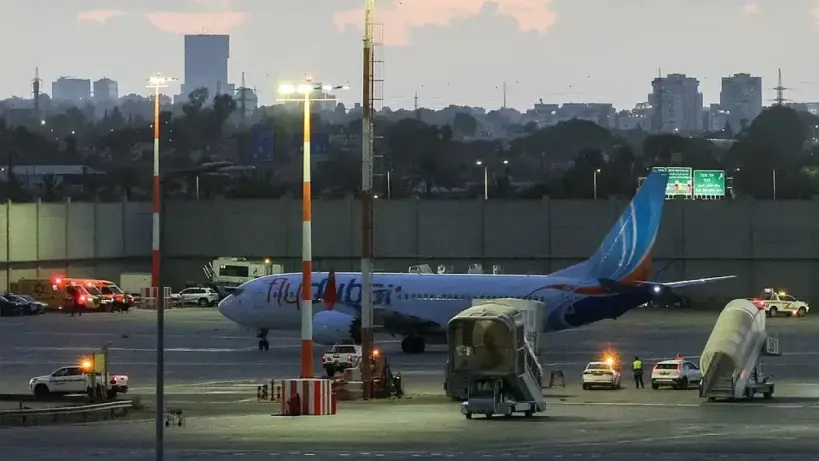
The UAE’s response to the September 30 cockpit attack on flydubai flight FZ1073 placed emphasis on releasing verified information rather than rushing to provide a full account, crisis communication experts said.
The incident involved a co-pilot who attacked the captain with a crash axe during the flight. The aircraft diverted to Tabuk, where it landed safely. The General Civil Aviation Authority (GCAA) acknowledged the incident within hours, confirmed that crew members had been injured and said an investigation had begun, while cautioning against speculation and declining to address unverified claims.
Kevin Abdulrahman, principal of Executive Authority, said the authority’s restrained initial approach reflected international crisis communication practice. “A blank in the facts is not an invitation to fill it with words,” he said. “The first statement does not need to answer every question. It needs to establish that the institution is present, that the situation is being handled.”
Flydubai chief executive Ghaith Al Ghaith later thanked the captain and passengers who helped during what he described as a “challenging situation.”
Hervé Verhoosel, a former UN Director of Communications and crisis communication expert, described the airline’s first statement, issued about 45 minutes after the landing, as a “reasonable response time” for an incident of this seriousness. “Crucially, it confirmed that the aircraft had landed safely and that passengers were safe, without speculating about the causes,” he said.
Updates released as inquiries progressed
Abdulrahman said rapid communication and factual accuracy have separate roles during a developing crisis. “Speed establishes presence. Accuracy protects credibility,” he said. “The fastest statement is useless if the next statement has to undo it.”
The UAE provided further details as the investigation developed. On October 3, UAE Attorney-General Dr Hamad Saif Al Shamsi said investigators had determined that the co-pilot had attempted to commit a “terrorist act,” while making clear that inquiries were continuing.
Verhoosel said officials need to remain careful in the early stages of an investigation, although he added that “prolonged silence can leave an information vacuum.” In his assessment, the handling of the case maintained a balance between protecting the investigation and meeting public expectations for information.
Abdulrahman said institutions can communicate effectively without disclosing all available information at once, particularly when headlines, leaks, social media posts and competing accounts are circulating rapidly. “An institution should not try to compete with all of them. It can become the source whose information remains dependable as the picture develops. That is what makes the communication sequence here useful to study,” he said.
He praised the authorities for issuing updates as facts could be confirmed. “They did not empty the file on day one,” Abdulrahman said. “They opened it one verified page at a time.”
Last week, Dr Al Shamsi said the 29-year-old Omani co-pilot had planned to hijack the aircraft and carry out a “suicide attack.” The investigation remains ongoing.






Thank you for being part of our community. Read our Comment Policy before posting.
Comments
Loading the conversation…