


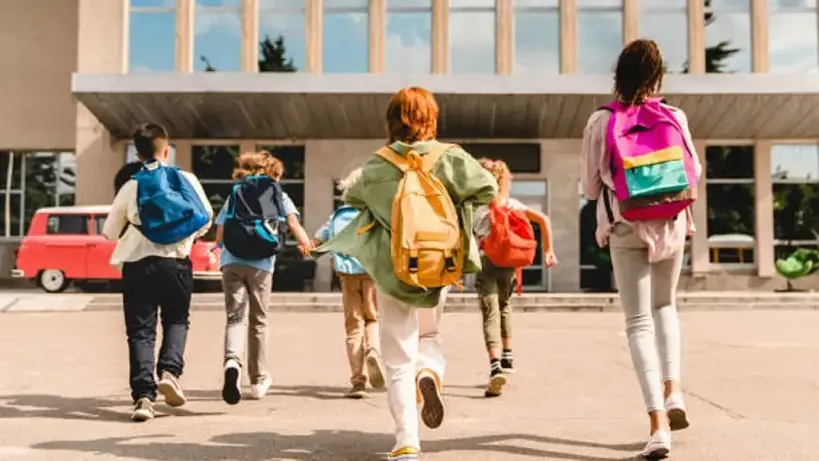
Schools in Dubai are reinforcing rules for photography and video at events, asking parents and visitors to protect the privacy, dignity and safety of all children while recording celebrations such as performances, sports days and graduations.
Schools recognise that families want to keep records of important school milestones. However, images captured at large gatherings can include children whose families have not agreed to photography or public sharing, particularly when material can be posted online within seconds.
Approaches differ between schools. Some have prohibited photography and filming on campus unless permission is specifically granted, while others set expectations that parents should take images of their own children and avoid sharing identifiable images of other pupils without consent.
Authorisation required at Dewvale School
Dewvale School in Dubai does not allow parents or visitors to take photographs or videos on its premises unless they have been authorised to do so. Principal Seema Umar said the policy reflects increased awareness of the ease with which images and videos can be distributed on social media.
“There is greater awareness around the need to protect children’s privacy, particularly as photographs and videos can be easily shared on social media,” Umar said.
She said the measure is not designed to prevent families from preserving memories. Instead, the school provides authorised occasions for parents to photograph significant events while seeking to prevent the accidental recording of children for whom consent has not been provided.
“The purpose is not to restrict parents, but to ensure that every child’s privacy, dignity and safety are consistently protected,” Umar said.
Where an unauthorised photograph or video includes other children, Dewvale School will ask the parent or visitor to delete it immediately and not distribute it. If the material has already been shared, the school will seek its removal and follow its safeguarding procedures.
“We take this seriously because every child’s privacy must be respected,” Umar said. She added that families should regard the protection of children’s privacy, dignity and safety as a shared responsibility, rather than only a school requirement.
Focus on the child being photographed
At GEMS Al Barsha National School, Principal and CEO Michelle Thomas said smartphones and social platforms have made the issue more pressing because a picture taken during a school event can quickly reach a broad audience.
“Smartphones make it incredibly easy to capture and share images instantly, and social media means that an image taken at a school event can potentially reach a very wide audience within minutes,” Thomas said.
The school sets photography and filming expectations for assemblies, performances, sporting events and other occasions involving large groups of pupils. Its own use of images is governed by the permissions families provide.
Thomas said the central consideration is respect for decisions made by families about their children’s images and online presence. “Our message is therefore not ‘don't take photographs’; it is ‘please be mindful of who else is in your photograph and how that image is used’,” she said.
Parents are encouraged, where possible, to keep their attention on their own child and not upload identifiable photos or videos of other children to social media or other public platforms unless appropriate permission has been obtained.
Thomas said schools understand the importance of family memories. “These are important memories, and we absolutely want families to celebrate them,” she said. But she noted that it can be difficult to retain control of an image once it has been published online, making digital citizenship an increasing part of safeguarding discussions in school communities.
She said a proportionate response is needed when concerns arise. A child unintentionally appearing in the background of a family photo differs from a person deliberately recording or photographing children other than their own.
“If a concern is raised, a member of staff will speak privately with the parent or visitor, remind them of the school's expectations and, where appropriate, ask them not to share the image or to delete it,” Thomas said.
Abu Dhabi schools highlight consent
Schools in Abu Dhabi are also reminding families about consent and child-protection requirements in the UAE. Abhilasha Singh, principal of Shining Star International School, said parents receive the school’s photography rules in its annual welcome email and are aware of its confidentiality agreement.
“Parents are informed about the country’s rules on child protection and safeguarding laws. Parents are informed that sharing photographs without consent may constitute an offence under UAE law,” Singh said.
Thomas said the aim is to allow parents to mark their children’s achievements without overlooking the privacy rights of pupils around them. “Ultimately, we want parents to capture the joy of their child's school experience while remembering that the child standing next to theirs has exactly the same right to privacy,” she said.






Thank you for being part of our community. Read our Comment Policy before posting.
Comments
Loading the conversation…