


In the Philippine mountain town of Sagada, families marked All Saints’ Day by lighting pinewood fires at a cemetery in the Panag-aapoy ceremony, a 122-year-old Christian tradition held in memory of the dead.
Sagada honours its dead with sacred All Saints’ Day fires
Philippines
Font
Article text size
English fonts
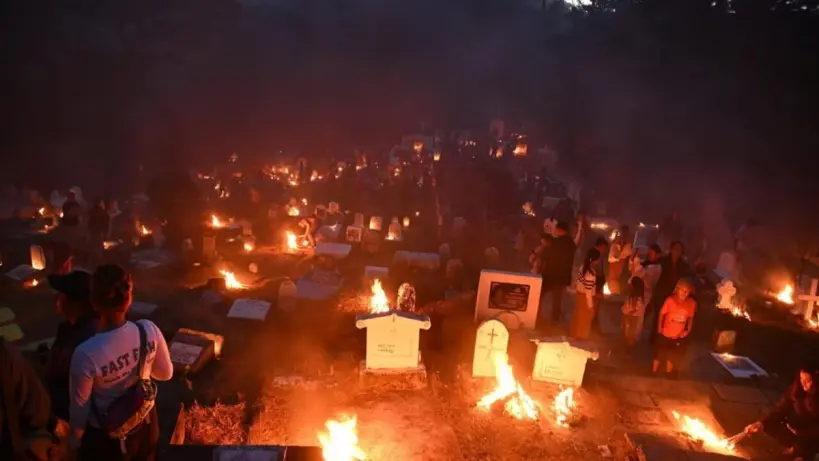
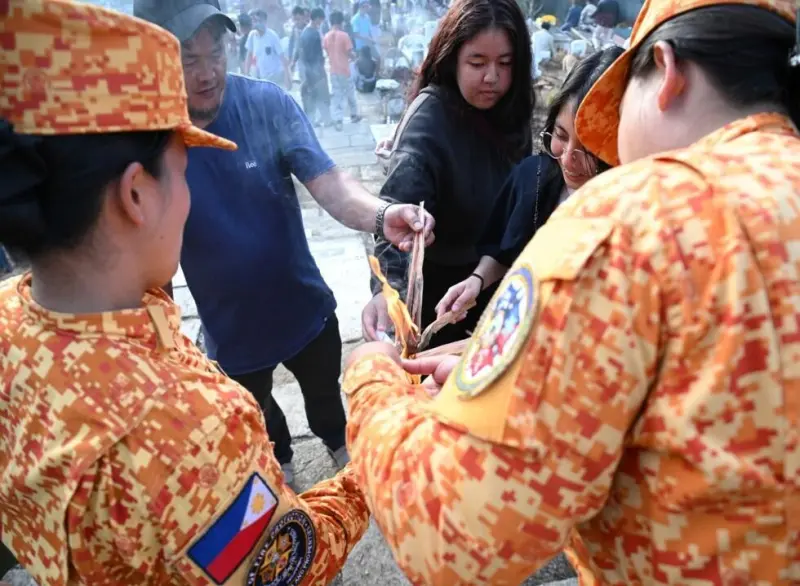
Pinewood fires are lit during Sagada’s Panag-aapoy ceremony for All Saints’ Day.
As darkness fell across the four-hectare burial ground, smoke and activity gave way to the light of fires burning among the graves of more than 2,000 people. The ceremony’s name, Panag-aapoy, means “to light a fire.”
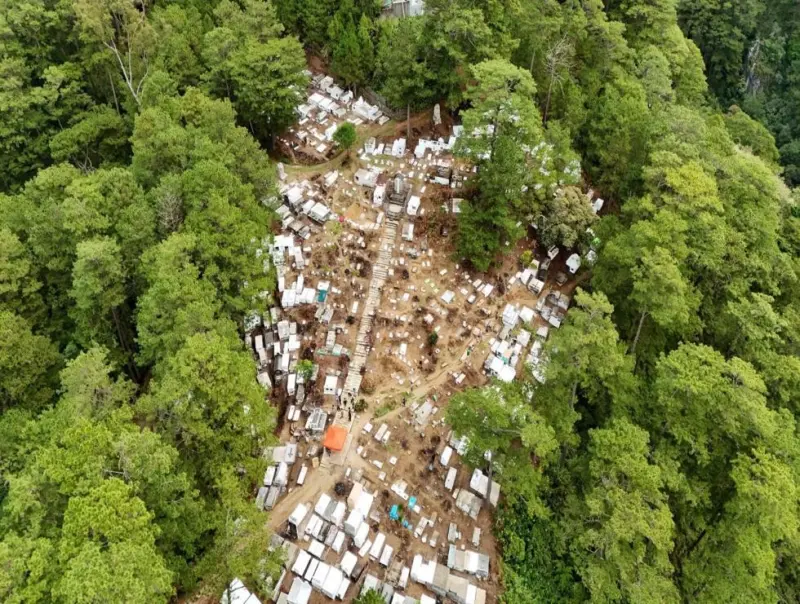
Winston Garlejo Menong, director of the Episcopal Church of Saint Mary the Virgin, which owns the cemetery, said the practice has been observed on All Saints’ Day for the past 122 years. US Protestant missionaries encouraged Sagada residents to bury their dead and light candles at graves after the Philippines was ceded by Spain to the United States in 1898, he said.
The Cordillera region’s animist communities adopted Christianity after the 1898 transfer of colonial control. This came centuries after Spanish friars had converted many people in coastal areas of the Philippines to Catholicism.
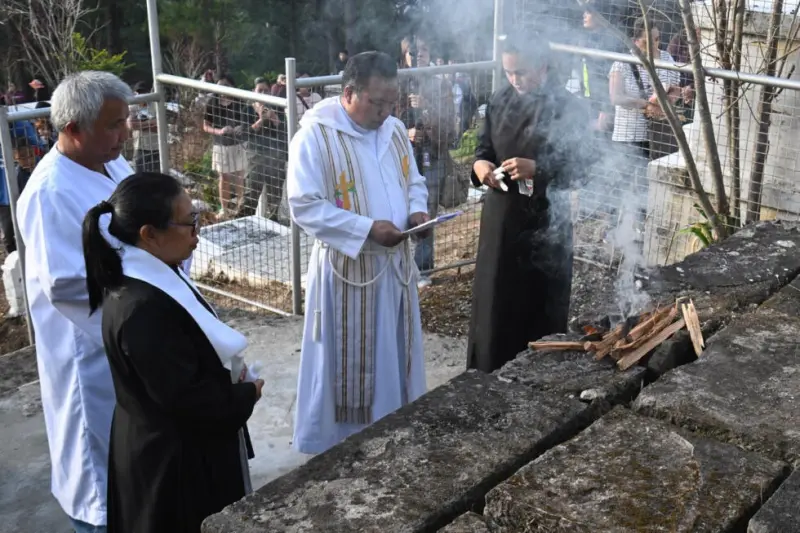
“In our Biblical context, Christ is the light,” Menong said. Whether families use candles or Sagada’s preferred pine sticks, he said the flame represents “inviting the presence of Christ with us, having fellowship with our departed loved ones”.
Pinewood in place of candles
Maria Teresa Abad, Sagada’s tourism officer, said the town’s first Christians turned to pinewood because candles were costly and could easily be extinguished by the wind. The area’s sap-rich pines, which cover the Cordilleras, burn quickly and produce a distinctive natural fragrance.
The custom has similarities with the burning of incense in Buddhist rites, although the sharp scent of pine differs from the aromatic powders used in joss sticks.
Among those attending this year was Cybil Domoguen, a 31-year-old teacher who returned to Sagada with her father and a bundle of 20-inch, or 51-centimetre, pine sticks. They were honouring the grandparents who raised her in the town.
Domoguen said the number of people who visit to watch the ritual can feel unusual. “It’s very unusual that people actually come here to watch. Usually one comes to the cemetery to pray for a dead relative,” she told AFP.
She said participants also make sure that graves without visitors are not left without a flame. “If a grave does not have any visitors, people make sure to light some sticks for them,” she said.
Domoguen said she had mixed feelings about the growing presence of tourists. “Last year, there were tourists who were taking pictures of us, which was uncomfortable,” she said, adding: “We have no problem with strangers as long as they respect boundaries.”
Restrictions to protect a sacred practice
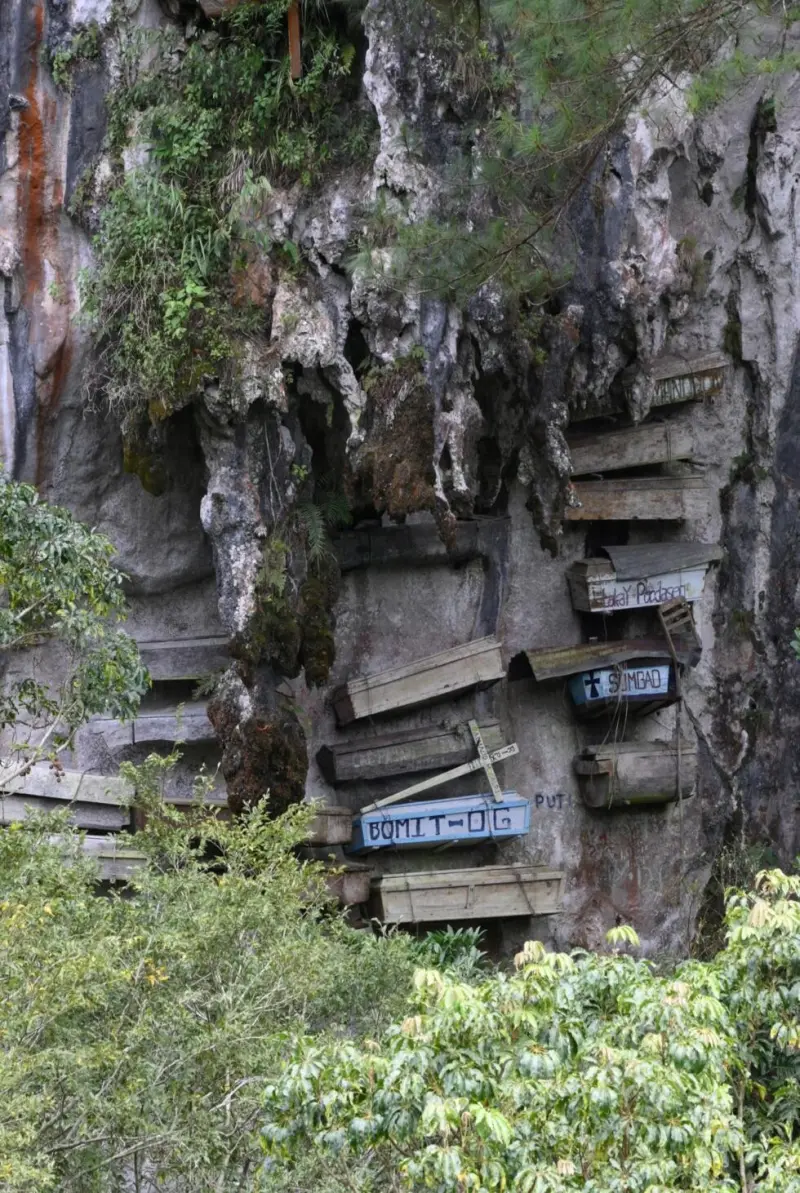
Sagada’s burial traditions predate the arrival of Protestant missionaries. Abad said residents once preferred to place coffins on cliff faces or in cave openings rather than bury their dead. The practice of hanging coffins only fully ended in 2010, though examples remain visible on cliffs near the town.
Traditional beliefs linked caves and high burial places to a spirit’s journey towards the ancestral realm, Abad said, while burial was seen as an obstacle to that passage. The elevated sites also helped protect remains from wild animals and flooding.
As Sagada became a popular refuge from tropical heat, helped by its mild climate and waterfalls, both Panag-aapoy and the hanging coffins drew increasing numbers of visitors. Residents, the church and local authorities have raised concerns about the effect of tourism on the town’s cultural heritage.
Measures introduced to safeguard the ceremony include bans on picnic mats and drone photography. Visitors carrying mobile phones have been kept away from the graves, while tourists have been told to remain quiet and observe the occasion respectfully.
“Panag-aapoy is a sacred cultural tradition, NOT a festival or a tourism event,” the Philippine tourism ministry said in a seasonal advisory.
Menong said the event’s solemn character had begun to fade as tourism increased. “The solemnity of the practice was getting lost,” he said. “It was turning into a muppet show.”
Rex Refuela, a 46-year-old visitor from Manila attending Panag-aapoy for the first time, said he supported the restrictions. “It’s OK to have some restrictions to keep and maintain its solemnity,” he told AFP. “It’s so amazingly beautiful.”
What do you think of this story?
Share your reaction, or help us correct a detail.





Thank you for being part of our community. Read our Comment Policy before posting.
Comments
Loading the conversation…