


Poland is entering a politically sensitive week after a deadly shooting in Krakow unsettled the country and intensified concern over already deep divisions.
Krakow Shooting Adds Pressure to Poland’s Constitutional Court Standoff
Poland
Font
Article text size
English fonts
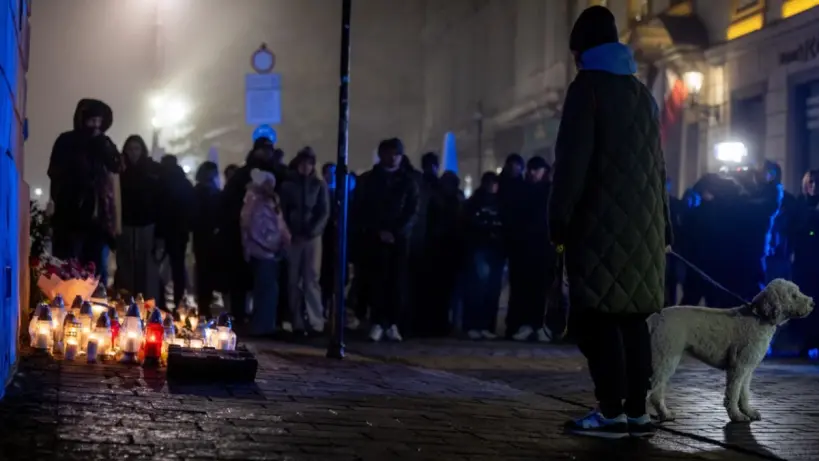
The deadly Krakow shooting comes ahead of a contentious week in Polish politics.
Six people, including two foreign nationals, were killed and about 15 wounded when a gunman opened fire at random in Krakow’s historic market square on Saturday. It was Poland’s deadliest shooting since the end of communism in 1989, according to France 24 with AFP.
The suspect was also believed to have killed three relatives—his parents and sister—at their home, about a two-hour drive from Krakow, bringing the suspected total to nine deaths. Police said on Monday that the suspect had died in hospital.
Prosecutors opened an investigation on Sunday into what they described as an “act of terrorism”. Poland’s interior minister said the suspect had been fascinated by “far-right ideologies”, a claim that has angered the conservative and nationalist opposition.
Constitutional Tribunal meeting looms
The attack comes before a high-stakes meeting of the Constitutional Tribunal scheduled for Tuesday, at the centre of a dispute between Prime Minister Donald Tusk’s government and the right-wing opposition over judicial appointments.
The opposition says the liberal, pro-European government is undermining the constitutional order. The governing coalition says it is seeking to reverse politically motivated court nominations and reforms introduced by the former nationalist government that it believes conflict with European democratic standards.
Nationalist protesters have been camped outside the court for weeks. Tensions escalated late last month when riot police blocked access and a judge appointed by the parliamentary majority said she would take over on an interim basis, suspending the incumbent judge who is close to the right and President Karol Nawrocki.
Law and Justice, or PiS, which governed Poland from 2015 to 2023, cancelled protests planned for Monday and Tuesday after the Krakow shooting. The demonstrations could resume later in the week.
Independence March raises further concerns
Attention is also focused on Wednesday’s annual Independence March, which can draw hundreds of thousands of right-wing participants, ranging from Catholic conservatives to fringe white-supremacist, antisemitic and pro-Russian far-right groups. Nawrocki has said he will attend.
Some observers have labelled the event high-risk amid concerns that participants could leave the agreed route and head towards the Constitutional Tribunal. Tusk rejected speculation that authorities would ban the march.
“No one intends to ban the Independence March,” Tusk wrote on X. “Speculation on this matter is nothing but disinformation.” He called on participants to refrain from aggression and warned against joining counter-demonstrations.
Writer Boguslaw Chrabota told Rzeczpospolita that Poland was experiencing a destructive form of polarisation that was weakening institutions and deepening social divisions. Political scientist Ewa Marciniak of Warsaw University said the Krakow tragedy could quickly become a subject of political conflict, particularly with parliamentary elections due in autumn 2027.
Source: France 24
What do you think of this story?
Share your reaction, or help us correct a detail.

Thank you for being part of our community. Read our Comment Policy before posting.
Comments
Loading the conversation…