

France is preparing for a nationwide day of strikes and demonstrations on Thursday, with authorities estimating that between 500,000 and 700,000 people could take part across the country, including up to 80,000 in Paris.
France prepares for nationwide union strike and demonstrations
Denmark France Germany
Font
Article text size
English fonts
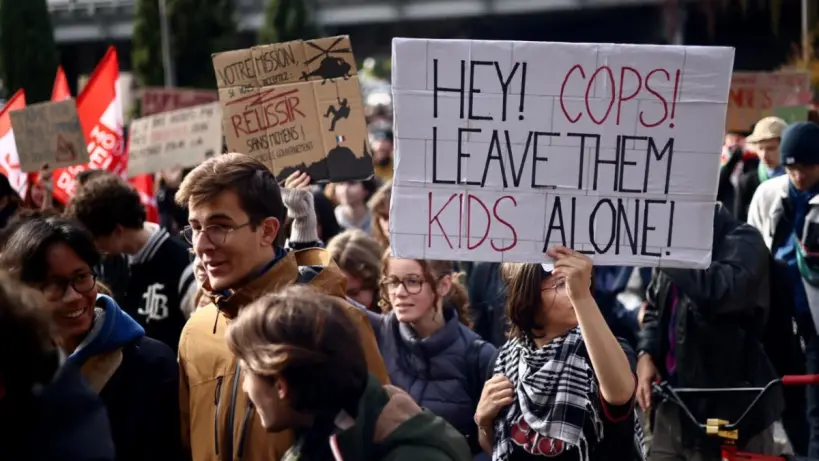
Student-led protests in France have at times led to clashes with police.
The action follows weeks of unrest in which a student movement over poor learning conditions has converged with wider frustration over living costs and inequality. The tensions culminated in major rioting on October 17, described as the worst seen in France for years.
Marylise Leon of the CFDT union said the planned action was expected to draw a substantial crowd. “It's going to be a strong mobilisation,” she said, comparing the anticipated participation with the pension reform protests of 2023, when more than one million people marched.
Education unions in both the public and private sectors have called for strike action. They are joined by unions representing railway staff, public hospital workers and postal employees.
In demands aimed at the government and employers, unions are seeking a higher minimum wage, general wage increases, tax changes and improved learning conditions for young people. They note that the minimum wage has not received a discretionary increase since 2012.
Security measures and Paris route dispute
Interior Minister Laurent Nunez said on Wednesday that 70,000 police officers and other security personnel would be deployed nationwide. He promised “an extremely firm response” to any “acts of violence” or public disorder.
Paris authorities have also altered the planned route for a major demonstration. The Paris prefecture on Wednesday banned a march between Place de la Bastille and Place de la Concorde, a route that would have passed through the city centre. Police authorised an alternative route heading east, away from central Paris.
Several unions have condemned the bans as an attempt to restrict the freedom to demonstrate, and some filed late appeals seeking to restore the original routes.
Fabrice Fort of the CGT union said support for the youth movement remained strong and that concerns were growing over limits on civil liberties. “We can feel a cumulative effect: public sympathy for the high school and university students' movement is not waning, and people are questioning restrictions on liberties, especially bans on demonstrations,” he said.
Clashes and investigations
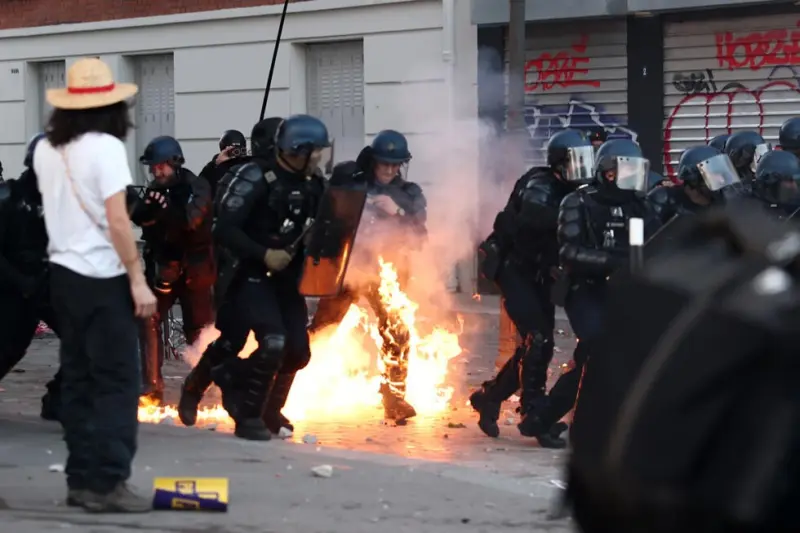
Most student-led demonstrations have been peaceful, although some protests have resulted in clashes with police. Security forces used tear gas and water cannon to disperse crowds on some occasions.
An attempted murder investigation was opened after petrol bombs were thrown at security forces in Paris on Saturday. Police tactics have also faced criticism as heavy-handed, while internal investigations have been launched into allegations that officers used brutality against demonstrators.
Several teenage protesters have been seriously injured and thousands of people have been arrested. Authorities have acknowledged failures in security and intelligence that preceded the October 17 clashes, extensive looting and vandalism of public property.
Youth-led demonstrations have also emerged in recent weeks in Denmark, Germany and Italy.
Source: France 24, reporting AFP
What do you think of this story?
Share your reaction, or help us correct a detail.





Thank you for being part of our community. Read our Comment Policy before posting.
Comments
Loading the conversation…