


Displaced families in the southern Khan Yunis camp are using homemade wind turbines assembled from salvaged debris to charge phones and power basic appliances, as Gaza’s electricity network remains severely damaged and solar equipment has become unaffordable for many residents.
In Khan Yunis, Gaza families build wind turbines from war rubble
Israel Palestine
Font
Article text size
English fonts
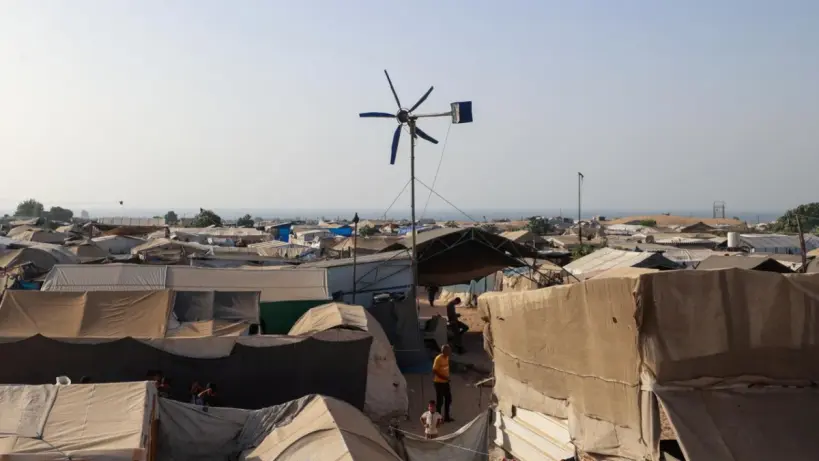
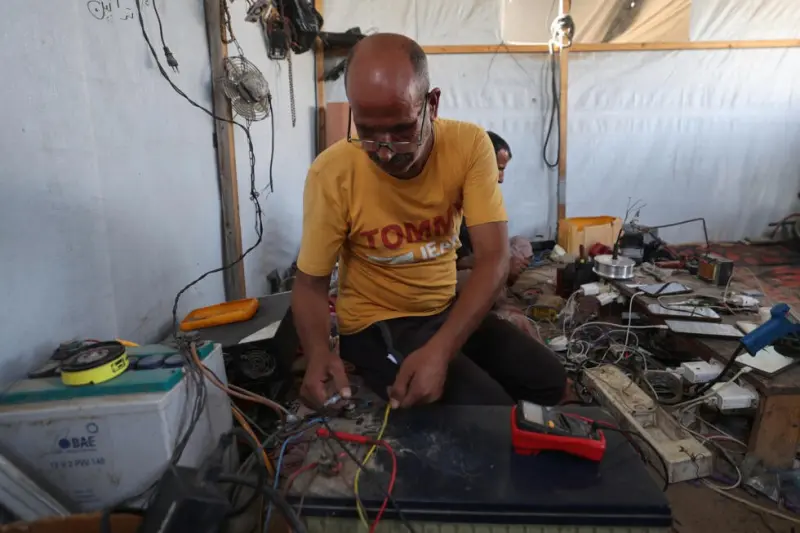
Kamal Al-Dabary assembles improvised electricity equipment in Khan Yunis.
Kamal Al-Dabary, 60, a former engineering student known locally as Abu Ayman, builds the devices from scooter motors, old water tanks and electrical parts recovered from destroyed homes. Working on the ground beside a plastic table, he connects wires and metal components with basic tools, checking the system with a multimeter before testing whether it can power small bulbs.
The turbines use pieces of water tanks cut into blades. Wind rotates the blades, which drive a motor to produce electricity. That power is routed through improvised circuits, then stored in batteries for later use.
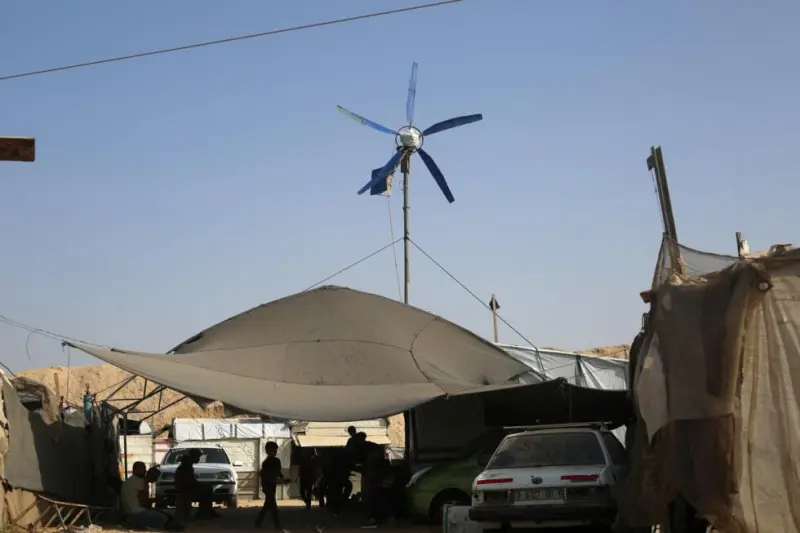
The resulting supply is limited, but it can charge mobile phones and operate lights, fans and electric razors. For people living in tents and shelters, those functions have become difficult to obtain, according to the AFP report.
Al-Dabary said his family had previously relied on a solar panel, moving it to follow the sun when such equipment was still comparatively affordable. However, he said a single solar panel now costs at least 15,000 shekels, nearly $5,000, after three years of war and restricted flows of aid and commercial goods through crossings controlled by Israel.
“We haven't had work or income for three years,” Al-Dabary told AFP. “That's when the idea of a wind turbine came to mind. Why not harness the wind? So we salvaged parts from the rubble.”
Power shortages across Gaza
The World Bank said that more than 90 percent of Gaza’s power generation and distribution capacity had been destroyed by April 2026. Much of the damage occurred in Israeli strikes that devastated homes and other infrastructure, according to the report.
The war began after Hamas’s deadly October 7, 2023 attack on Israel. Nearly all Gaza residents have been displaced at least once during the conflict. Most are now living in a small part of the territory still governed by Hamas, while Israel controls more than 60 percent of Gaza along its perimeter.
Al-Dabary said the turbines offer families a way to endure conditions in the camp. “They help us hold on... until God delivers us from this ordeal and we can return home,” he said.
For Saleh ben Hasan, 50, the improvised electricity supply has practical importance beyond lighting and communications. With healthcare and medicines difficult to access, he said it can help families operate medical equipment when necessary.
“The system has changed everything,” ben Hasan said. “If a child needs a nebuliser, a device used to inhale medicine, in the middle of the night, who else can we turn to?”
“Electricity is needed... So we turn to our brother Abu Ayman.”
Source: France 24, reporting by AFP.
What do you think of this story?
Share your reaction, or help us correct a detail.




Thank you for being part of our community. Read our Comment Policy before posting.
Comments
Loading the conversation…