


Taiwan is accelerating investment in aerial and maritime drones as it faces growing military pressure from China, prompting manufacturers from Taiwan, the United States and Singapore to compete for a major expansion of the island’s unmanned defence capabilities.
Sea drone makers target Taiwan as island expands unmanned defences
Singapore Taiwan United States
Font
Article text size
English fonts
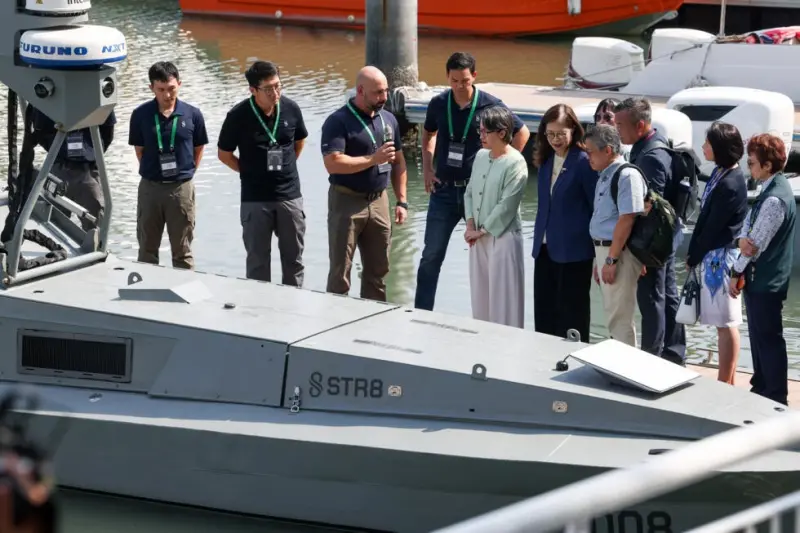
Taiwan Vice President Hsiao Bi-khim inspects a Ghostwake uncrewed surface vessel at an unmanned robotics expo in Tainan.
Taiwan’s military has said it intends to obtain more than 1,400 coastal surveillance and reconnaissance drones, more than 200,000 coastal attack drones and 1,320 one-way attack uncrewed surface vessels, or USVs. The planned purchases come as drones have been widely used in Russia’s war in Ukraine and in the Strait of Hormuz, with devastating effect.
Parliament recently approved a NT$240 billion (US$7.4 billion) drone defence bill despite political disagreement over the level of security spending. Further spending is expected to receive approval this month.
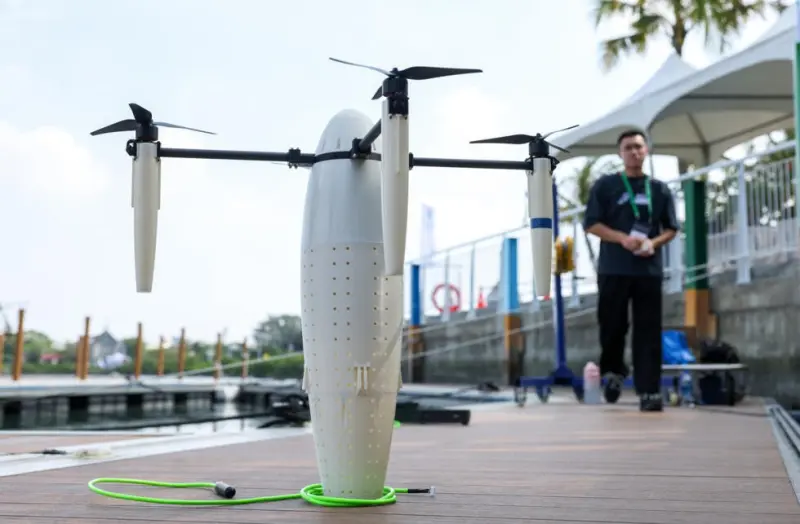
Manufacturers demonstrate sea systems in Tainan
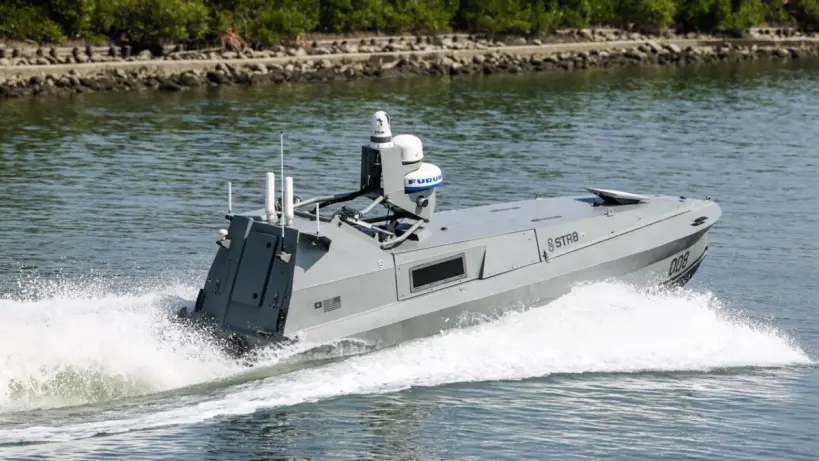
At a yacht resort in the southern city of Tainan on Monday, companies presented USVs and uncrewed underwater vehicles, known as UUVs, to Taiwanese government representatives and other officials.
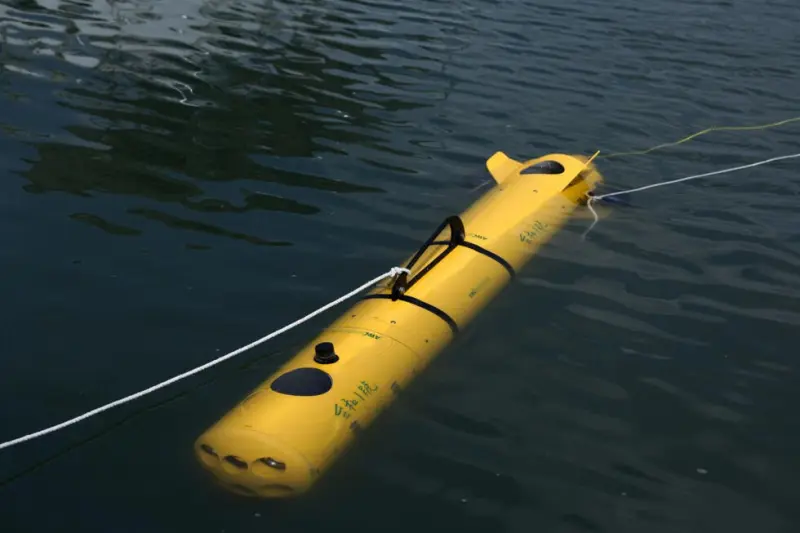
Several-metre-long surface vessels capable of carrying bombs moved through the calm marina during demonstrations intended to show their speed and manoeuvrability. Underwater systems designed for seabed inspection remained below the water’s surface.
“Taiwan has the largest procurement for USVs in the world right now... and that’s why all the companies come here,” Cathy Fang, a policy analyst at the government-backed Research Institute for Democracy, Society and Emerging Technology, told AFP at the demonstration.
Taiwan wants to establish itself as an Asian manufacturing centre for drones that do not use Chinese components. It is seeking to build on its strengths in artificial intelligence technology and semiconductor manufacturing.
The island already has experience relevant to advanced sea-drone production through its shipbuilding sector and remote-controlled toy industry. However, it is also looking to foreign companies with battle-tested platforms and stronger software systems.
Florida-based Maritime Tactical Systems recently announced an agreement under which Taiwan’s coast guard will purchase 25 of its USVs. The vessels will be manufactured in both the United States and Taiwan.
“We’re making an investment in Taiwan,” Seamus Flatley, the company’s chief growth officer, told AFP in Tainan. He said a large fleet of small USVs undertaking varied missions could reduce demands on the coast guard, navy and their conventional grey-hulled ships.
Potential role in Taiwan’s defence planning
Phil Ho, chief executive of Virginia-based USV manufacturer STR8 Industries, said uncrewed maritime systems could allow Taiwan to “project scalable force”.
The cost and production time of a sea drone vary substantially by model, ranging from thousands to millions of US dollars and from weeks to months to build. Even at the higher end of that range, they can be cheaper and faster to produce than warships or submarines.
Bryce Barros, a former US Senate national security adviser who is now with the Global Taiwan Institute, described USVs and UUVs as a relatively low-cost “game changer” in a potential conflict with China.
“Using USVs and UUVs are really important because they definitely complicate Chinese military operations and the calculus for it,” Barros said.
Su Tzu-yun, a military expert at the Taipei-based Institute for National Defense and Security Research, said the systems could also help address Taiwan’s manpower shortage, which he linked to the island’s declining birth rate.
Interest in UUVs has increased sharply since the start of the Middle East war, when Iran claimed control of the Strait of Hormuz, according to Grace Chia, chief executive of Singapore autonomous underwater vehicle company BeeX.
“We have seen a significant increase in demand as people start to realise that you can just have a very simple mine destroy a whole entire channel, and that’s where underwater robots come in to neutralise these targets,” Chia told AFP.
Analysts also identify operational challenges for Taiwan, including integrating different drone types, ensuring that systems can communicate with one another and operating without access to Elon Musk’s Starlink satellites, which have been crucial to Ukrainian military operations.
“Satellite communications for USV platforms are important,” Barros said. “But that really depends on the range of operations, and matters less for operations that are in Taiwan’s near shore within its 12 nautical mile (22 kilometre) territorial zone.”
Source: France 24 / AFP
What do you think of this story?
Share your reaction, or help us correct a detail.




Thank you for being part of our community. Read our Comment Policy before posting.
Comments
Loading the conversation…