

Donald Trump’s Republican Party suffered a major setback in the US midterm elections, a result that could encourage trade partners to challenge or delay some of the president’s demands. However, governments dealing with Washington may still proceed cautiously, given the possibility that Trump could respond more forcefully during his final two years in office.
US Midterm Results May Give Trade Partners More Scope to Resist Trump
China Japan United States
Font
Article text size
English fonts
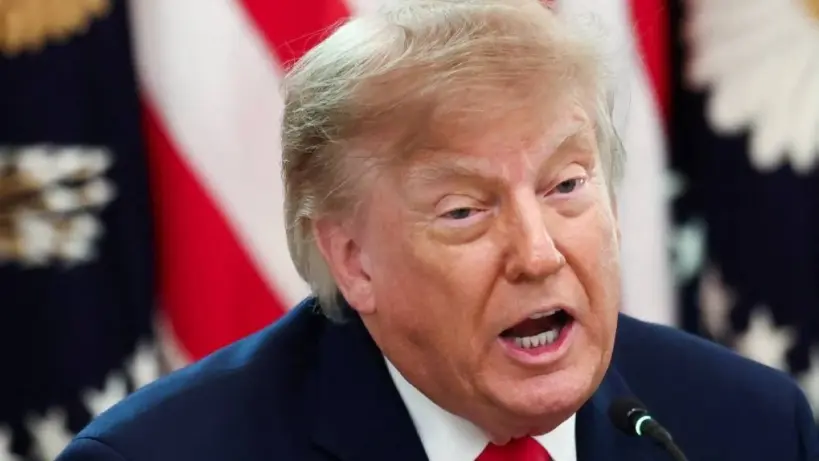
US midterm results could reshape trade negotiations involving the Trump administration.
Democrats won control of both the Senate and the House on Tuesday after voters rejected Trump’s policies, including tariffs that have been blamed, together with the Iran war, for persistent inflation. The new congressional balance could affect negotiations involving China, US allies in Asia, Europe and India.
China may see an opportunity to strengthen its position in talks with Washington. Meanwhile, Japan and the Republic of Korea could face less immediate pressure over investment commitments worth hundreds of billions of dollars, while European governments may gain greater clarity over unresolved transatlantic trade disputes.
Trade partners nevertheless remain wary that the midterm outcome will not end US protectionism. Bernd Lange, chair of the European Parliament’s trade committee, said Trump’s weakened position could make his approach harder to predict.
“US protectionism won't simply disappear,” Lange said. “A weakened Trump could become even more aggressive and unpredictable. A lame duck could quickly turn into an angry duck.”
Rajiv Bhatia, a former Indian diplomat and distinguished fellow at the Gateway House think tank, also cautioned against assuming that a Democratic victory would lead to a softer US stance. “A Democratic victory will not necessarily make Trump more accommodating towards any country,” he said.
Asian allies assess investment commitments
Japan and the Republic of Korea are among the US partners that could be seeking a less confrontational path. Japan has pledged $550bn in investments in the United States, while the Republic of Korea has promised $350bn, commitments made in agreements intended to satisfy Trump.
Heo Yoon, an economics professor at Sogang University in Seoul, said the election result could reduce the sense of urgency surrounding those pledges. “Democrats seem to perceive that the investment commitments were forced on allies,” he said.
But Kazuhiro Maeshima, a professor of US politics at Sophia University in Tokyo, said Japan would have limited room to retreat from its commitments. “The tariff issue is not over. If Japan’s response is slow, calls for additional tariffs could resurface,” he said.
The Republic of Korea has been a particular focus of Trump’s criticism of countries he considers not to have met their investment promises. Seoul recently rejected his assertion that it had agreed to finance Alaska LNG, a major pipeline project.
Ban Kil-joo, an international relations professor at the Korea National Diplomatic Academy, said congressional scrutiny of such projects could allow Seoul more time to assess them. Korea’s Foreign Ministry said it would continue discussions on economic and trade matters with the US administration, Congress and state governments regardless of changes in Congress.
European and Indian negotiations remain unsettled
A series of agreements has eased much of the trade friction between the United States and Europe and has so far curbed the effects of Trump’s tariff measures. Several issues, however, remain unresolved.
These include the prospect of US retaliation against European countries that impose a digital services tax on US technology companies, as well as the possibility of action linked to a €3bn public loan to European aircraft maker Airbus.
India, which is still negotiating trade agreements with Washington, may have an incentive to wait before making further commitments. India’s trade minister said earlier this month that drafting of the first phase of an India-US trade deal was nearing completion, while stressing that New Delhi would proceed only if it gained an advantage over competing exporters.
China faces both opportunity and constraint
China’s trade truce with Trump is due to expire in January. Beijing could try to use the president’s reduced political authority to improve its negotiating position, although a Democratic-controlled Congress may also make it more difficult for Trump to offer concessions.
Saul Eslake, an economist at Corinna Economic Advisory in Australia, said Xi Jinping was likely to consider how the election results could be used. “Xi Jinping will recognize that Trump's authority has been greatly weakened by these results, and will no doubt be thinking about ways of exploiting that,” he said.
Trump has sought to improve ties with Xi, but Democrats in Congress could constrain his ability to provide incentives in future agreements. Alicia Garcia-Herrero, chief Asia-Pacific economist at Natixis, said Democrats were unlikely to give Trump broad discretion in dealings with Beijing, noting their earlier criticism that his summits with Xi had produced limited substance on issues including artificial intelligence.
She added that Democrats were more likely to support stricter technology export controls and closer examination of AI and semiconductor supply chains. Such positions could leave Trump with less latitude to make concessions affecting those high-growth sectors.
China’s foreign ministry spokesperson Mao Ning said on Wednesday that the midterm vote was a domestic matter for the United States. Beijing, she said, would continue to manage differences with Washington while expanding cooperation.
What do you think of this story?
Share your reaction, or help us correct a detail.






Thank you for being part of our community. Read our Comment Policy before posting.
Comments
Loading the conversation…