


Dubai International Airport (DXB) has secured the top position among the world’s busiest international airports by scheduled international airline seat capacity for November 2026, according to newly published figures from OAG, a leading international aviation data provider. The achievement further strengthens Dubai’s position as a major global aviation hub connecting passengers and international markets.
Dubai International Airport Tops Global Rankings for International Airline Seat Capacity in November 2026
United Arab Emirates
Font
Article text size
English fonts
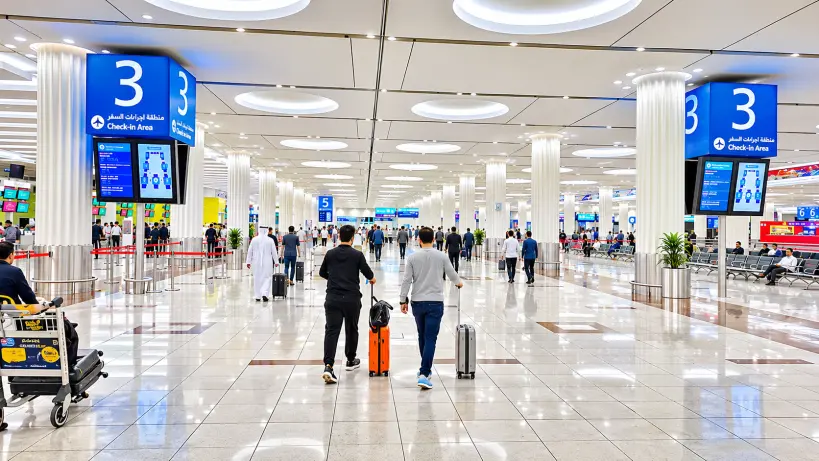
Dubai International Airport
According to the figures reported by UAE newspaper Emarat Al Youm, airlines operating at Dubai International Airport have scheduled approximately 4.47 million international departure seats during November. This represents around 8.94 million seats when both travel directions are counted, placing Dubai ahead of other major international aviation gateways.
London Heathrow Airport ranked second with approximately 3.79 million scheduled international seats, leaving Dubai International Airport with a lead of nearly 680,000 seats. The difference highlights the substantial scale of international airline operations planned through Dubai during the month.
South Korea’s Seoul Incheon International Airport secured third place with approximately 3.7 million seats, followed by Singapore Changi Airport in fourth position with 3.58 million seats. Amsterdam Schiphol Airport completed the top five with approximately 3.25 million scheduled international seats.
The remaining positions in the global top ten were occupied by Hong Kong International Airport, Istanbul Airport, Paris Charles de Gaulle Airport, Bangkok Suvarnabhumi Airport, and Frankfurt Airport. Their respective scheduled international capacities were approximately 3.19 million, 3.16 million, 3.08 million, 2.82 million, and 2.65 million seats.
Scheduled airline seat capacity is an important indicator of the scale of planned aviation operations and international connectivity. However, the figures represent seats made available by airlines rather than the actual number of passengers travelling through airports during the reporting period.
Dubai International Airport’s leading position is supported by its extensive international network and the operations of major carriers, including Emirates and flydubai. The airport continues to play a central role in connecting destinations across Europe, Asia, Africa, and other international markets.
The latest figures reinforce Dubai’s importance in the global aviation industry and demonstrate the scale of international air connectivity available through the emirate. For passengers and airlines, this extensive network remains one of the airport’s most significant competitive advantages.
Source: Emarat Al Youm, citing OAG aviation data, published November 3, 2026.
What do you think of this story?
Share your reaction, or help us correct a detail.






Thank you for being part of our community. Read our Comment Policy before posting.
Comments
Loading the conversation…