


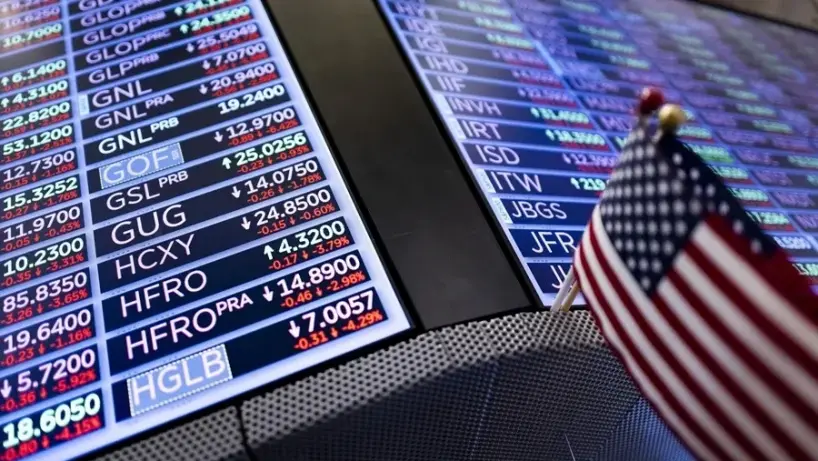
U.S. stocks suffered their sharpest daily decline since June on Friday as a sell-off in technology shares intensified concerns that investor enthusiasm for artificial intelligence may have pushed valuations too high. The S&P 500 dropped 1.8%, while the Nasdaq fell 2.9% and the Dow Jones Industrial Average lost 572 points, or 1.1%.
The S&P 500 finished at 7,580.07, down 140.32 points, and recorded its third consecutive weekly loss. The Dow closed at 51,770.31 after falling 572.25 points, while the Nasdaq shed 747.73 points to end at 25,437.00.
Despite the decline, the U.S. stock market remained 3.1% below its all-time high, a level that had lifted the value of workers' 401(k) accounts. Trading has become increasingly volatile ahead of Tuesday's U.S. elections. Concerns about AI have become an issue for voters, while President Donald Trump has historically cited stock-market performance as a measure of his success.
Intel led the losses, tumbling 28.6% in its steepest drop since 1974. The chipmaker issued a profit forecast for the final three months of the year that fell short of analysts' expectations. Chief Executive Lip-Bu Tan said the personal-computer industry continues to face pressure, even though Intel's profit for the most recent quarter was stronger than analysts had anticipated.
Amazon shares declined 1.4% after the company reported weaker profit than analysts expected. Investors were also focused on its cash use: Amazon reported consuming $42.4 billion in cash over the previous 12 months, using a measure known as free cash flow. It spent $94.8 billion on property and equipment, mainly through investments in artificial-intelligence technology.
Alphabet had added to the pressure on technology stocks a day earlier, when its shares fell more than 12% in their worst day on record. The Google and YouTube parent told investors it consumed more cash during the Northern Hemisphere summer than in the spring, citing similarly heavy AI investments.
Focus shifts to returns on AI spending
Investors have increasingly questioned whether the hundreds of billions of dollars being committed to AI will produce enough profit and productivity to justify the spending. Shares in chip companies and other businesses that benefited from the rush to build AI data centres have also come under pressure amid concerns that high interest rates could slow further data-centre expansion.
“We are moving out of the hopes and dreams phase of the AI trade and into the ‘show me’ phase,” Joe Tigay, portfolio manager at Equity Armor Investments, said in a note to investors.
Nvidia fell 4.2%. The chipmaker, which became a central symbol of the AI boom, was the largest single drag on the S&P 500, outweighing even Intel's decline.
Crypto shares also retreat
Cryptocurrency-related stocks fell after a hack at the world's largest cryptocurrency exchange. Bitcoin dropped below $77,000, compared with more than $86,000 a few days earlier this month. A U.S.-based blockchain intelligence firm said a North Korean unit was probably behind the attack, which affected more than $6 billion in cryptocurrency at Binance.
Coinbase Global lost 10.6% despite reporting better-than-expected results for its latest quarter. Strategy, which says it holds about 4% of the total bitcoin supply, declined 7.8%. The company also reported stronger profit than analysts expected and said its chief financial officer would resign next week for personal reasons.
Losses were less pronounced outside technology. Within the S&P 500, nearly as many stocks rose as fell after a number of companies reported profits that exceeded analysts' expectations.
ExxonMobil rose 2.2% and Chevron gained 1.8% after both companies posted stronger-than-expected earnings. Mondelez International advanced 3.9% after the maker of Oreo cookies and Ritz crackers reported better-than-expected growth. Colgate-Palmolive added 2.3%, helped by higher product prices across much of the world, which contributed to revenue and profit that exceeded analysts' forecasts.
Expectations for stronger corporate profits in the United States had helped push the S&P 500 to a record earlier this month, even as people around the world have been discouraged by high inflation and elevated fuel prices.
In the bond market, the yield on the 10-year U.S. Treasury fell to 4.93% from 4.98%. Treasury yields declined even as oil prices climbed, a combination that is notable because higher oil prices can worsen inflation and typically push yields higher. Brent crude rose 2.4% to $113.43 per barrel.
Associated Press journalists Yuri Kageyama and Michelle Chapman contributed to the report.






Thank you for being part of our community. Read our Comment Policy before posting.
Comments
Loading the conversation…