


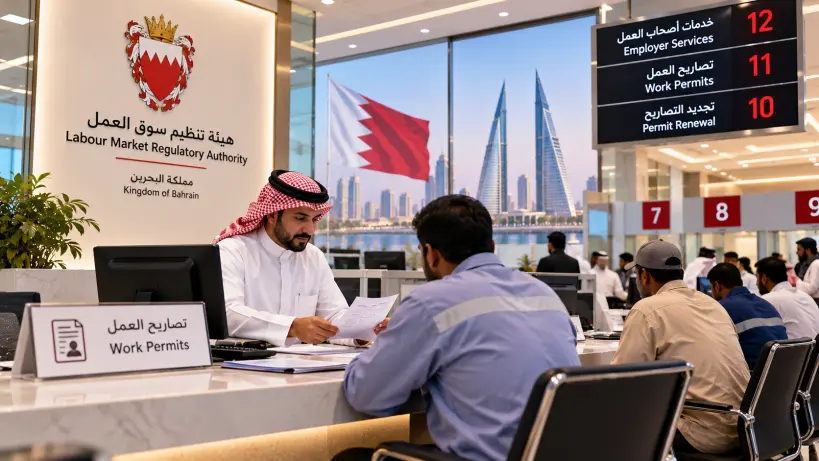
The Kingdom of Bahrain is preparing to implement the next stage of its scheduled adjustments to government fees associated with foreign workers’ employment permits, with new annual and monthly rates taking effect on January 1, 2027. The changes are particularly relevant to companies, business owners and establishments employing expatriate workers across the Kingdom.
The upcoming adjustments form part of Edict No. 79 of 2025, issued by His Royal Highness Prince Salman bin Hamad Al Khalifa, the Crown Prince and Prime Minister, on December 29, 2025. The edict followed Cabinet approval and a recommendation submitted through the Minister of Labour, Chairman of the Labour Market Regulatory Authority.
The decision entered into force on January 1, 2026, and established a phased fee schedule covering subsequent years through 2029. Therefore, the January 2027 adjustments represent the next scheduled stage of an existing government decision rather than a newly announced regulation.
According to the official legislative text, the annual fee for issuing or renewing a foreign worker’s work permit will increase from BHD 105 in 2026 to BHD 111 starting January 1, 2027. This represents an increase of BHD 6 in the annual rate specified in the decision.
The government has also approved changes to the monthly amounts payable by employers for expatriate workers. For the first five foreign workers employed by an establishment, the monthly fee per worker will increase from BHD 7.5 in 2026 to BHD 10 in 2027.
For foreign workers beyond the first five, the monthly fee will increase from BHD 12.5 to BHD 15 per worker. This means employers will face a BHD 2.5 monthly increase per worker in each of the two categories established under the government schedule.
For example, an establishment employing five expatriate workers subject to these rates would pay BHD 50 in monthly worker fees during 2027, compared with BHD 37.5 under the rates applicable in 2026. The difference would amount to BHD 12.5 each month.
An establishment employing ten expatriate workers would pay BHD 125 per month under the 2027 schedule, consisting of BHD 50 for the first five workers and BHD 75 for the additional five. Under the 2026 rates, the corresponding total would be BHD 100 per month.
The edict specifies that the annual fee covers several components associated with issuing or renewing work permits, including the work permit, entry visa, no-objection certificate, residence permit, return visa, medical examination and identity card.
It also states that the annual charge must be collected proportionally to the duration of the work permit requested, according to the permit durations offered by the Labour Market Regulatory Authority.
The phased schedule includes further annual fee increases, with the rate reaching BHD 118 from January 2028 and BHD 125 from January 2029, subject to the provisions of the official decision.
Monthly expatriate worker charges are also scheduled to rise in the following stages. Both categories will be charged BHD 20 per worker per month from January 2028 and BHD 30 per worker per month from January 2029.
The legal wording identifies the relevant fees as amounts payable by employers, making it important to distinguish these charges from personal expenses incurred by employees or other government services not directly covered by the decision.
Businesses should also distinguish the annual fee specified in the edict from the total amount displayed for individual transactions on government service platforms, where additional components, such as healthcare or administrative charges, may apply depending on the service.
Employers are advised to review expected work permit issuance and renewal expenses, check the number of expatriate workers covered by each fee category and verify applicable charges through the Labour Market Regulatory Authority before submitting applications.
The next scheduled adjustment will take effect on January 1, 2027, giving businesses an opportunity to prepare for the forthcoming financial requirements under the phased schedule originally approved in December 2025.
Source: Bahrain Prime Minister’s Office – Legislation and Legal Opinion Commission – Labour Market Regulatory Authority




Thank you for being part of our community. Read our Comment Policy before posting.
Comments
Loading the conversation…