


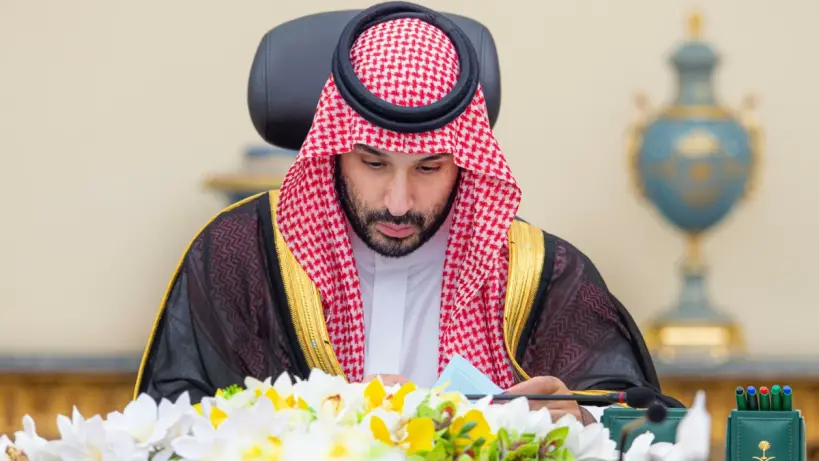
Crown Prince Mohammed bin Salman chaired a significant meeting of the Saudi Cabinet in Jeddah on Tuesday. The session focused on current regional developments and the approval of various developmental and regulatory decisions. Among these were measures to support individuals with disabilities and the establishment of regulations for the National Falcon Center.
At the beginning of the meeting, the Crown Prince briefed the Cabinet on messages received by King Salman bin Abdulaziz Al Saud and himself from several leaders, including Zimbabwe's President Emmerson Mnangagwa, Rwanda's President Paul Kagame, Uzbekistan's President Shavkat Mirziyoyev, and Japan's Prime Minister Sanae Takaichi.
Condemnation of Iranian Attacks
The Crown Prince also updated the Cabinet on a phone call with UAE President Sheikh Mohammed bin Zayed Al Nahyan. During this call, both leaders condemned recent Iranian attacks targeting the UAE, emphasizing Saudi Arabia's solidarity with its neighbor to safeguard its security and stability.
Given the current regional tensions, the Cabinet emphasized the importance of reducing conflict and supporting Pakistan's mediation efforts along with diplomatic initiatives to achieve a political resolution that maintains regional peace.
The Cabinet reiterated the need for international maritime traffic in the Strait of Hormuz to return to normalcy as it was before February 28, ensuring ships can pass safely without restrictions.
Support for People with Disabilities
In a notable social decision, the government agreed to cover costs associated with visa issuance, renewal, and residency for domestic workers employed by individuals with disabilities in need. This initiative aims to ease financial burdens and improve living standards for this vulnerable group.
Falconry and Charitable Donations
The Cabinet also approved regulations governing charitable donations to enhance governance and transparency within this sector. Additionally, they established guidelines for the National Falcon Center to support falconry activities while preserving cultural heritage linked to this traditional sport.
International Collaboration
Information Minister Salman Al-Dosari highlighted results from Saudi Arabia's participation in various international meetings aimed at strengthening cooperation with friendly nations. The session saw approvals of numerous agreements including:
- An agreement with India for mutual visa exemptions for diplomatic passport holders.
- A customs cooperation agreement with Tunisia.
- A legal cooperation memorandum of understanding (MoU) with Pakistan.
- A mining cooperation MoU with Brazil.
- An MoU concerning halal certification between Saudi Arabia and Turkey.
Other approvals involved MoUs in industrial security, postal services, knowledge sharing, internal auditing, and agricultural development.
Local Initiatives and Environmental Efforts
The council reviewed performance indicators across key sectors reflecting progress in national strategies. They noted achievements such as expanding protected areas fourfold, rehabilitating over a million hectares of desert land, planting 159 million trees using renewable water sources, and releasing thousands of endangered species into their natural habitats.
The launch of "Saudi Environment Week 2026" was acknowledged as part of ongoing efforts to foster community involvement in environmental protection.
Appointments and Administrative Decisions
The Cabinet appointed Dr. Kamel bin Mohammed bin Ahmed Shikho as a board member of the National Center for Meteorology. They also endorsed financial statements for several universities over previous fiscal years. Furthermore, promotions included Nawaf bin Qaed Al-Ghubaini Al-Otaibi as Senior Business Advisor at the Ministry of Interior and Faisal bin Saad Al-Fardan Al-Qahtani as Financial Advisor at the Ministry of Finance.




Comments
Log in to write a comment