


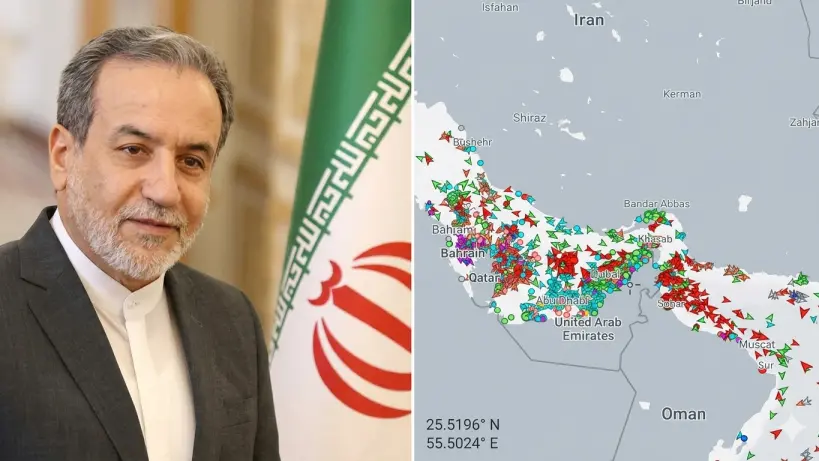
Iranian Foreign Minister Abbas Araghchi announced on Friday a significant decision to fully reopen the Strait of Hormuz to all commercial vessels throughout the remaining duration of the ceasefire, a move that aligns directly with the ongoing ceasefire in Lebanon and signals a broader shift toward regional de-escalation and stability in critical maritime corridors.
Araghchi stated that the decision reflects Iran’s commitment to maintaining calm and ensuring uninterrupted maritime navigation, emphasizing that commercial ships will be allowed to pass freely through the Strait of Hormuz without restrictions during the ceasefire period, a development that holds major implications for global shipping lanes and energy supply chains.
He further clarified that vessel transit will follow the coordinated route previously outlined by the Iranian Ports and Maritime Organization, indicating a structured and regulated navigation system designed to maintain safety, optimize traffic flow, and minimize potential risks while ensuring compliance with established maritime standards.
The announcement comes at a highly sensitive geopolitical moment, as it is closely tied to the ceasefire developments in Lebanon, highlighting a connection between political agreements and economic measures, and reinforcing the importance of keeping vital maritime routes open to sustain global trade and prevent disruptions in international markets.
This move is widely interpreted as a strategic signal to the international community that Iran intends to preserve stability in one of the world’s most critical shipping passages during this period, while also making it clear that continued access to the Strait of Hormuz is directly linked to the sustainability of the ceasefire, placing this decision at the center of upcoming regional and global economic developments.





Comments
Log in to write a comment