

Oil prices fell by more than 3% on Monday as rising Middle East supply and the reopening of Libya’s Sharara pipeline offset concerns over attacks on shipping and refinery infrastructure in the region.
Oil falls more than 3% as Sharara pipeline restart adds to supply outlook
Libya Russia Turkey
Font
Article text size
English fonts
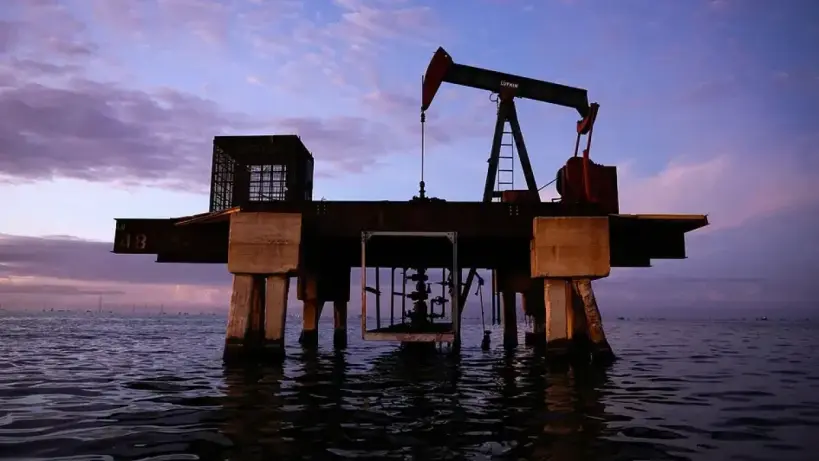
Brent and WTI crude prices declined as Libya’s Sharara pipeline resumed flows.
Brent crude futures settled into the decline at $89.32 a barrel by 12:02 p.m. EDT, down $3.25 or 3.51%, while US West Texas Intermediate futures lost $2.97, or 3.56%, to $80.44 a barrel. The fall came as traders assessed additional crude flows alongside continuing security risks around regional energy routes.
Earlier in the session, Brent reached $88.60 a barrel, its lowest level since August 27. WTI fell to $79.95 a barrel, its lowest since August 26.
Sharara pipeline resumes flows
Libya’s Sharara oil pipeline has reopened, and crude has started flowing into storage tanks at the Akakus facility in Zawiya, the chairman of the National Oil Corporation told Reuters.
JPMorgan expects oil futures to decline to the high $70s in the first half of 2027 because of an estimated supply surplus. The bank expects higher Middle East production outside Iran next year, together with additional supply from the Americas led by the United States.
Bank of America said geopolitics would remain the key driver of oil prices. Relatively low global inventories, it said, leave much of the world vulnerable to supply disruptions.
Chris Beauchamp, chief market analyst at IG, attributed part of the price decline to growing signs of a supply glut and said it appeared less likely that Trump would launch another attack.
Shipping and refinery risks remain
Regional security concerns persisted despite the supply outlook. On Sunday, the Iran-aligned Houthi movement said it had attacked a Saudi Arabian oil refinery, while the UK Maritime Trade Operations reported multiple attacks on shipping in the Gulf and near the Strait of Hormuz over the weekend.
Bahrain said an Iranian attack struck a civilian industrial facility on Saturday. Iran’s Revolutionary Guards said they had launched a missile-and-drone assault on US military positions in the kingdom, which hosts the US Navy’s 5th Fleet.
PVM analyst Tamas Varga warned against assuming that supplies would move without disruption. “It would be irresponsible to conclude that oil will now be supplied uninterruptedly and in vast volumes. Iranian attacks on ships transiting the Strait of Hormuz are taking their toll,” he said.
Ukraine reports strikes on Russian oil facilities
Elsewhere, Ukraine’s military said it struck Russia’s Lukoil oil refinery in Perm overnight, damaging three processing units. Ukraine’s General Staff said on Telegram that the Kaleykino oil pumping station in Tatarstan was also hit, marking the second strike on the site in four days, and that four reservoirs were damaged.
Russian oil exports from its main Baltic and Black Sea terminals are facing growing delays because of bad weather and persistent Ukrainian drone attacks, according to traders and people with direct knowledge of loading schedules and shipping data.
COP31 ends without fossil-fuel agreement
In Turkey, talks at the COP31 global climate conference collapsed on Sunday for the first time since 2009 after countries failed to agree on a deal including a statement on phasing out fossil fuels.
Saudi Arabia and other major oil-producing countries have said fossil fuels will retain a role in the economy for the foreseeable future. Conference observers said they lobbied to exclude any reference to fossil fuels from the text.
OPEC+ ministers will hold a series of meetings on November 29 to decide the group’s output policy for 2027. The group includes OPEC members and other oil producers, including Russia.
What do you think of this story?
Share your reaction, or help us correct a detail.






Thank you for being part of our community. Read our Comment Policy before posting.
Comments
Loading the conversation…