


An investing commentary uses Wayne Gretzky’s advice on anticipating the next play, echoed by Warren Buffett, to argue for holding stocks over the long term rather than attempting to time market moves.
Wayne Gretzky’s maxim underpins a case for long-term S&P 500 investing
Font
Article text size
English fonts
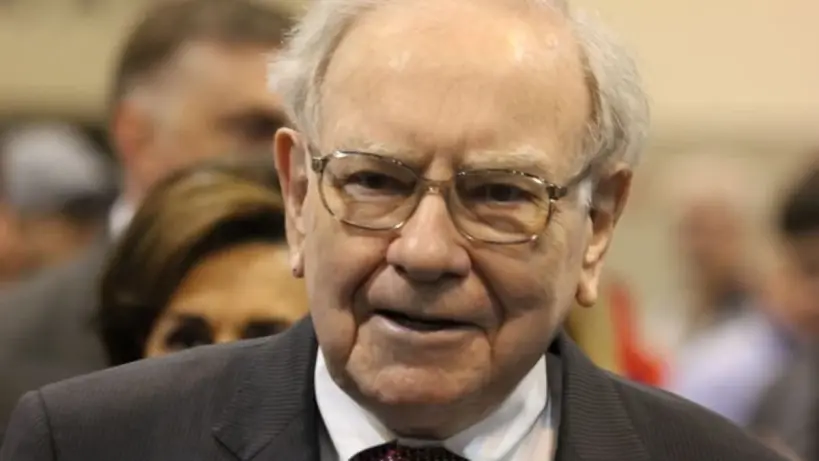
Wayne Gretzky’s maxim is used alongside Warren Buffett’s 2008 commentary on investing.
The central case for Wayne Gretzky investing is that investors should look toward future earnings and economic growth, rather than make decisions solely on daily news or recent market activity. The commentary cites the S&P 500’s 9.98% annualized return over the past 98 years as support for a long-term approach.
Gretzky played 20 seasons in the NHL, appearing in 1,487 games and recording 894 goals and 1,963 assists. His 2,857 points amounted to about 1.92 points per game. The hockey player’s ability to anticipate where the puck would go and move into position is presented as the basis for an investing comparison.
Buffett quoted Gretzky in a 2008 opinion article for The New York Times: “I skate to where the puck is going to be, not to where it has been.” The investing argument follows the same logic: investors allocate capital to companies and sectors based on expectations for future earnings growth, not only on what is happening in markets today.
Looking beyond daily market news
Investors continually assess which businesses may continue expanding, which industries could benefit from positive economic changes and which countries might be positioned for a stock-market rise. The commentary argues that this means seeking the places where the “puck is going to be,” rather than following the areas currently attracting attention.
It acknowledges that negative headlines can make a market crash appear imminent. Its view is that stock markets are forward-looking, so an investor putting money into shares should be prepared to leave it invested for five, 10, 20 years or longer. That money is making a long journey into the future, the commentary argues, even if a market decline occurs the following day.
The S&P 500 delivered annualized returns of 9.98% over the past 98 years, according to the article. That span included the Great Depression, World War II and the 2020 pandemic. The commentary describes a long-term investment in stocks as generally a good bet and argues that investors should remain optimistic about the market’s future.
Buffett’s warning on market timing
Buffett used Gretzky’s maxim in 2008 to caution against holding cash while waiting for reassuring economic or market news. He wrote: “Those investors who cling now to cash are betting they can efficiently time their move away from it later. In waiting for the comfort of good news, they are ignoring Wayne Gretzky’s advice: ‘I skate to where the puck is going to be, not to where it has been.’”
The commentary applies the quotation to market timing, or trying to choose the precise moment to invest. Like a puck moving around an NHL rink, markets can move quickly. The S&P 500 can decline, but it can also rebound before an investor waiting on the sidelines has bought shares.
It cites Fidelity research based on historical S&P 500 returns from the end of 1987 through the end of 2025. Over those 38 years, an investor who missed the index’s five best days would have had overall returns 38% lower, according to the research. The article uses that comparison to support the view that “time in the market” is preferable to “timing the market.”
Rather than waiting to identify the exact right day to buy, the commentary recommends putting available money to work as soon as possible and allowing it to remain invested over a longer period.
Vanguard S&P 500 ETF as an example
The commentary presents the Vanguard S&P 500 ETF, traded as VOO on NYSEMKT, as one possible long-term investment. The fund has produced annualized gains of about 14.8% during the 16 years since its inception in September 2010.
It also considers a less favourable outcome over coming decades, in which the Vanguard S&P 500 ETF delivers only the stock market’s longer-term annualized average of 9.98%. The article argues that such a return could still increase an investor’s wealth over time.
A low-cost index fund such as VOO does not require investors to select individual companies or sectors. Instead, the commentary describes it as a long-term bet that the stock market will place capital in companies positioned to profit from the future economy. In that sense, it says, an S&P 500 ETF can place money where the puck is expected to be.
Stock Advisor promotion and disclosures
The article also includes a Motley Fool Stock Advisor promotion. It says the service’s analyst team had identified 10 stocks it believed were the best investments to buy at the time, and that the Vanguard S&P 500 ETF was not among them. The promotion claims the 10 selections could produce substantial returns in the coming years.
It cites hypothetical results for two previous recommendations: US$1,000 invested when Netflix appeared on the list on December 17, 2004 would have grown to US$305,941, while US$1,000 invested when Nvidia was selected on April 15, 2005 would have reached US$771,325.
The promotion states that Stock Advisor’s total average return was 719%, compared with 192% for the S&P 500, with figures current as of November 22, 2026. Ben Gran, the article’s author, has no position in any of the stocks mentioned. The Motley Fool says it holds positions in and recommends the Vanguard S&P 500 ETF.
What do you think of this story?
Share your reaction, or help us correct a detail.
Thank you for being part of our community. Read our Comment Policy before posting.
Comments
Loading the conversation…