


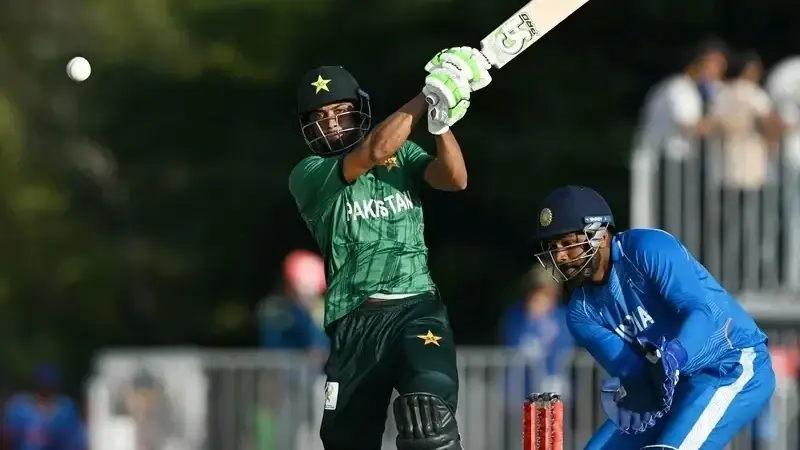
Revealed during the Asian Games 2026 Men's T20 final in Nisshin, Hasan Nawaz produced one of the most blistering solo counterattacks in recent rivalry history, smashing 96 runs off just 51 balls against India.
Despite Pakistan falling 19 runs short in their pursuit of 212, Hasan Nawaz single-handedly reshaped the narrative of a match that appeared lost early in the chase.
In a related context, Pakistan’s top order crumbled under the pressure of a massive 212-run target, leaving the middle order exposed against India's disciplined spin and seam attack.
However, entering at number four, Hasan Nawaz changed the momentum with raw power hitting, striking 5 fours and 7 massive sixes to keep Pakistan's gold medal hopes alive until the closing overs.
read Also: Why West Indies' 700-Run Spectacle Failed to Stop India's Modern ODI Dominance.
Furthermore, tactical analysis highlights how Hasan Nawaz systematically targeted India's main bowling options during the middle overs.
By building a crucial 87-run partnership with Saim Ayub, Nawaz exploited the shorter boundaries at Aichi Prefectural Korogi Sports Park, forcing India's captain to frequently alter field setups and burn through key overs earlier than planned.
Analytically speaking, Nawaz's 188.24 strike rate under immense final-match pressure proves that Pakistan's middle-order approach is shifting toward aggressive, intent-driven white-ball cricket.
While India ultimately secured the gold medal, Hasan Nawaz's lone-hand resistance exposed clear areas of improvement for India's death bowlers when defending totals above 200.
From an instructional and analytical perspective, bowling units facing Hasan Nawaz in future T20 series must avoid pitching full in his hitting arc.
Teams need to employ wider line-and-length bowling mixed with hard back-of-a-length deliveries, as his ability to clear the ropes straight down the ground makes conventional middle over bowling strategies obsolete.






Comments
Log in to write a comment