


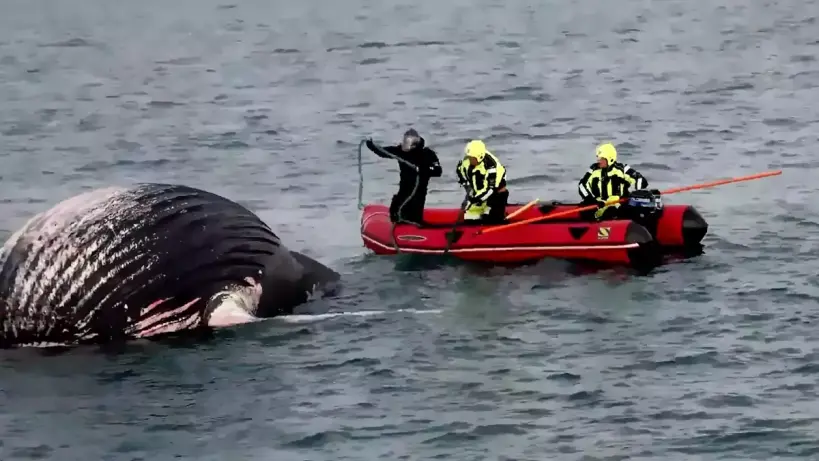
SYDNEY—The government of New South Wales has issued out an emergency maritime alert, asking people to close several iconic beaches south of Sydney right now. The unusual action was taken after a big, decaying humpback whale corpse washed up on shore, which led to a dangerous "feeding frenzy" among some of the ocean's most dangerous predators, like the Great White and Bull sharks.
The Discovery at Era Beach
People found the tragic thing at Era Beach over the weekend. This is a rough and remote area of the Royal National Park's beach. The whale was already severely decayed and weighed many tons when it hit the rocks. This biological state is particularly essential because when a whale dies, it releases a lot of blood, oils, and noxious gases into the ocean. These "scent trails" can stretch for kilometers and work as biological beacons for sharks all around the Pacific shelf.
A dangerous place when predators are nearby
It was just a few minutes after the dead shark washed up on the beach that rangers from the National Parks and Wildlife Service (NPWS) and Surf Life Saving NSW worked together to report a disturbing surge in shark sightings. Aerial surveillance and drone pictures showed a number of huge sharks, some of which were considered to be more than four meters long, swimming in the surf zone and on the rocky platforms around the whale.
Authorities are most worried about the Great White Shark because it is known to move down the East Coast of Australia. Whales have a lot of fat that is heavy in calories, which makes these sharks particularly sensitive. The Bull Shark, which is known for being aggressive and hunting in shallow, murky waters, has also been observed nearby, making the region perilous for both swimmers and surfers.
Official Beach Closures and Safety Rules
A number of well-known beaches are now "Hard Closed" until further notice since the threat is getting worse. This includes:
- Garie Beach
- The Era of the North and South
- Fire on the Palms
- Wattamolla is a famous place for tourists to go.
"Our lifeguards and drone operators are seeing a lot of shark activity," said the CEO of Surf Life Saving NSW in a solemn voice. We can't physically block off the ocean, but we want to make it clear that swimming in these locations is quite risky. You don't want to be in the water when a 4-meter-long Great White shark is eating.
The Issues with Getting Rid of
It would be hard to get rid of a whale carcass at the Royal National Park. Heavy machinery can't get to Era Beach to bury the victims because the only way to get there is by sea or by steep trekking trails. NPWS officials are talking about whether to let nature take its course or undertake a sea-tow, which is a risky operation that involves pulling the body out into the open ocean. This could attract sharks further closer to coastal towns that are nearby.
The Humpback Migration in Relation to the Environment
This happens every year as thousands of humpback whales migrate from the icy waters of Antarctica to warmer breeding grounds in the north. It's typical for whales to wash up on shore, but this one did so near to Sydney's metropolitan border. This highlights how tense the interaction is between human recreational areas and natural processes.
Advice for Everyone
Authorities are asking hikers and people who want to go to the Royal National Park to stay away from the shore and the "Coast Track" near the affected areas. The smell of the dead animal plus the presence of top predators make the area perilous even for those who are on top of the cliffs. The beaches will continue blocked until the body is gone or eaten and the number of sharks returns back to normal.
People are encouraged to check the SharkSmart app and official government social media accounts for updates in real time.






Comments
Log in to write a comment