

Ontario Premier Doug Ford and Alberta Premier Danielle Smith used a Toronto discussion on November 23, 2026, to press for fewer barriers to interprovincial trade, while acknowledging that provincial rules and regulatory systems remain difficult to change.
doug ford and Smith Push Interprovincial Trade Reform as Barriers Persist
Canada
Font
Article text size
English fonts
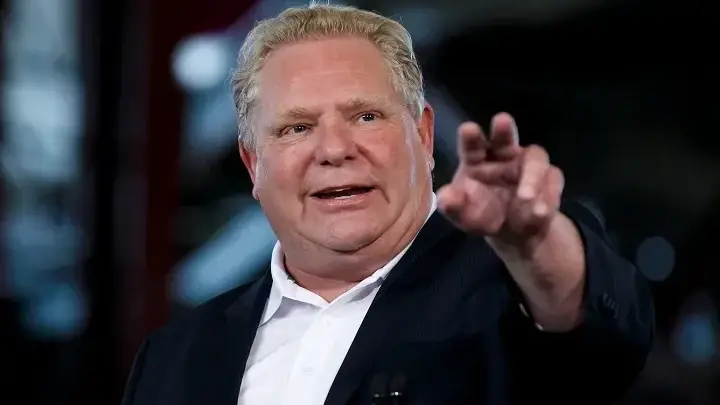
Doug Ford and Danielle Smith discussed reducing barriers to trade between Canadian provinces.
At a fireside chat hosted by the Toronto Region Board of Trade, Ford and Smith outlined efforts by Ontario and Alberta to ease trade and labour mobility between provinces. Their push builds on a 2025 memorandum of understanding signed months after U.S. President Donald Trump launched a trade war with Canada, but both leaders described substantial obstacles to translating political agreements into everyday regulatory change.
Professional recognition faces regulatory obstacles
Ontario and Alberta have moved to recognize regulated professions, including doctors, nurses and skilled trades. Smith said implementation has nevertheless revealed friction between provincial policy objectives and independent regulatory bodies.
Smith cited Alberta’s medical licensing rules as an example. She said the College of Physicians and Surgeons of Alberta, which is overseen by an independent board, had previously limited doctors from outside the province to treating 12 patients in Alberta. According to Smith, the rule prevented Alberta from using physicians elsewhere in Canada for virtual appointments until it was removed in April.
She described the licensing issue and alcohol distribution rules as evidence of the difficulty of unwinding internal barriers. Premiers can decide to open trade, Smith said, yet still face “mountains and mountains of legislation, regulation and agency directives” that are difficult to rewrite quickly.
Ford argued that Ontario had gone further than other provinces by eliminating all of its trade exemptions. Calling Ontario the largest province with “zero exceptions,” he maintained that doctors, nurses and skilled trades workers qualified in Alberta should be welcomed in Ontario.
Ford also criticized exemptions that remain elsewhere, singling out Quebec despite Ontario having signed 10 memorandums of understanding with other provinces and territories. He estimated that internal barriers cost the Canadian economy $200 billion and argued that the rules can make it easier to trade internationally than across provincial borders.
Alcohol access and pipeline plans
Alcohol distribution illustrated the uneven market access that remains between provinces. Smith said Alberta sells more than 1,000 types of Ontario alcohol, while the Liquor Control Board of Ontario stocks only 53 Alberta alcohol products.
Ford pointed to Ontario’s broader retail alcohol expansion, which brought wine, beer and spirits into grocery stores and about 8,000 convenience stores. The LCBO still controls the purchasing and sale of spirits. Ford argued that protectionism does not work either within Canada or across North America.
Both premiers also supported stronger east-west energy infrastructure, including a crude oil pipeline from Alberta to refineries in southern Ontario. They backed the route under the Northern Shield Energy Corridor banner. Supporters view domestic pipeline capacity as an internal trade link and a hedge against external trade pressure.
Carbon pricing and U.S. trade talks
The fireside chat also connected interprovincial trade to industrial competitiveness and cross-border trade with the United States. Ford said he had met on the preceding Friday with federal Industry Minister Mélanie Joly and Stellantis over plans to sell the automaker’s idled Brampton plant.
Addressing carbon pricing, Ford argued that federal greenhouse-gas taxation was pushing investment out of Canada. He expressed confidence that Ottawa would scrap the tax to help protect the auto and steel sectors.
Smith separately offered her view on negotiations with Washington, suggesting there was a window before Democrats take over the U.S. Congress in which Trump could agree to a deal favourable to U.S. interests. Her remarks reflected the parallel challenge for provincial leaders of reducing internal trade barriers while navigating tariff and trade dynamics south of the border.
What do you think of this story?
Share your reaction, or help us correct a detail.





Thank you for being part of our community. Read our Comment Policy before posting.
Comments
Loading the conversation…