


Rawalpindi has 39 surviving Hindu temples, but only three remain in use by the city’s shrinking Hindu community, while many others have been turned into homes, shops, warehouses or schools.
Rawalpindi’s 39 surviving Hindu temples reflect a fading shared religious past
India Pakistan
Font
Article text size
English fonts
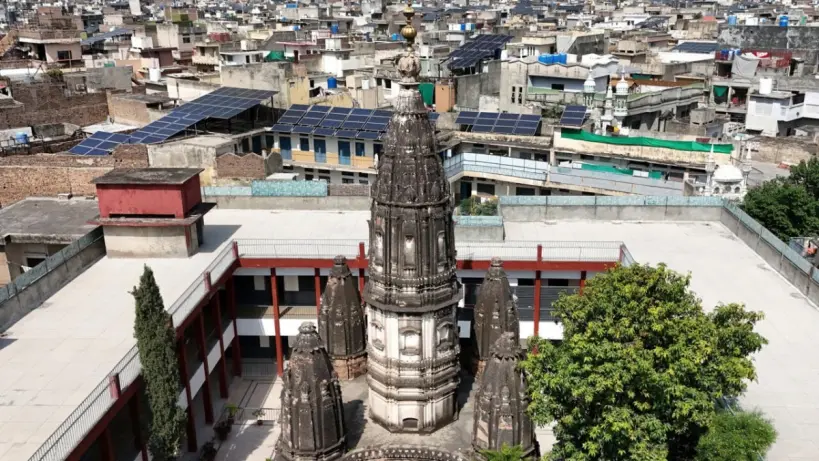
Rawalpindi’s surviving Hindu temples reflect the city’s diverse religious past.
The temples trace Rawalpindi’s religiously diverse past before the 1947 partition of British-ruled India, when non-Muslims formed a majority of the city’s population. The violence and mass migration surrounding partition drove Hindus and Sikhs to India while Muslim refugees entered Pakistan, permanently reshaping Rawalpindi’s demographics.
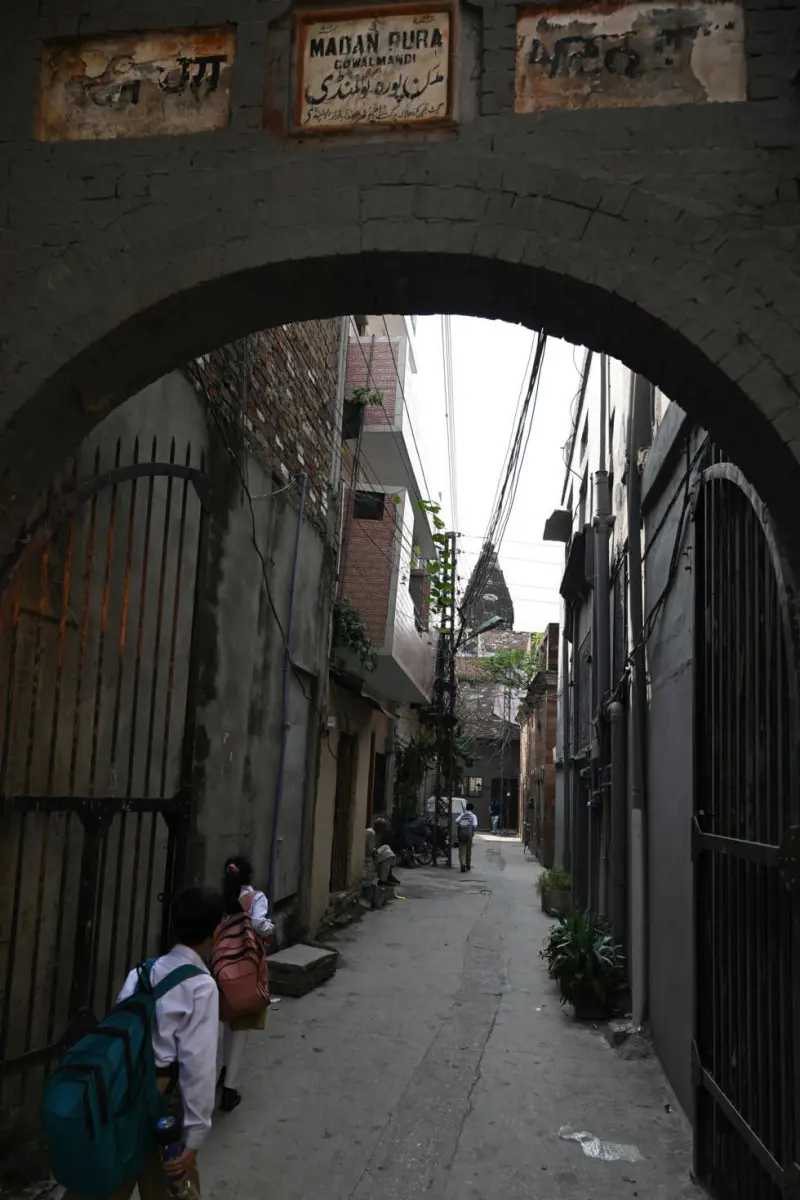
Researcher and architectural and cultural heritage expert Hassaan Tauseef said the remaining shrines offer evidence of a markedly different period in the city’s history, when diverse communities lived together. In the crowded Raja Bazaar commercial district, the crumbling facade of a 19th-century temple rises amid electrical wires and advertising billboards. A jewellery maker now sells goods from its ground floor as motorcycles weave through the surrounding streets.
Muslims now account for 96 percent of Pakistan’s population of 240 million, while Hindus make up two percent, with most living in rural areas in the south. Tauseef said the city’s old temples have been adapted to meet practical needs, particularly after housing demand increased. “When the housing shortage became very, very large, the government started allotting a lot of these temples to these families as houses,” he said.
In Rawalpindi’s northern Purana Qila area, a former Hindu temple has become a residence. Small trees grow from fractures in its deteriorating walls, its original windows have been bricked up and washing hangs outside. The space around the building is now widely used for motorcycle parking.
Historic places of Hindu worship have also fallen into disrepair as they were converted to warehouses and schools. The domed, 19th-century Kalyan Das Temple stands within the Qandeel school for visually impaired children, where detailed carvings remain visible on its walls.
Pervaiz Akhtar, the school’s principal, said students benefit both educationally and culturally from encountering the site. Learning about the temple helps younger people understand how another religion worshipped and what its buildings looked like, he said. Akhtar added that Muslims respect all places of worship and that the school treats the temple accordingly.
Concerns over the condition of the sites come amid broader pressure on religious minorities. A Human Rights Commission of Pakistan report this year warned of escalating hate speech and attacks against minority communities.
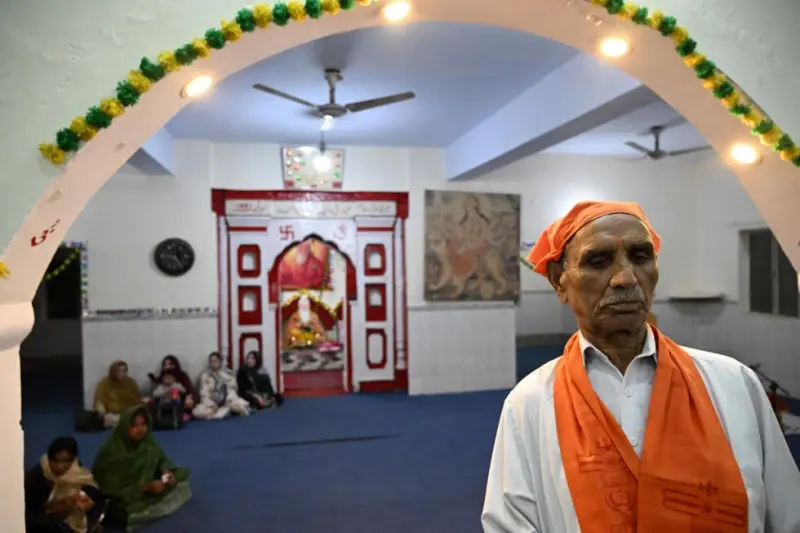
Members of Rawalpindi’s Hindu community hope abandoned temples can again be used for worship. Several local temples were attacked during retaliatory riots in Pakistan after the Babri mosque was demolished in India in 1992. Maharishi Valmiki Temple was among the sites targeted; it lost its spire before later being renovated and reopened.
Mir Chand Khokhar, the 74-year-old priest at Maharishi Valmiki Temple, said the community could restore other disused shrines if the government handed them over. Tauseef described the buildings as reminders of a more tolerant Rawalpindi, arguing that they could become places for storytelling and empathy at a time South Asia urgently needs both.
Source: France 24
What do you think of this story?
Share your reaction, or help us correct a detail.
Thank you for being part of our community. Read our Comment Policy before posting.
Comments
Loading the conversation…