


Motorists travelling between Dubai and Sharjah report shorter commutes after new road connections opened, though they say journey times still depend heavily on the route, direction and time of travel.
Motorists report shorter Dubai-Sharjah commutes after new road links open
United Arab Emirates
Font
Article text size
English fonts
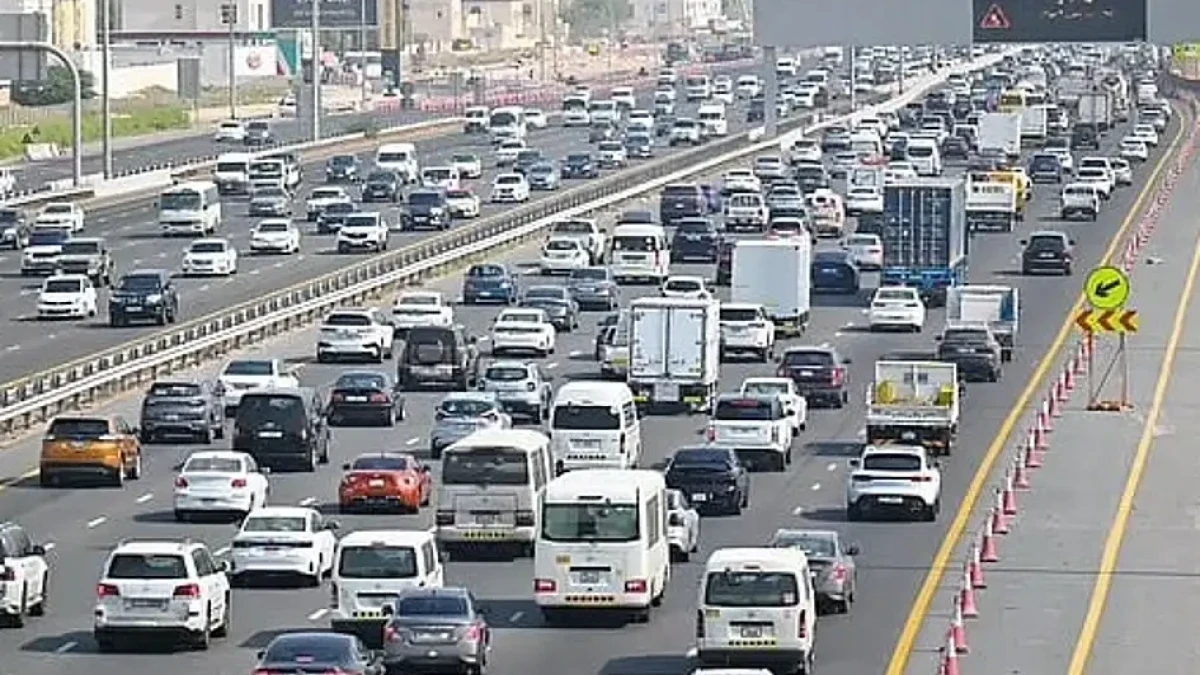
New Sharjah road connections have shortened some Dubai-Sharjah journeys, while congestion persists on several routes.
The first phase of Sharjah's new road network opened on November 4, partially opening Al Taawun Interchange and adding bridges and junctions linking major roads towards Dubai. It permits one-way traffic from Sheikh Mohammed bin Zayed Road towards Expo Centre Sharjah, but several connections remain under development.
Nabil Mansour, an Egyptian outdoor sales executive who lives in Al Khan, said his evening trip home from his Al Quoz office has fallen from nearly two hours during the construction period to about an hour and a half. Road diversions, long queues and slow-moving traffic had previously become part of his daily routine.
He said the most noticeable improvement is on the return journey. Mansour still takes the Corniche diversion in the morning to reach Al Nahda Bridge, where traffic remains slow. In the evening, he said the new tunnel on the Corniche road and the new link towards Al Khan now take only a few minutes, rather than the 20 to 25 minutes they previously required.
Mansour said the project is not complete, but that traffic is beginning to ease. He said getting through the heavily congested sections near the Dubai-Sharjah border early can make the rest of the journey smoother, while long queues at those points can still add considerable time.
Several motorists have described improvements since the new connections opened earlier this month, although their experiences indicate that the benefit is uneven. Conditions vary by route, direction of travel and the time commuters leave home or work.
Ashif K, an Indian accountant living in Al Majaz 3, said his evening journey from Abu Hail in Dubai has become easier, although traffic has not disappeared. His commute took about an hour during the road construction period and now takes approximately 40 to 45 minutes.
Ashif typically leaves home at ten twenty a.m. because he starts work late, avoiding the early-morning rush when thousands of motorists head towards Dubai. He begins his return trip at around 8 p.m., when several roads into Sharjah remain very busy. He said the main difficulty is now the evening journey back into Sharjah.
He identified the evening route from Dubai towards Al Taawun as a continuing congestion point. One of the main bottlenecks is where traffic splits in three directions for motorists heading to Al Khan, Al Taawun and the Buhaira area.
For Naseema Ahmed, a teacher living near Sahara Centre in Al Nahda, the reduction in travel time has been smaller but still welcome. Her husband drops her at work in Al Garhoud each morning before continuing to his own office. As her classes start at 7 a.m., they leave home at 6 a.m. to avoid the morning rush.
Ahmed said the journey took around 45 to 50 minutes two months ago and now takes about 35 minutes. She said saving ten to 15 minutes can determine whether the day starts calmly or in a rush.
Traffic merging near the Dubai-Sharjah border has become easier to manage since some connections opened, she said. However, leaving early remains essential to her routine because even a short delay can put her in heavier traffic.
Ahmed avoids the evening road journey altogether. After finishing work at around 3 p.m., she takes the Dubai Metro from Al Garhoud, changes from the Red Line to the Green Line at Union and gets off at Stadium station. She then takes a short bus ride and walks home, relying on a car in the morning and public transport in the evening.
Further elements of the Sharjah road network have yet to open, including the Al Taawun Tunnel and other junction improvements. Separately, the Ministry of Energy and Infrastructure has issued a tender for improvements at Al Nahda Interchange and Al Ittihad Road, one of the main routes between Dubai and Sharjah.
The planned Al Ittihad Road project includes eight bridges with a combined length of four kilometres and 4.5 kilometres of service roads. While the developments are expected to improve traffic movement, construction on the Al Ittihad Road project has not yet been confirmed.
What do you think of this story?
Share your reaction, or help us correct a detail.






Thank you for being part of our community. Read our Comment Policy before posting.
Comments
Loading the conversation…