

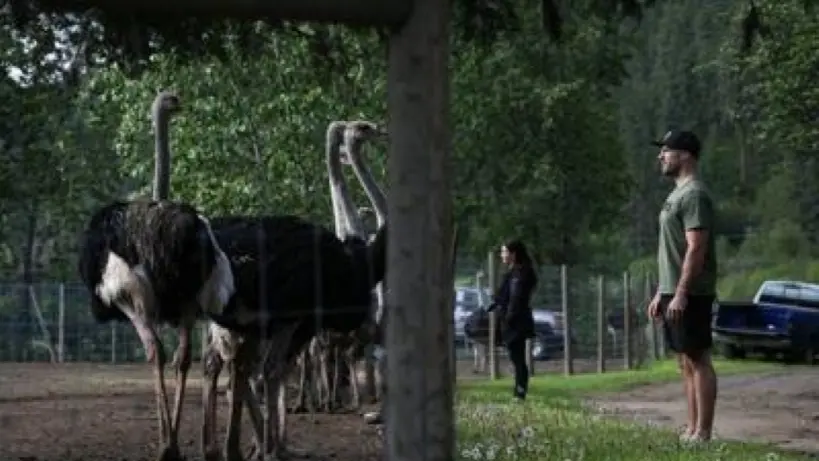
The Federal Court of Appeal permits a controversial ostrich cull in British Columbia amid ongoing avian flu concerns. Farmers argue against it due to herd immunity; however, CFIA insists it's necessary due to potential virus risks.
The Federal Court of Appeal has given the go-ahead for a cull of approximately 400 ostriches at a British Columbia farm, following an outbreak of avian influenza. The decision marks a significant moment for the Universal Ostrich Farms located in Edgewood, B.C., which had been grappling with this challenging situation.
What did the court decide?
The appeal court upheld prior rulings that denied a judicial review of the Canadian Food Inspection Agency's (CFIA) decisions to proceed with the cull. It concluded there was no basis for granting an exemption and refused to accept new evidence from farm owners asserting the flock's current health status.
Why do the farmers advocate against the cull?
The farmers argue that their ostriches have recovered since an H5N1 flu outbreak claimed 69 birds last winter, believing that those remaining have developed "herd immunity." They contend these birds are healthy and pose no threat, advocating instead for testing rather than culling.
Why does CFIA insist on proceeding with the cull?
The CFIA maintains that retaining the flock could perpetuate a virus source, heightening mutation risks and increasing infectivity. It warns that seemingly healthy ostriches can still spread disease and repeated infections may enhance mutation chances. Notably, this strain hasn’t been identified elsewhere in Canada but has connections to human infection cases in the U.S.
What options do farmers have to halt the cull?
Katie Pasitney, representing the farm, indicated plans to request another court stay and aims for a hearing at Canada's Supreme Court. Meanwhile, she is calling on supporters to assemble peacefully at the farm as an act of protection for their flock.
When might this cull occur?
The CFIA is reticent about specific operational details regarding individual farms. However, they reaffirmed on May 30th through their website that preparations continue under veterinary supervision for humane depopulation at affected sites.








Comments
Log in to write a comment