

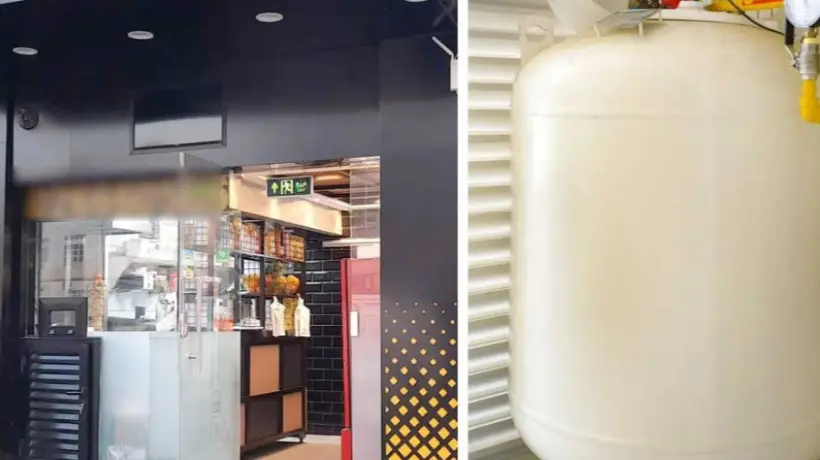
The Abu Dhabi Department of Energy has launched the emirate's first vertical LPG tank system for food establishments, aiming to enhance safety and efficiency by replacing traditional gas cylinders.
The Abu Dhabi Department of Energy (DoE) has introduced a groundbreaking vertical Liquefied Petroleum Gas (LPG) tank system designed specifically for food establishments. This innovative move is aimed at substituting conventional LPG cylinders with a more secure and effective alternative.
With a notable capacity of up to 125 gallons, this system features an explosion-proof vaporiser and facilitates on-site refilling by licensed professionals, thereby eliminating the need for storing or handling individual gas cylinders.
This development marks a significant regulatory step by the DoE in its efforts to mitigate leak risks, boost operational efficiency, and elevate safety standards across the sector. Technical Bulletin No. (1/2025), issued alongside this initiative, details the technical requirements, safety standards, and regulatory conditions necessary for installing these tanks in compliance with NFPA standards and the UAE Fire and Life Safety Code.
Dr Saif Saeed Al Qubaisi, Acting Director General for Regulatory Affairs at DoE, stated: “This initiative underscores our commitment to safeguarding individuals and communities by ensuring a safe operational environment for food businesses.” He highlighted that gas remains crucial as an energy source within this sector.
Er Ahmed Al Sheebani, Executive Director of the Petroleum Products Regulatory Affairs Sector at DoE, noted: “Our project seeks to establish a safer and more sustainable system. This allows food businesses to operate confidently while adhering to international best practices.” He emphasized collaboration with licensed private operators for implementing this high-standard system.
The DoE encourages all food establishments-especially those lacking access to underground gas networks or centralized LPG systems-to adopt this solution. Doing so will ensure compliance with both present and future regulatory frameworks.








Comments
Log in to write a comment