


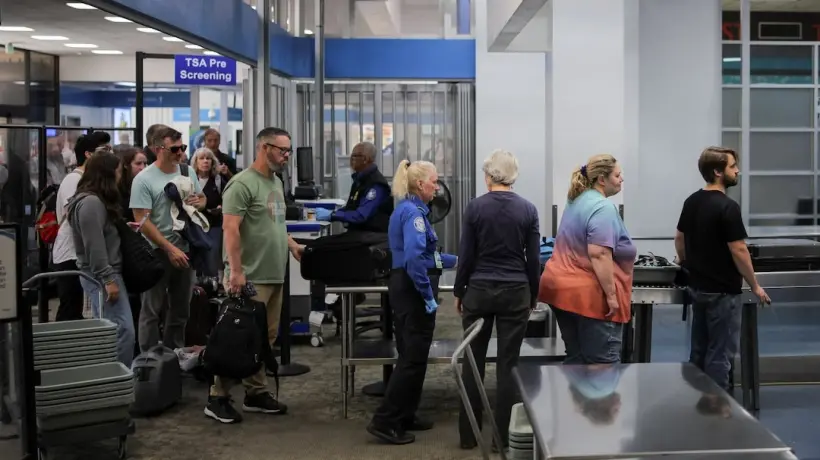
The U.S. announces plans to expand facial recognition technology at borders to track non-citizens, raising privacy concerns.
Washington - In a move likely to stir further debate over privacy and surveillance, a recently published government document reveals that the United States plans to significantly expand its use of facial recognition technology. This development is part of an intensified effort to monitor non-citizens entering and exiting the country, aimed at curbing overstays on visas as well as identifying passport fraud and identity theft.
A new regulation will empower U.S. border authorities to request photographs of non-citizens at airports, ports, land crossings, and other exit points. This marks an extension of a previous pilot program. According to the document, set to take effect on December 26th, the rule will also permit border officials to collect other biometric data such as fingerprints or DNA samples.
Interestingly, the expanded measures will now include facial recognition for children under 14 and seniors over 79 years old-groups previously exempted from such scrutiny.
These stricter regulations are seen as part of broader initiatives by former President Donald Trump aimed at clamping down on illegal immigration. While resources have been bolstered to secure the southern border with Mexico, Trump had also focused efforts on minimizing visa overstays.
However, the increasing application of facial recognition in U.S. airports has sparked privacy concerns among watchdog groups wary of potential misuse and inaccuracies. A report from the U.S. Commission on Civil Rights highlighted that tests have shown this technology is more prone to errors when identifying individuals with darker skin tones and members of minority groups.








Comments
Log in to write a comment