


The UAE hosts a pivotal meeting to enhance satellite-based rescue systems, emphasizing cooperation, innovation, and efficiency.
The United Arab Emirates, represented by the National Search and Rescue Center, continues to host the main meeting of the Joint Commission JC-39 of the COSPAS-SARSAT system for the fourth consecutive day.
The event sees extensive participation from representatives of countries and international organizations specializing in satellite search and rescue systems.
Yesterday's sessions, held on Friday, focused on discussing updates to operational and technical documents.
Key topics included the revision of documents related to interoperable communication services and enhancing alert message formats for ELT-DT distress devices.
Detailed discussions within technical working groups addressed operational and software challenges concerning devices operating in marine environments.
The sessions also covered issues related to quality management in international data centers and proposed new classifications for false alarms.
Additionally, there was a study on delegating the Mission Control Center in the Republic of Togo, with recommendations to authorize ground stations in several countries, including Spain, India, and Canada.
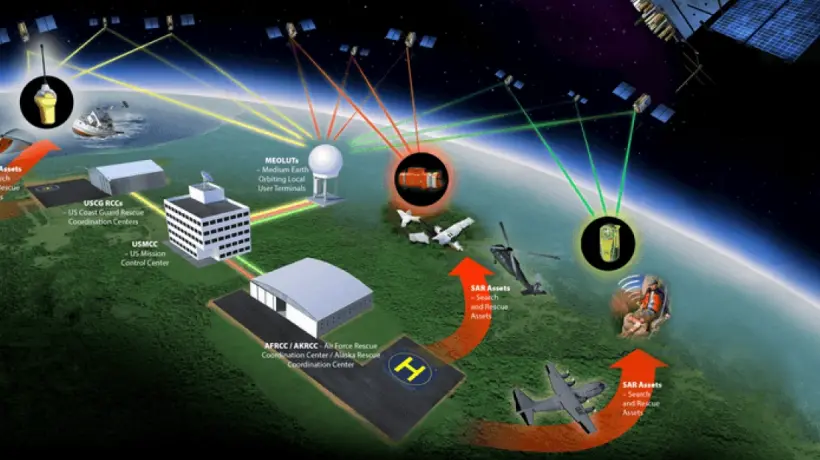
Participants also discussed proposed amendments to the reference document C/S G.003 to formally recognize the MEOSAR system as an operational component of the COSPAS-SARSAT system, a move aimed at enhancing the precision and efficiency of emergency responses worldwide.
Daoud Al Jarrah, Director of Air Navigation in Kuwait, emphasized the importance of the 39th annual meeting of the International Satellite Communications Search and Rescue Organization "COSPAS-SARSAT," hosted by the UAE.
Gathering representatives from 45 countries and international organizations, this meeting aims to enhance and develop all systems related to search and rescue operations, ensuring the saving of more lives with high efficiency and speed.
Speaking to the Emirates News Agency (WAM), Al Jarrah stated that Kuwait and the UAE are committed to building strategic partnerships and sharing expertise to save lives and improve emergency response readiness according to the highest global standards.
He pointed out that this meeting, organized by the UAE National Guard Command through the National Search and Rescue Center, reflects the development achieved by the UAE in enhancing the effectiveness of the global search and rescue system.
"We aim to enhance international cooperation, exchange knowledge, and showcase the latest technologies and experiences in this vital field," he added.
Brigadier General Mohamed Abdulaziz Al Ishaq, Commander of the Doha Joint Rescue Coordination Center, confirmed that the International Satellite Communications Search and Rescue Organization "COSPAS-SARSAT" plays a pioneering role in saving thousands of lives annually.
He noted that the Gulf countries support the organization's efforts in fulfilling this humanitarian role effectively.
Speaking to the Emirates News Agency (WAM) on the sidelines of his participation in the meeting hosted by the UAE National Guard until June 5 in Abu Dhabi, Al Ishaq highlighted the significant efforts made by the UAE during this important meeting, which witnesses large attendance from representatives of 145 countries.
The meeting fosters an exchange of opinions and expertise to discuss the necessary mechanisms to support the organization's work and its humanitarian efforts in saving lives.








Comments
Log in to write a comment