


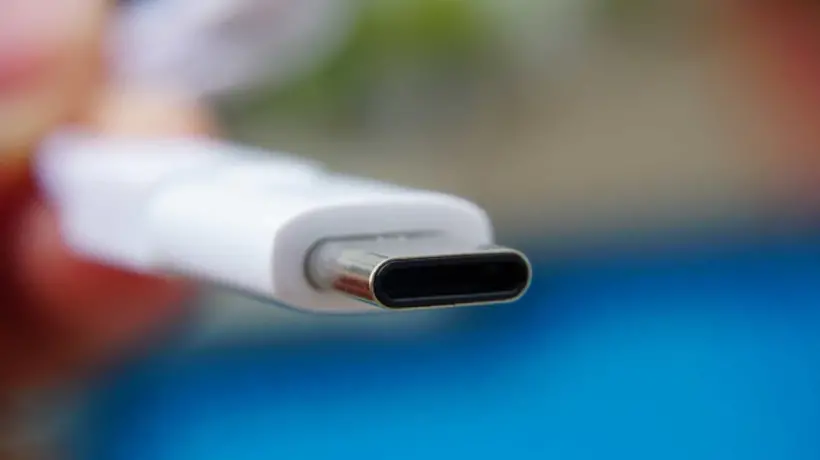
Starting January 1, 2025, the first mandatory phase of establishing a universal charging port standard for mobile phones and other devices will take effect in the Saudi market, according to Saudi officials.
Declared by the Communications, Space and Technology Commission (CST) and the Saudi Standards, Metrology and Quality Organization (SASO), this project requires the use of "USB Type-C" connectors for different electronic products.
The purpose of the decision is to guarantee high-quality charging and data transfer technologies, thereby improving user experience all throughout the Kingdom by streamlining charging options and lowering needless consumer prices. Establishing USB Type-C as the standard helps the authorities hope to raise the general caliber of electronic goods on the market.
Apart from improving customer ease of use, the project emphasizes a dedication to environmental sustainability, Saudi Arabia wants to reduce electronic waste by pushing a single charging outlet, therefore supporting the Sustainable Development Goals (SDGs). Projected to be dropped by over 2.2 million units yearly, the CST and SASO estimate that the deployment of this standardized charging method will significantly lower the local usage of charging ports for mobile devices and other electronics.
Furthermore, there is clear financial effect on customers. Standardizing charging ports should save Saudi citizens more than SR170 million annually, according projections. This fits the larger sustainability objectives of the Kingdom since expectations of lowering electronic waste by about 15 tons yearly reflect their larger goals.
Mobile phones, tablets, digital cameras, e-readers, portable video game consoles, headphones, earphones, portable speakers, amplified speakers, keyboards, computer mice, and portable navigation systems will all be among the first phase of this endeavor covering a broad spectrum of electronic gadgets, Furthermore covered under this control will be wireless routers. After this first phase, a second phase starting on April 1, 2026 is expected to start, therefore extending the requirements to laptops.
Originally announced on August 6, 2023 by CST and SASO, which enforced that businesses and suppliers follow the new standard, this shift toward unified charging ports The choice represents a growing trend among countries to streamline consumer charging while addressing environmental issues related with electronic waste, hence simplifying the process.
Using USB Type-C as a universal charging port not only makes daily user life easier by allowing interoperability between several gadgets but also advances Kingdom technology. Saudi Arabia shows a proactive attitude to consumer electronics management by following this criterion, therefore joining a worldwide drive toward more sustainable IT practices.
Saudi Arabia's electronic scene will be much modernized with the addition of required USB Type-C charging connectors. Its goals are to lower expenses, improve user convenience, and advance environmental sustainability, With hopes for significant cuts in consumer costs and electronic waste, this program may establish a standard for like laws in other areas. The gradual approach guarantees that a wide range of devices conforms with the new criteria, therefore enabling an orderly transition and so benefiting consumers and the environment both.







Comments
Log in to write a comment