

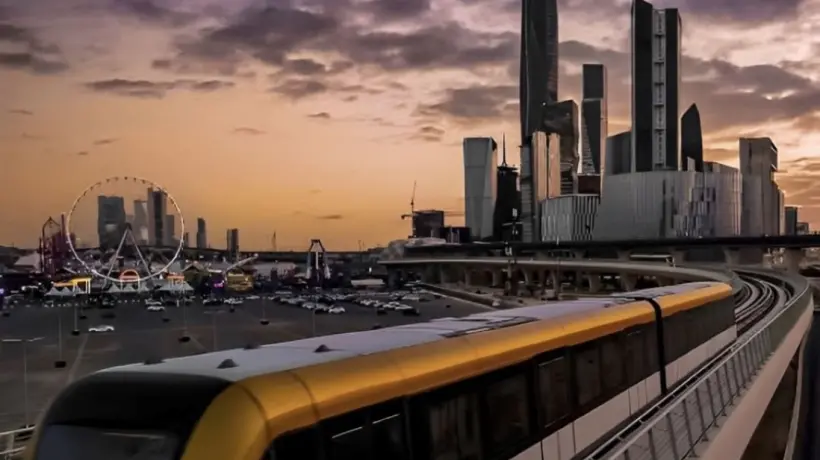
After a little disturbance caused on by train emergency handle manipulation, the Blue Line of the Riyadh Metro has returned full operation.
Following a brief halt brought on by the event, the Public Transportation Authority in Riyadh said that activities between Alinma Bank and STC stations are back to normal, Shuttle busses were used to move people between the impacted stations so as to minimize the impact during the disturbance and guarantee continuity in the transportation system.
The Royal Commission for Riyadh City (RCRC) issued a reminder advising the public to respect and care for the metro trains, stops, and related infrastructure in reaction to the incidence, The panel underlined the need of not meddling with emergency equipment in order to stop more disruptions of services. To keep the metro system running as it should, they urged every passenger to follow operational rules exactly.
The Transport General Authority strengthened this point of view by stressing the gravity of utilizing security or safety tools aboard trains, like alarms or emergency exits. Under the executive rules of the Railway Law, such acts are categorized as grave infractions unless they are absolutely necessary in response to real crises. Using the metro services for up to six months could result in fines and suspension from offenders. This legislative framework emphasizes the need of preserving public transportation system and guaranteeing passenger convenience and safety.
Comprising eighty-five stations-four of which are key hubs-the Riyadh Metro is pillar of the urban transportation development of the city. These stations combine architectural grace with practical efficiency using modern engineering standards. Among them, 47 are subterranean, 4 are at ground level, and 34 are elevated. The four main stations are essential hubs tying several metro lines together and interacting with the bus system of the city. This link guarantees a flawless transportation experience for inhabitants and guests, hence improving urban mobility.
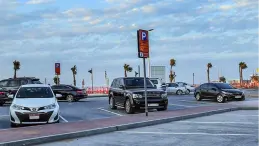
The stations serve as multifarious urban areas, not only places of transportation. Providing parking facilities, customer service desks, ticket outlets, stores, and restaurants, these stations give consumers a complete range of conveniences, The Riyadh Metro seeks to establish a standard in public transit systems by combining urban comfort with transportation efficiency.
Launched formally on December 1, the Riyadh Metro started running three lines: the Blue Line (Line 1), the Yellow Line (Line 4), and the Purple Line (Line 6). The first operating line of the city, the Blue Line links Olaya Street to Batha. The Purple Line connects Abdul Rahman bin Awf Road with Al-Shaikh Hassan bin Hussain Road; the Yellow Line follows King Khalid International Airport Road. These lines taken together show the initial stage in a bigger concept to build a strong, linked metropolitan system in Riyadh.
A historic endeavor, the Riyadh Metro is the biggest metro system in the Middle East and hosts the longest driverless train network worldwide, It is essential in changing the transportation scene of the city by lowering traffic congestion, supporting sustainability, and providing modern, safe, quick means of mobility for the citizens, The metro stations' combined architecture and their link to the bus system improve their attractiveness even more as a necessary urban mobility option.
The little disturbance on the Blue Line reminds us of the need of group effort in preserving public transportation networks, Authorities keep teaching travellers on the proper use of safety equipment and the implications of abuse. Riyadh is trying to make sure the metro is a dependable and world-class transportation choice for all by encouraging a culture of care and compliance.
Comments
Log in to write a comment