


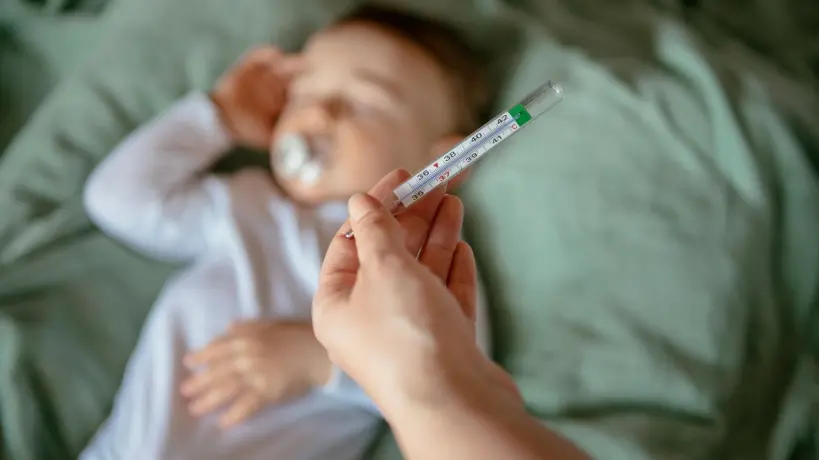
Medical experts have issued a serious warning to parents about neglecting or downplaying recurrent fever episodes in children, highlighting that frequent fevers can be an early indicator of underlying health problems, including immune disorders, genetic diseases, and chronic infections or cancers.
While it’s common for children to experience fever three to six times a year due to mild viral infections, doctors emphasize that fevers lasting more than five days or occurring repeatedly without a clear cause require comprehensive medical evaluation. Advanced testing, such as immunological and genetic screenings, may be necessary to identify rare conditions like periodic fever syndromes or primary immunodeficiencies.
Dr. Danny Salloum, a pediatric and neonatology specialist, stated that a fever is considered medically abnormal in four key cases: when it exceeds 38°C, persists beyond five days, recurs frequently, or is accompanied by alarming symptoms such as skin rash, joint pain, weight loss, extreme fatigue, or neck stiffness.
He identified seven common causes of recurrent fever in children, including repeated viral infections, tonsillitis, ear and sinus infections, urinary tract infections (especially in younger children), autoimmune disorders, Familial Mediterranean Fever (FMF), and environmental factors such as humidity, pollution, and tobacco smoke.
Dr. Vivek Mundada, pediatric neurology consultant, added that although most children with recurrent fever are not seriously ill, 5–10% of emergency visits are linked to serious bacterial infections. He outlined four fever categories: prolonged, fever of unknown origin (FUO), recurrent, and periodic fevers, with the latter often requiring advanced diagnostics due to their complex symptoms.
Dr. Lina Amiri, child and adolescent psychiatry consultant, discussed the lesser-known “psychogenic fever” - a rare condition mostly seen in teenagers, where fever occurs due to psychological stress rather than physical illness.
Dr. Janan Abuzour emphasized that core childhood vaccinations remain one of the most effective tools for preventing severe febrile illnesses. She encouraged breastfeeding and proper nutrition as key immunity boosters, while urging parents to closely monitor behavioral changes during fevers.
Experts agree that early medical intervention for recurrent fevers can lead to better outcomes, particularly with promising developments in gene therapy and targeted treatments for primary immune deficiencies.








Comments
Log in to write a comment