


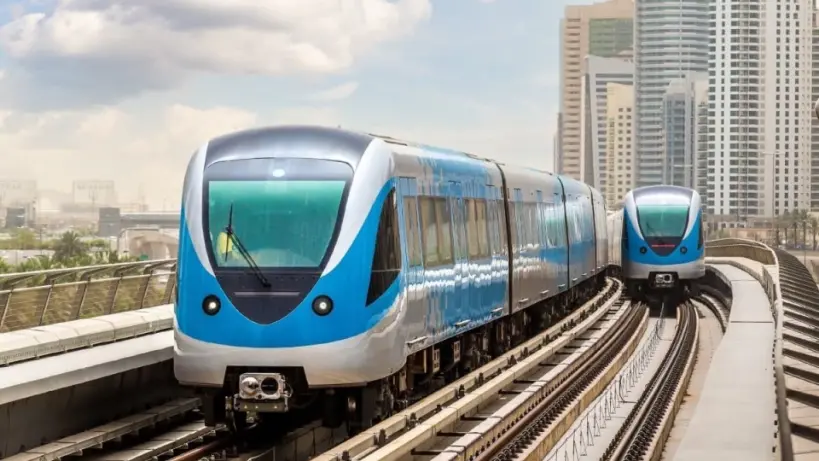
The Roads and Transport Authority (RTA) has put permanent actions in place to protect Dubai's metro system from future floods in response to the unheard-of rains that fell on the city in April and caused notable flooding.
With a record-breaking 250mm of rain in a 24-hour period, the severe rainfall drew attention to weaknesses in several metro stations-especially those in low-lying locations. For the current Red and Green lines as well as the forthcoming Blue Line, planned to open in September 2029, the RTA has thus developed forward-looking ways to stop such flooding disasters.
Director General Mattar Al Tayer of the RTA's Board of Executive Directors confirmed that an unusual meteorological occurrence never seen before was the cause of the flooding, not any design defect of the metro. With rainfall intensity we had not anticipated, he said, "this was an unprecedented event in our lifetime." Several important metro stations, notably Onpassive, Equiti, Mashreq, and Energy stations, closed for weeks due to the unprecedented rainfall, therefore requiring citizens to choose different means of transportation.
The RTA has proposed many preventative actions to solve the problem and guarantee that the metro system of the city stays operational even under very demanding weather circumstances. Among these are the protective barrier installations at sensitive locations meant to guard against possible flooding. Al Tayer underlined that all found problem locations have been strengthened with these measures and that the difficulties found during the April rainfall have been completely resolved. Al Tayer reassured the public, "If a similar situation occurs, flooding will definitely be prevented," therefore demonstrating the RTA's dedication to future-proofing the metro system.
Originally supposed to keep expenses under control, the choice to build metro stations with a 20-30 year lifespan also meant that stations in low-lying locations were more vulnerable to floods. The April heavy rain revealed these weaknesses, which prompted the immediate use of long-term preventive measures. Al Tayer noted the unusual character of the rainfall event and said, "The UAE typically sees 140-200mm of rainfall annually, so the magnitude of this event was unlike anything we had accounted for."
These teachings have helped the RTA give resilience of future metro infrastructure to climate change, especially high rainfall and flooding top priority. Measures aiming at reducing climate-related hazards have been included into the Dh20.5 billion earmarked for the new Blue Line. Al Tayer said that despite severe conditions the initiative is meant to guarantee continued, uninterrupted service. Furthermore, the Blue Line is the first metro project worldwide attaining LEED-certified green building criteria. This certification supports environmentally friendly building techniques, lowers carbon emissions, and increases energy economy.
Apart from enhancing flood control, the RTA's expenditures on climate resilience solve the long-term viability of Dubai's metro system. These initiatives are meant to reduce future disturbances brought on by climate change and lower the running and maintenance expenses resulting from weather-related damages.
The Dubai Government has set aside Dh1.5 billion to handle the effects on the city's transportation system following the April flooding. With the intention of restoring complete performance and guaranteeing that the metro system stays strong to withstand future flooding occurrences, this money will be focused on fixing problems at 14 affected sites.




Comments
Log in to write a comment