


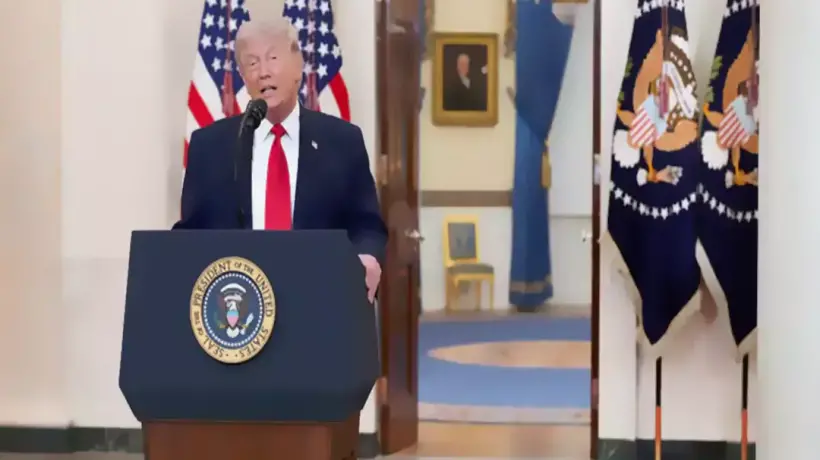
U.S. President Donald Trump has expressed grave concern regarding the fate of the missing American pilot whose aircraft was downed over Iranian territory, marking a significant escalation in the ongoing conflict.
In a brief but pointed interview with The Independent, Trump admitted that Washington is not yet prepared to disclose its course of action should the missing American pilot be harmed or captured by Iranian forces.
"We hope that doesn’t happen," Trump stated, while simultaneously telling NBC News that the incident would not derail military operations or potential negotiations, flatly asserting: "We are in a state of war."
In a related context, the disappearance of the missing American pilot has triggered a wave of strategic mockery from Tehran.
Mohammad Baqer Qalibaf, a prominent Iranian official, took to social media to ridicule the U.S.military strategy, suggesting that Washington’s goals have shifted from "regime change" to a desperate plea for help. "Can someone find our pilots? Please?" Qalibaf wrote sarcastically on 'X', describing the American campaign as a "genius war without a strategy." This psychological pressure comes as the Pentagon remains tight-lipped about ongoing search and rescue efforts.
For their part, Iranian-aligned forces have expanded the scope of the crisis beyond the search for the missing American pilot.
Qalibaf pointedly questioned the global impact of maritime traffic through the Bab el-Mandeb strait, a chokepoint where Houthi rebels have already caused a 50% drop in shipping.
By linking the fate of the missing American pilot to the security of global energy and food supplies, Tehran is signaling its ability to inflict severe economic pain on the West if the conflict escalates further.
The authorities explained that the tactical shift toward targeting infrastructure and the potential capture of U.S.
personnel has sent shockwaves through global markets, leading to a sharp rise in shipping costs.
As the world watches for any news on the missing American pilot, analysts warn that the situation remains a "powder keg," where the treatment of captured personnel could serve as the ultimate catalyst for a full-scale regional explosion.







Comments
Log in to write a comment