


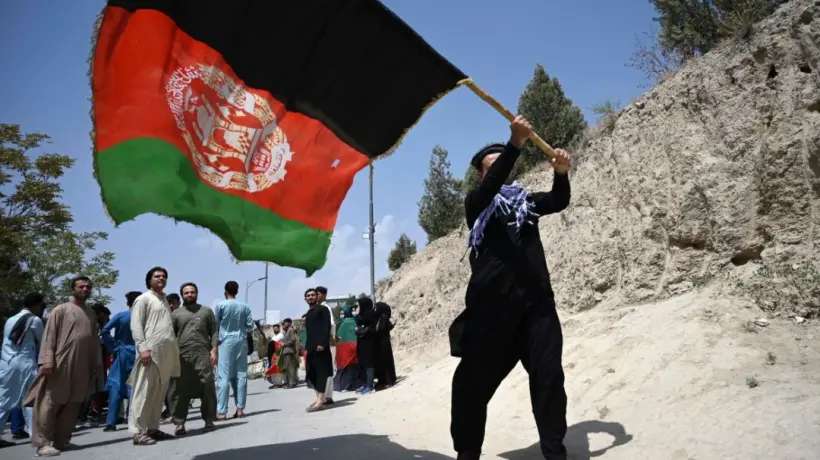
Over a million Afghan migrants have returned home from Pakistan amid ongoing deportation campaigns. The UNHCR reported this unprecedented trend, as migrants face challenges in Afghanistan after leaving Pakistan. Despite aid, many express discontent with their treatment in host countries.
Over 1.055 million Afghan citizens have returned from Pakistan to Afghanistan between October 2023 and May 2025, marking an unprecedented trend in recent years, according to the United Nations High Commissioner for Refugees (UNHCR) and Afghan newspapers on Monday.Afghan migrants returning from Pakistan (File Photo)
"From October 1, 2023, to May 31, 2025, more than 1.055 million people have returned from Pakistan to Afghanistan," said Faramarz Barzin, Assistant Communications Officer at UNHCR. "The UNHCR is present at the borders, in resettlement areas, and where cash centers are located, offering a wide range of services," he added.
In 2025 alone, since early April, around 3,500 people have crossed daily from Pakistan to Afghanistan, according to Tolo News. "These families, forced to leave Pakistan after decades, face significant challenges, including a shortage of shelter, employment opportunities, and limited access to health and education services," the report mentioned.
Afghan migrants at a Pakistani border crossing awaiting return to their homeland (Reuters)
Deported migrants expressed discontent with their treatment in Pakistan. "We suffer at the Torkham border crossing," said Torhal, a returnee. "I swear, we face hardships... The Pakistani police expelled us in a highly disrespectful manner," he noted.
Another returnee, Arifullah, shared, "Landlords in Pakistan treated us very poorly. The Pakistani government should not humiliate people." The World Food Programme (WFP) reported assistance to over 600,000 returning migrants from Iran and Pakistan since October 2023. Zia Safi, a communications officer at WFP, confirmed, "At the border, families are provided with nutritional meals, especially to prevent malnutrition among pregnant and lactating mothers."
A Taliban fighter stands guard at a market in preparation for Eid al-Adha in Kabul, June 5, 2025 (AP)
Meanwhile, the Pakistani government announced plans to deport approximately 3 million Afghan migrants this year.
More than 200,000 Afghans have left Pakistan since Islamabad started a broad expulsion campaign last April, which affects 3 million Afghans residing within its borders, according to the Pakistani Interior Ministry as reported by AFP on Sunday.
Over 135,000 Afghans left Pakistan in April, 67,000 in May, and more than 3,000 were expelled in the first two days of June.
Millions of Afghans have moved to Pakistan over the decades, fleeing successive wars in their homeland. Hundreds of thousands arrived following the Taliban's return to power in 2021.
On April 1, Islamabad revoked the residence permits of 800,000 Afghans, some of whom were born or have lived there for decades. Pakistan now threatens to withdraw protection for 1.3 million Afghans holding "refugee status" cards issued by the UNHCR, starting at the end of June.
Taliban fighters guard outside the former US embassy on the eve of Eid al-Adha in Kabul, June 5, 2025 (AP)
The United Nations warned on Tuesday that Iran deported twice as many Afghan families in May compared to the previous month, expressing concerns about a "new and worrying trend" coinciding with Pakistan's mass expulsions.
An Afghan refugee returning from a neighboring state takes a break, May 21, 2025 (EPA)
The International Organization for Migration reported a "significant increase in forced repatriation of Afghan nationals" since the beginning of May, with 15,675 Afghan families returned compared to 6,879 in April. It stated that "the number of undocumented Afghan families returned from Iran last month was three times higher than last May (4,402 versus 15,675)." The organization expressed particular concern over "the dramatic rise in the number of families being deported."
May 29 alone saw the return of 955 families to Afghanistan, which remains one of the world's worst humanitarian crises, according to the United Nations. In total, more than 450,000 Afghans have returned from Iran from the start of the year till May 2025.







Comments
Log in to write a comment