


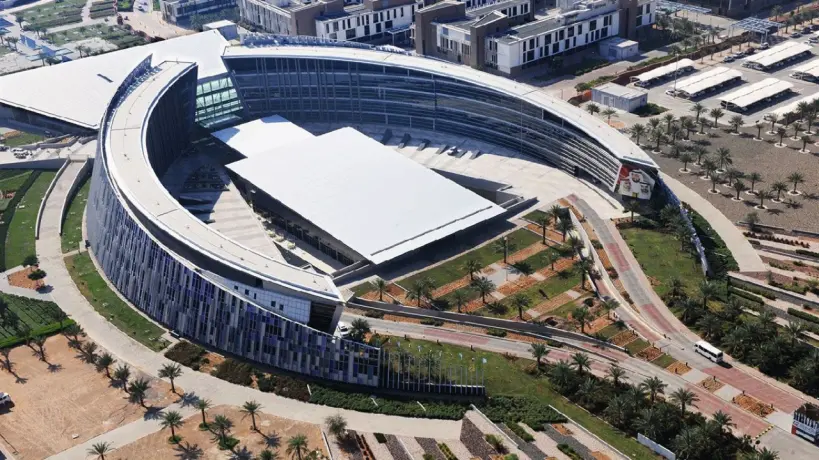
UAE University has launched its 'AI Agenda 2025-2031', focusing on enhancing research and education in artificial intelligence, while preparing students for the digital economy.
The United Arab Emirates University has formally adopted its "Artificial Intelligence Agenda 2025-2031", outlining an ambitious roadmap designed to boost its research and educational capabilities in this vital field. This initiative aims to develop interdisciplinary solutions to societal challenges and expand the university’s academic influence both locally and internationally. Dr. Ahmed Ali Al-Raisi, the university's director, emphasized that integrating AI at the core of their future vision reflects their commitment to building a comprehensive system encompassing education, research, and community service. The goal is to prepare a new generation of national talents capable of leading the digital future.
Current projects include studies assessing neural networks' performance in monitoring concrete structures, predictive models for hospital stays of lung cancer patients, and systems measuring student attention in classrooms.
Further research explores interpretative AI for classifying autism behaviors, smart tools addressing childhood obesity, predicting newborn weight, and data analysis for flood assessment. In environmental sustainability, the university leads projects predicting rainfall with machine learning, hybrid models forecasting ozone concentration, and monitoring groundwater through statistical analysis combined with neural networks. This reflects the university’s commitment to impactful research that enhances natural resources' resilience and sustainability. Over the past five years, UAE University researchers have published over 1,000 peer-reviewed studies related to AI in Scopus-indexed journals across fields such as health, engineering, environment, education, and social sciences.
On the academic front, starting from Fall 2025/2026 semester onwards, the university will require all students to complete an AI component as part of their graduation requirements. This ensures national workforce readiness for the demands of a digital economy. Offered programs include a Bachelor of Science in Data Science and Artificial Intelligence; Bachelor of Science in Statistics & Data Analysis; with a specialized branch in AI. New courses developed by faculty members cover areas like "Introduction to Artificial Intelligence" providing comprehensive insights into AI history applications & societal impacts available to all majors; "Fundamentals & Applications of Artificial Intelligence" focuses on concepts such as robotics computer vision audio processing featuring practical applications within smart cities healthcare cybersecurity.
The curriculum also features "Artificial Intelligence in Engineering," tackling predictive maintenance & optimizing industrial systems; alongside "Artificial Intelligence in Medicine," focusing on technology-assisted diagnostics drug development personalized medicine ethical aspects associated with clinical AI use.







Comments
Log in to write a comment