


The UAE intensifies cloud seeding initiatives to boost rainfall as winter approaches, with H.H. Sheikh Mansour inspecting advanced meteorological capabilities.
The United Arab Emirates is intensifying its efforts in cloud seeding as the nation anticipates cooler weather. The focus on this innovative approach to weather modification comes as part of the UAE's broader strategy to enhance its meteorological infrastructure.
Earlier in October, His Highness Sheikh Mansour bin Zayed Al Nahyan, who serves as vice president and deputy prime minister, visited the National Centre of Meteorology (NCM) headquarters in Abu Dhabi. During his visit, he reviewed state-of-the-art facilities including systems for weather forecasting and cloud seeding, marine monitoring operations, and renewable energy forecasting sections.
The NCM is equipped with one of the region's most sophisticated supercomputers that improves precision in numerical weather prediction and strengthens early warning systems. As part of his visit, Sheikh Mansour evaluated platforms such as "Early Warning for All," which provides timely alerts to UAE citizens overseas during severe weather conditions. Furthermore, he examined the NCM's Science Dome aimed at increasing public climate literacy.
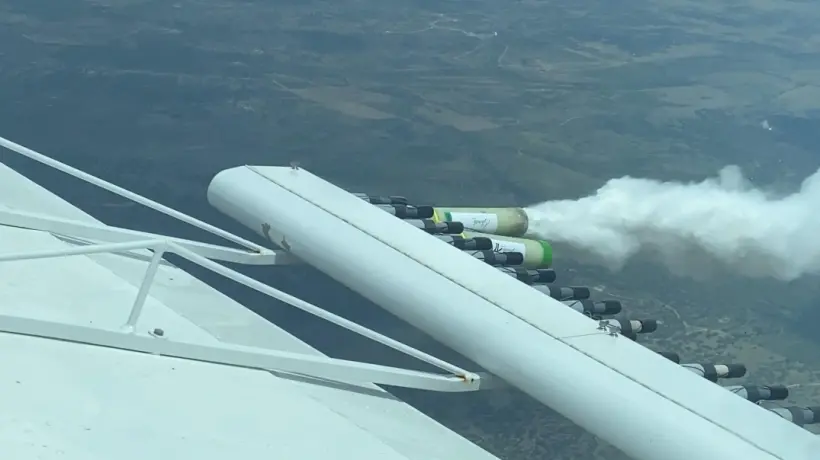
One of the standout features of the NCM’s initiatives is its robust rain enhancement program. In 2025 alone, 185 cloud seeding missions have been conducted so far - 39 of those taking place in July. These missions utilize advanced technologies like hygroscopic flares and electric-charge emitters to potentially boost rainfall by up to 25% under ideal conditions.
Research published in npj Climate and Atmospheric Science suggests that these efforts can generate between 168 and 838 million cubic meters of additional rainfall annually. Of this increase, around 84 to 419 million cubic meters translate into usable water resources. The cost for each mission averages at approximately AED 29,000 per flight hour with more than 900 hours flown each year.
Officials believe these activities are critical for sustainability and adapting to climate change challenges. Missions typically last around three hours with aircraft releasing salt particles into clouds when suitable conditions are detected by pilots using specially equipped planes.
The UAE has significantly expanded its meteorological network over recent years - now boasting more than 60 interconnected weather stations alongside an integrated radar network - complemented by a dedicated factory producing high-quality flares for cloud seeding missions.
Paving the Way for Future Cloud Seeding Missions
This weekend’s forecast suggests partly cloudy skies across eastern and southern regions with potential light showers despite temperatures climbing up to 46°C locally. Recent bouts of moderate to heavy rainfalls coupled with dust storms have already led to noticeably cooler temperatures within areas surrounding Abu Dhabi and Dubai.
Akhbrna News highlights how pivotal these programs remain given that average annual rainfall across all Emirate territories accounts only slightly above six billion cubic meters; reinforcing why investments exceeding $20m directed towards further research come as no surprise amidst heightened global discussions regarding climate adaptation measures globally implemented today."








Comments
Log in to write a comment