


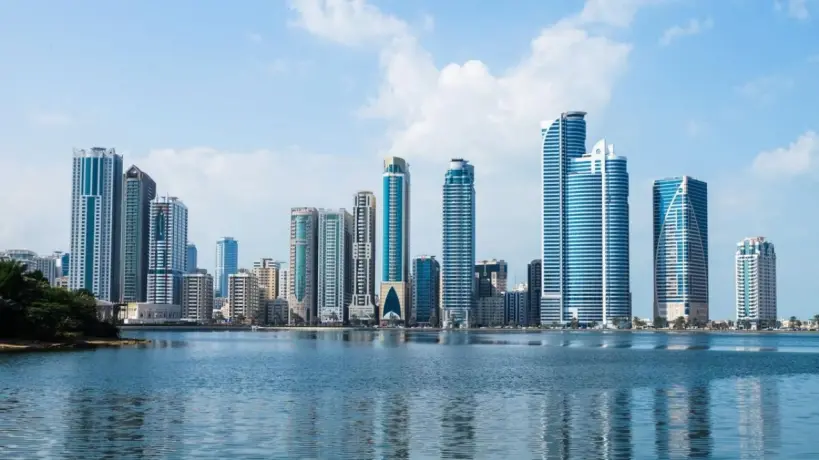
Engineer Mohammed Shuaib, who lives in Al Nahda, Sharjah and works for a telecom business in Ajman, is seeing the consequences of a significant rise in rental rates all throughout the emirate. Like many other city dwellers, he is finding it difficult to cope with the almost doubled housing prices in the city since the epidemic.
According to Khaleej times news, Shuaib, who paid roughly Dh11,000 a year for a studio flat in Al Rashidiya until 2021, has discovered that his circumstances have gotten more problematic as he wants to see his family, who were returned to Pakistan during the epidemic. Now, depending on the location, a one-bedroom apartment starts at Dh25,000; a studio apartment in the same region has surged to Dh18,000. Shuaib has been forced to rethink his intentions by this rapid rise in rent. Originally planning to rent a one-bedroom apartment for his family, he now feels compelled to compromise with a smaller, more reasonably priced studio.
Traditionally perceived as a reasonably priced substitute for commuters to Dubai, Ajman has seen a notable increase in rental rates, which has many people reconsidering where they live. Real estate agent Sikandar Azam claims that since 2021 the rental market in Ajman has seen significant rise. "Studio flats were accessible beginning at Dh13,000 now start in prime districts at Dh22,000. Likewise, rates for one-bedroom apartments-which used to go from Dh18,000 to Dh22,000-now start at Dh35,000," Azam said. With prices now starting at Dh40,000, up from Dh26,000 in past years, the rent for two-bedroom apartments in newly developed buildings in prime locations has also increased.
Experts in the local real estate industry claim that a number of elements contribute mostly to the increase in rental prices. Owner of Marhaba Real Estate Mohammed Mukhtar pointed out the growing rental rates in adjacent emirates including Dubai and Sharjah. Large-scale development projects in Ras Al Khaimah (RAK) where workers are choosing to live in Ajman because of its central location, which offers easy access to both RAK and Dubai, further drive demand.
Furthermore, better infrastructure in Ajman-such as the building of new bridges and the smoothest three-lane road development along Ittihad Road-has made the city more appealing to its citizens. Further increasing its appeal is the enhanced connection, which has made traveling between Ajman and other emirates far more practical. Mukhtar also pointed out that the expanding business scene of Ajman, with the development of new cafes, restaurants, and entertainment venues, has drawn more people to the city, hence increasing the demand for homes.
The rather good rent rules of Ajman also help to explain its appeal. Unlike other emirates, in Ajman leases can only be raised once every three years, with a maximum increase of 20 percent," Azam said. For individuals who work in Dubai but are looking for more reasonably priced accommodation, Ajman is a desirable location since this control gives inhabitants some stability.
Notwithstanding these advantages, many-including Shuaib-have found it difficult to adjust to the sudden increase in rental costs. Residents have tough decisions to make as they strive to strike a balance between the demand for reasonably priced accommodation and its reality. One of the increasing number of people in the city attempting to negotiate the difficulties presented by the rising cost of living is Shuaib, who is now thinking about moving nearer his Ajman office.
Driven by elements including urban expansion, infrastructure upgrades, and the flood of people from surrounding areas, Ajman's real estate market is still changing as demand soars. Although the growing rent rates point to a strong economy, they also represent the demands experienced by those who used Ajman as a reasonably priced alternative. The future of the emirate's housing market is yet unknown as more people are lured to it, which leaves many of its citizens unsure about where they will live in the next years.






Comments
Log in to write a comment