


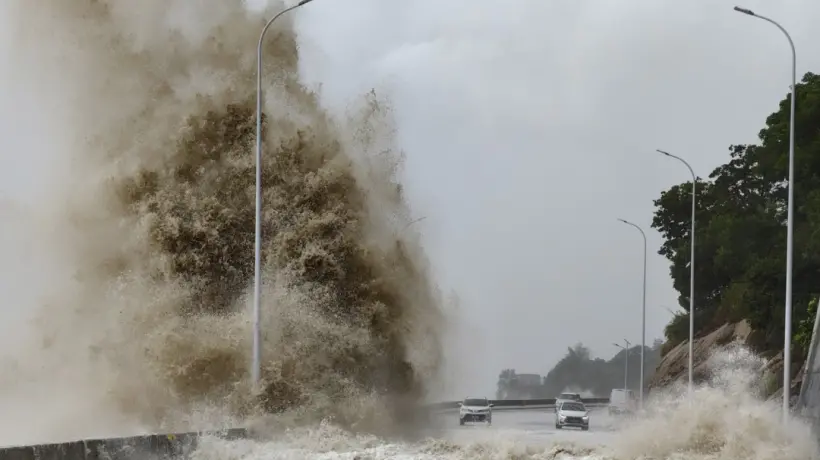
Typhoon Krathon devastated Taiwan, resulting in the sad revelation on Saturday, October 5 two missing people discovered dead. This sad event has brought the death toll of the storm to four, so highlighting the extreme influence of the typhoon that earlier in the week passed the island. Along with terrible winds, the storm delivered torrential rain that seriously disrupted and damaged many different areas.
Krathon's strong attack left around 20,000 houses all throughout Taiwan without electricity on Saturday, mostly in Kaohsiung, the southern seaport city where the typhoon made landfall. The infrastructure suffered greatly from the extreme weather, leaving many of the people dark and without basic amenities.
Typhoon Krathon swiftly dropped into a tropical depression by Friday following landfall. But the typhoon unleashed mudslides, extreme flooding, and record-breaking gusts of wind during its brief but destructive visit, Over 700 people suffered injuries according to the National Fire Agency, which emphasizes the typhoon's destructive power and the difficulties emergency personnel encounter.
The two dead people were found in New Taipei City, an area mostly impacted by the severe rain and later landslides, Local officials said that the unrelenting rain caused major disturbance by flooding roadways and landslides in different regions. The perilous conditions the water produced caused many students to be momentarily stuck in their universities.
Reacting to the catastrophe, the Taiwanese defense ministry organized roughly 250 troops on Friday to support the recovery efforts in New Taipei and adjacent Keelung, both of which suffered landslides. Their tasks included emptying extra floodwater and clearing blocked roads to provide access back in the impacted communities. The defense ministry also mentioned the deployment of some 1,500 troops for a second day to assist continuous relief operations in Kaohsiung and the neighboring Pingtung area.
Taiwan is not new for tropical storms, especially between July and October. Experts caution, though, that as climate change increases the strength of these storms, more rainfall, flash floods, and stronger wind gusts are resulting, The population and infrastructure are seriously at danger from the more frequent and severe nature of these natural disasters.
Typhoon Gaemi, which struck Taiwan in July, was noted as the strongest typhoon to strike the island in eight years in a past incidence. It claimed at least ten lives, injured hundreds, and flooded Kaohsiung widely, This emphasizes the growing worry about how climate change might affect tropical storms and their rising danger to property and life.
While the nation evaluates Typhoon Krathon's damage, rehabilitation initiatives and infrastructure construction to resist next storms will take the stage, While attending to the immediate aftermath of the accident, emergency services will keep giving resident safety top priority. The sad death toll reminds us of the possible risks connected with strong weather and the need of being ready for natural disasters.
Typhoon Krathon has, all things considered, had a major influence with notable death toll, injuries, and extensive infrastructure damage. Local authorities as well as military personnel's response captures the seriousness of the matter and the necessity of group efforts to assist impacted populations. As Taiwan negotiates the difficulties presented by an increasingly erratic temperature, conversations about climate resilience and catastrophe preparedness will become vital going ahead.








Comments
Log in to write a comment