

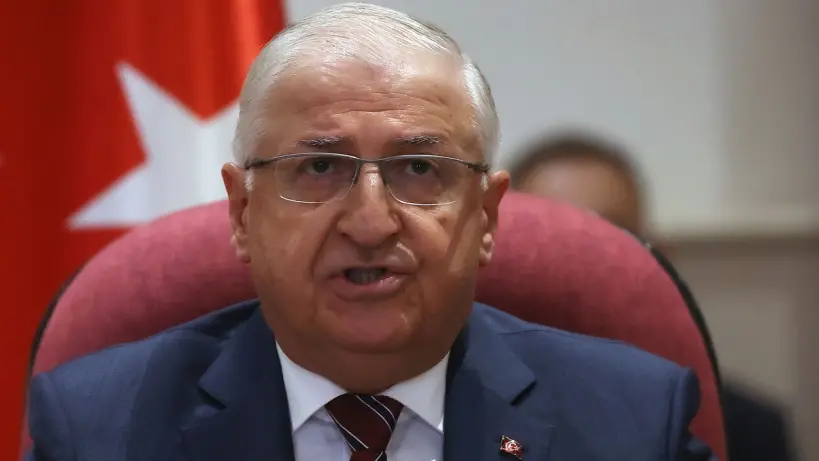
Declared by Turkish Defense Minister Yasar Guler, Turkey's preparedness to assist Syria's recently constituted Islamist-led government, founded by rebels overthrowing President Bashar Al Assad, Speaking on Sunday, Guler underlined the need of assessing the policies of the new government and allowing it chances to rule, according to state news agency Anadolu of Turkey and other sources.
"We have to watch what the incoming government would do. Giving them opportunities is really vital, Guler said, alluding to the Hayat Tahrir Al Sham (HTS) group. Originally anchored in Al Qaeda's Syria branch, the HTS is labeled as a terrorist group by many Western countries. Still, the group has tried to tone down its rhetoric in recent times. Its transitional government promises to respect the rule of law and defend the rights of every Syrian.
Citing current military training and agreements with other countries, Guler confirmed Turkey's readiness to support the incoming government militarily should asked for. He said, without specifying the possible extent of support, "We are ready to offer the required help if the new administration requests it." He also emphasized the new leadership's dedication to honoring government institutions, international entities including the United Nations, and disclosing any proof of chemical weapons to the Organization for the Prohibition of Chemical Weapons (OPCW).
Eliminating Kurdish separatist fighters-especially the YPG ( Syrian Kurdish People's Defense Units) and the PKK (Kurdistan Workers' Party)-remains Turkey's main concentration of involvement with Syria. Ankara sees the Syrians Democratic Forces' (SDF) backbone as an extension of the PKK. Turkey's main security issue is the decades-long conflict the PKK has carried on against the Turkish government.
"The Kurdish/YPG terrorist group will be eradicated in Syria, sooner or later," Guler said. He underlined that the new governments of Turkey and Syria had this goal in common and added, "We have no problems with our Kurdish brothers in Iraq or Syria. Our issue resides just with terrorists. This stance captures Turkey's larger policy of differentiating between militant groups it views as a danger to national security and Kurdish people.
Turkey's posture conflicts with that of the United States, which sees the SDF as a vital ally in the battle against Daesh (ISIS). Leading in destruction of the self-declared caliphate of ISIS in Syria in 2019 was the SDF. But Ankara's classification of the SDF as a terrorist actor has caused problems with Washington. Emphasizing that it compromises Ankara's security issues, Turkey has frequently requested the United States to review its support for the group.
"Our first concern in Syria is the liquidation of the PKK/YPG terrorist group," Guler said. "We have communicated this to our American counterparts and expect them to reconsider their stance," he said further. These views coincide with those of Turkish Foreign Minister Hakan Fidan, who also underlined Turkey's strategic aim of eradicating the YPG.
Speaking earlier, Fitan observed that the newly appointed Syrian administration will have time to handle the Kurdish problem on their own. Our strategic aim is to eradicate the YPG. Fidan informed Turkish network NTV that we would wait for our brothers in Syria to eliminate this threat from their area; moreover, the YPG leadership has to leave Syria.
Turkey's and Syria's new government's alliance on common goals, namely combating Kurdish militant organizations, points to a possible change in the dynamics of the area. Still, there are difficulties especially in juggling foreign connections and making sure any action done against Kurdish groups does not cause more general regional unrest.
Turkey's defense minister has overall shown cautious optimism in Syria's new government while underlining Turkey's relentless dedication to eradicate Kurdish armed groups in the country. Turkey keeps negotiating difficult geopolitical and security issues in Syria by giving conditional backing to the new government and pushing the United States to change its position on the SDF.






Comments
Log in to write a comment