


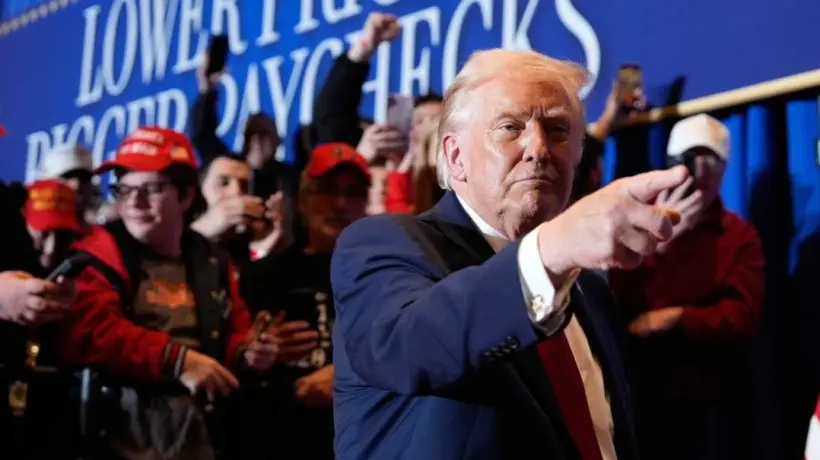
An American proposal aimed at ending the war in Ukraine and reintegrating Russia into the international community has triggered sharp disagreements between Washington and its European allies. Critics accuse the plan of serving primarily U.S. and Russian interests, threatening Ukrainian sovereignty and sidelining Europe’s postwar role.
The administration of former President Donald Trump has reportedly circulated a series of one-page documents to European partners. These papers outline a vision for reconstructing Ukraine while facilitating Russia’s re-entry into the global economy. What has especially alarmed European officials are provisions allowing U.S. financial and industrial firms to tap into an estimated 200–300 billion dollars of frozen Russian assets, channeling them into investment projects across Ukraine-including, notably, a massive nuclear-powered data center in a region currently under Russian military control.
Annexes attached to these proposals widen their scope further, suggesting that reviving the Russian economy would involve opening key sectors to American investment-from rare earth mineral extraction to oil and gas drilling in the Arctic. The blueprint even contemplates restoring Russian energy flows back to Western Europe and global markets.
Comprising 28 points, the plan-regarded by many Europeans as overtly favorable toward Moscow and Washington-demands significant concessions from Kyiv. Chief among these: surrendering roughly 20 percent of its territory to Russia, capping its armed forces at 600,000 troops without offensive weaponry, and pledging not to pursue NATO membership.
Sources familiar with the matter say this plan did not emerge through traditional diplomatic channels but was crafted with input from three influential businessmen-two Americans and one Russian-during closed-door meetings in Miami Beach. Their ambitions go far beyond silencing guns; they envision Russia’s two-trillion-dollar economy knitted back into global commerce, with U.S. companies enjoying clear preferential access over their European competitors.
In his waterfront estate, real estate magnate Steve Witkoff-now acting as Trump’s special envoy for key negotiations-hosted Kirill Dmitriev, head of Russia’s sovereign wealth fund and close confidant of Vladimir Putin. Some sessions were joined by Jared Kushner, Trump’s son-in-law, who arrived from his nearby residence on an island known colloquially as “Billionaire Bunker.”
Dmitriev defended the initiative as an unprecedented opportunity for broad Russo-American cooperation spanning not just energy or minerals but also aerospace endeavors. He floated visions extending as far as joint missions to Mars alongside Elon Musk’s SpaceX.
The American concessions offered under this plan would gradually restore Moscow’s international standing through phased sanctions relief while directing frozen Russian funds in Europe toward jointly managed U.S.-Russian investments rebuilding Ukraine. A sweeping partnership is also outlined for exploiting immense Arctic mineral reserves together.
European capitals have condemned these measures as nothing less than "political and economic rewards" for Moscow’s invasion-a move they fear could embolden further Kremlin expansionism by granting it resources and time needed to regroup for future challenges against other NATO states.
Several senior European officials believe that circulating such proposals signals a shift in Washington’s approach: away from military deterrence or supporting Kyiv toward striking business deals that redistribute benefits among powerful players. Some have likened it to the controversial "Gaza Riviera" concept-a glossy investment vision oblivious to political or humanitarian realities-or even invoked comparisons with Yalta 1945 when Allied powers carved up spheres of influence after World War II.
This week, as Western leaders debated these ideas behind closed doors, Polish Prime Minister Donald Tusk summed up Europe’s skepticism: "We know this isn’t about peace-it’s about business." Meanwhile, Moscow objects vehemently to any postwar arrangements benefiting Europeans; it refuses to let EU firms participate in Ukrainian reconstruction projects as retaliation for harsh public criticism by European heads of state regarding Washington's proposed roadmap.
Reports indicate that Trump has dispatched close associates on discreet trips exploring rare mineral mining ventures and options for reviving Nord Stream-the sabotaged pipeline channeling Russian gas to Europe-should political winds change in both capitals. Energy giant ExxonMobil is said to have opened talks with Rosneft about rejoining Sakhalin's vast gas project if given a green light by authorities on both sides.
A group of Trump-linked business figures is also maneuvering itself as a new economic bridge between America and Russia: among them Gentry Beach (a friend of Donald Trump Jr.) and Stephen B. Lynch (eyeing assets tied directly to Nord Stream 2).
Moscow views all this activity as validation for strategies conceived before Trump's potential return-a way around traditional U.S. security institutions that recasts Russia not only as a military player but more crucially as an indispensable economic partner brimming with opportunities. Western security analysts warn that Kremlin hopes rest on multi-billion-dollar energy-minerals pacts designed both to redraw Europe's economic landscape and deepen divisions within NATO alliances over time.
The proposed American peace initiative looks less like classic diplomacy meant simply to end a brutal conflict than evidence of a broader shift: away from alliance-based crisis management toward deal-making motivated by economics first. While presented officially as a path out of war toward stability, many European observers see instead an unsettling transfer of gains at Ukraine's expense-with unity fractured across the West-and view it ultimately more as political-economic payoff for halting violence than genuine resolution addressing root causes.




Comments
Log in to write a comment